Winter Paw Protection for Dogs and Cats: Complete Safety Guide to Ice, Salt, and Frostbite Prevention
Essential guide to protecting your dog's and cat's paws from winter damage. Learn post-walk care routines, paw balm protection, bootie training, safe de-icers, and emergency frostbite protocols.
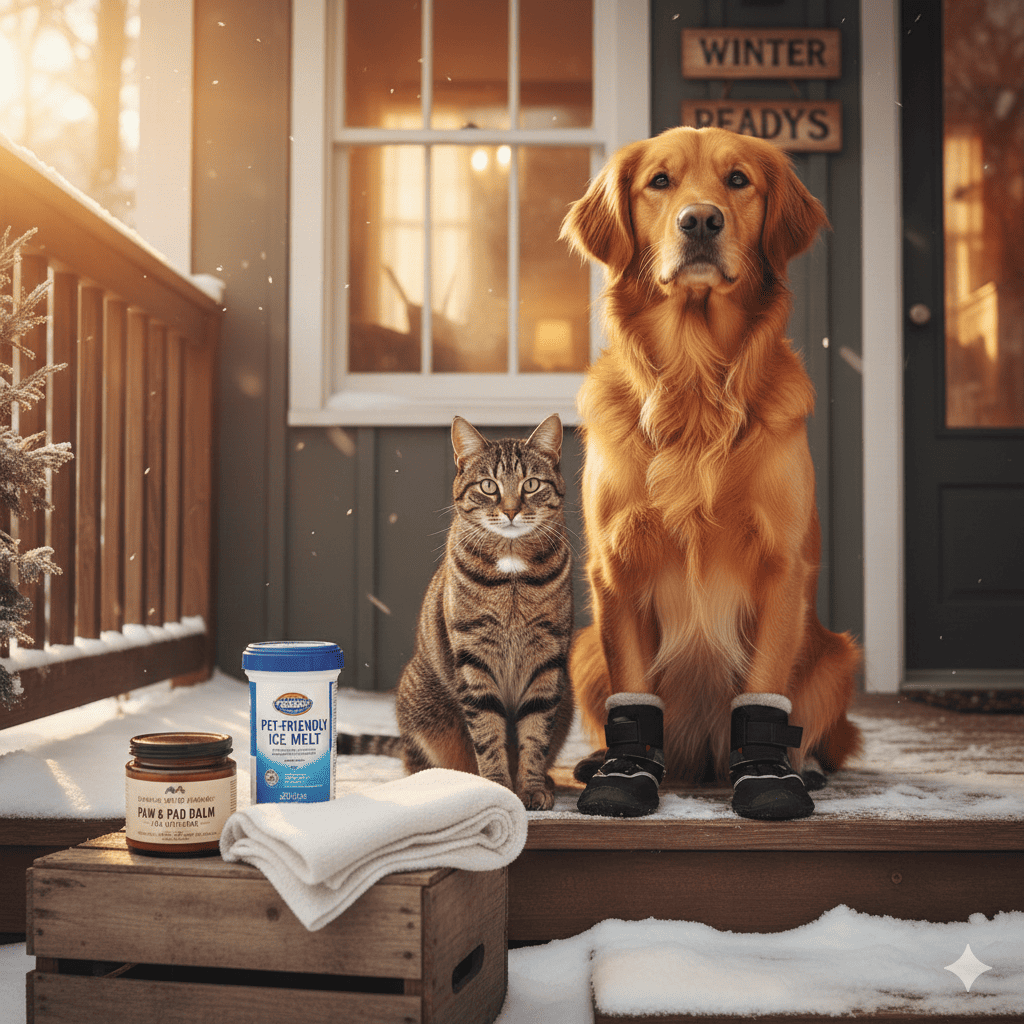
When winter arrives, your pet's paws face real danger from rock salt, ice crystals, and chemical de-icers. Winter paw damage happens through chemical burns from salt ingestion and physical trauma from sharp ice. Frostbite can develop in as little as 30 minutes of exposure below freezing, especially with wind chill. The good news: with proper daily prevention strategies, you can protect your pet's paws and avoid costly veterinary emergencies.
Understanding the Winter Paw Damage Trifecta
Winter paw damage happens through three simultaneous mechanisms.
1. Rock Salt and Chemical Ice Melts: The Dual Damage
Rock salt, the most common de-icer on sidewalks and roads, causes damage in two ways. First, sharp salt crystals physically cut and scrape the paw pads, creating tiny wounds. Second, rock salt is caustic—it causes chemical burns similar to what would happen if you held your hand in strong detergent. Dogs and cats naturally lick their paws during grooming, so any salt remaining on the paw pads gets ingested, causing gastrointestinal irritation, vomiting, and electrolyte imbalances.
The damage intensifies because these paws are constantly exposed. After one winter walk on salted sidewalks, a pet's paws may feel raw and irritated. Repeated exposure over weeks leads to chronic cracking, bleeding, painful wounds, and secondary infections.
Some ice melt products contain ethylene glycol—the same ingredient found in antifreeze. This is particularly dangerous: even small amounts can cause fatal poisoning. Cats, which are smaller and more likely to groom their paws thoroughly, are at especially high risk.
2. Ice, Snow, and the Frostbite Window
Frostbite can develop faster than most pet owners realize. Frostbite can occur in as little as 30 minutes of outdoor exposure below freezing, especially with wind chill.
The biological process is relentless: initial vasoconstriction (blood vessels narrow to conserve core body temperature) cuts off oxygen to the paws. Prolonged cold causes ice crystals to form inside cells, destroying cell membranes and causing cellular dehydration. After rewarming, tissue swells severely, and inflammatory damage continues even after the pet comes inside.
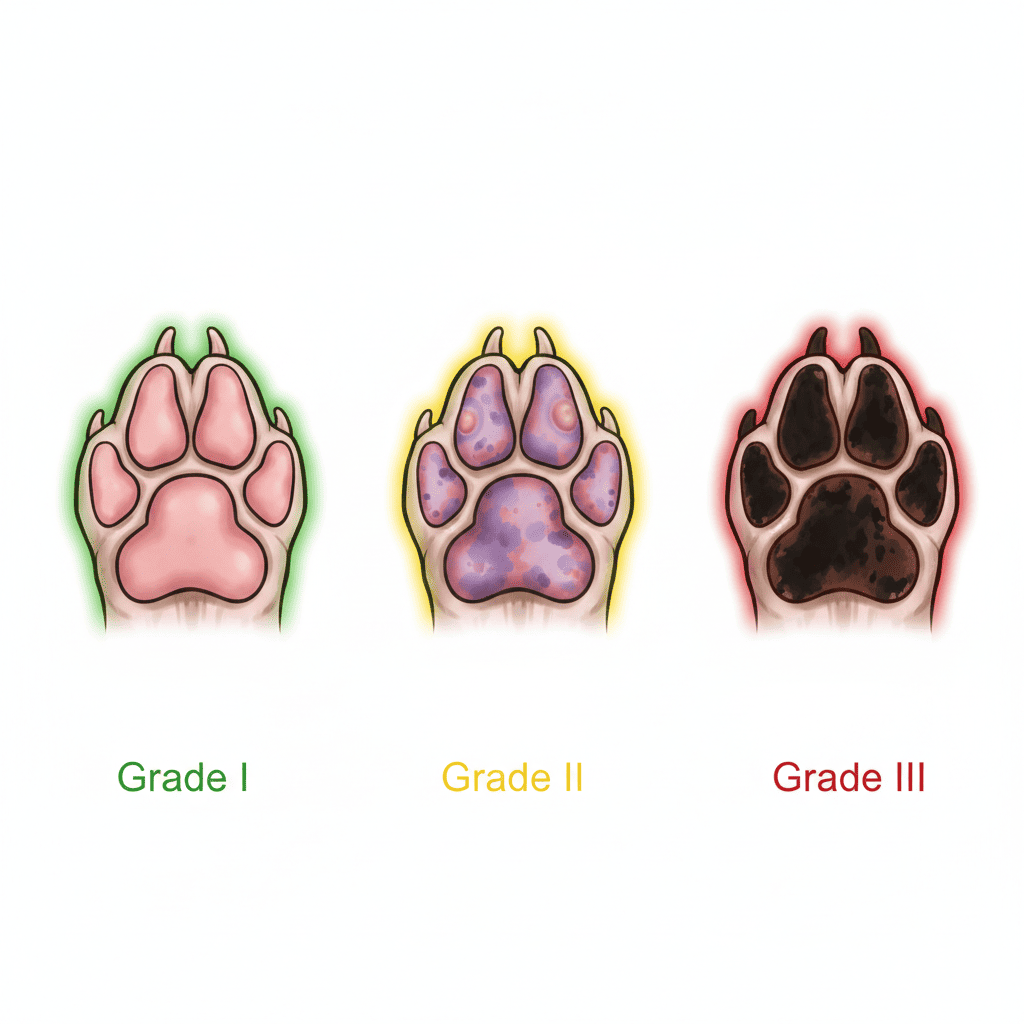
Veterinarians classify frostbite into three grades:
- Grade I: Superficial damage—redness, swelling, and minor discomfort. Usually heals completely within 1-2 weeks without permanent damage.
- Grade II: Blister formation within 24-48 hours after thawing; affects the entire epidermis. Healing takes 3-4 weeks and may leave scarring.
- Grade III: Deep tissue death (necrosis). Skin turns black or dark brown; tissue is permanently destroyed and may require amputation.
Certain breeds are far more vulnerable: short-haired dogs like Greyhounds and Chihuahuas, hairless Sphynx cats, and any breed with minimal undercoat. Puppies (soft, unconditioned paw pads), senior pets (reduced circulation, thin paw pads), and pets with pre-existing health conditions face heightened risk.
3. The Dry Air Factor: Indoor Heating Damage
While outdoor hazards are obvious, indoor heating creates a hidden problem. Winter heating systems drastically reduce humidity, turning your home's air into a desiccant. Your pet's paw pads, which are naturally moist, lose hydration rapidly during the heating season. This causes cracking, flaking, and painful dryness—which then makes the paws more vulnerable to all the other winter damage.
Transitions between cold, dry outdoor air and hot, dry indoor air create thermal shock on the skin, increasing the likelihood of cracking and irritation.
7 Warning Signs Your Pet's Paws Need Attention
1. Excessive Licking or Chewing of Paws
If your pet is obsessively licking their paws after walks or during the day, something is irritating them. This could be salt residue, ice crystals, dryness, or early-stage infection.
2. Visible Cracking or Bleeding
Cracks in the paw pads are painful and act as a gateway to infection. Any bleeding is a sign of significant damage and warrants immediate inspection and care.
3. Limping, Reluctance to Walk, or Holding Up a Paw
Pain is often the first clear signal something is wrong. If your pet suddenly seems uncomfortable on walks or favors a paw at home, investigate immediately.
4. Redness, Swelling, or Inflammation Between the Toes
Chemical burns from salt or early infection cause inflammation. This requires veterinary attention if it doesn't resolve within a day.
5. Blisters or Sores on the Paw Pads
Blisters can indicate frostbite, chemical burns, or early infection. Don't ignore these—they need professional assessment.
6. Paw Pad Discoloration (Pale, Gray, or Blackish Skin)
This is a critical frostbite warning sign. Pale or grayish skin indicates tissue damage. Dark or blackish areas suggest Grade III frostbite and require immediate veterinary emergency care.
7. Unusual Lameness, Lethargy, or Behavioral Changes After Outdoor Exposure
These could indicate systemic poisoning from ingesting ice melt or antifreeze. Call your veterinarian or poison control immediately.
Protection Strategy 1: The Post-Walk Cleaning Routine
This takes five minutes and prevents approximately 80% of preventable winter paw problems. The routine removes salt before your pet ingests it and prevents moisture from sitting on paws (which promotes fungal growth).
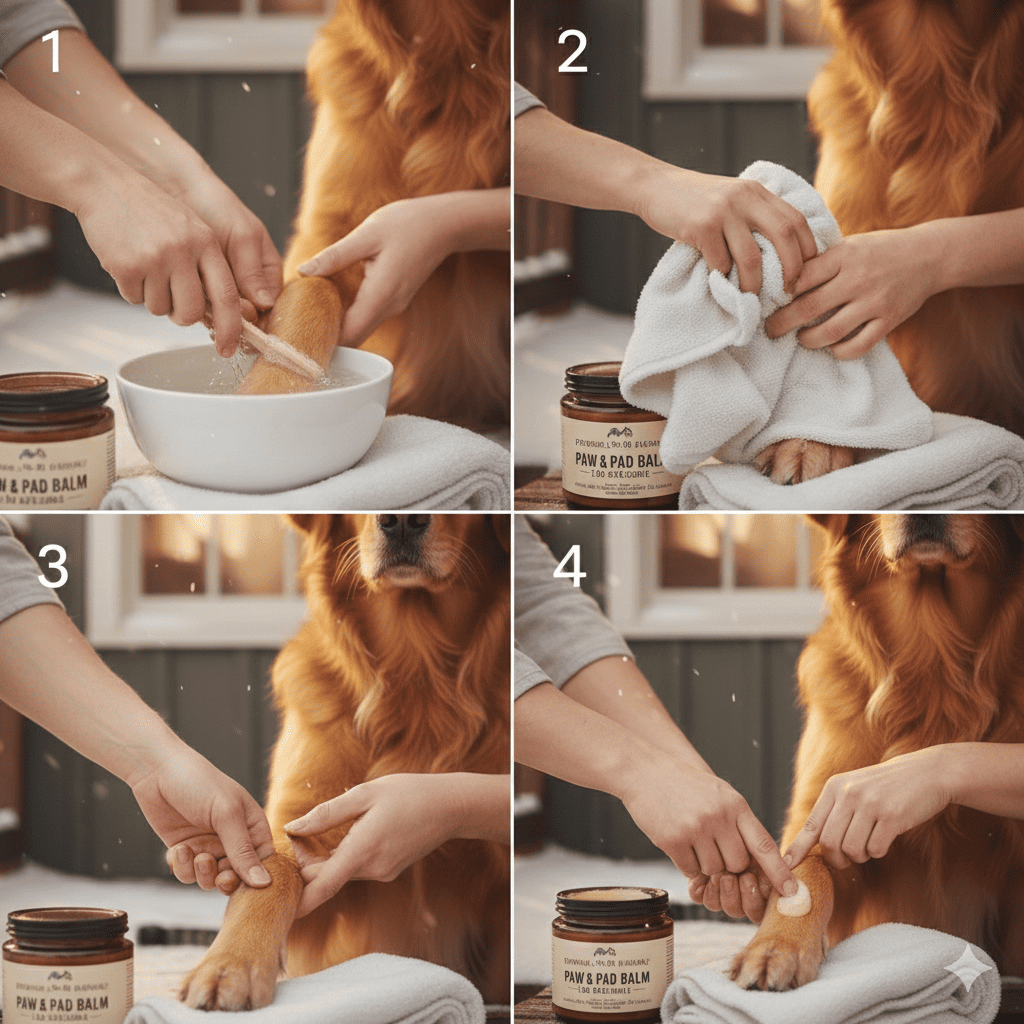
After every winter walk, follow these steps:
- Use lukewarm water (not hot) to rinse each paw gently. Hot water can damage already-compromised skin.
- Pat dry thoroughly with a soft towel, paying special attention between the toes where moisture and salt hide.
- Inspect carefully while the paws are wet. Look between toes, on the paw pads, and around the nail beds for cuts, ice crystals, swelling, or chemical residue.
- For ice balls between toes: Gently remove with your fingers or a soft cloth. If ice is stubborn, let warm water soften it rather than forcing it.
- Apply paw balm or wax after drying to seal in moisture and create a protective barrier for the next walk.
Protection Strategy 2: Paw Balms and Waxes
Apply a protective paw balm before heading outside on any walk during winter months. These create a hydrophobic barrier that repels water, salt, and chemicals while preventing moisture loss from the paw pads.
Effective products contain beeswax (natural waterproofing), coconut oil or other natural oils (moisturizing and antimicrobial), and cacao butter (hydrating without toxicity).
Look for products specifically formulated for pets. Apply a thin layer to all paw pads and let dry for 1-2 minutes before heading outside. Reapply after the post-walk cleaning routine. Don't skip this for cats: many cats tolerate balm application better than booties.
Protection Strategy 3: Dog Booties
Well-fitted booties provide the best physical protection against cold, ice, salt, and chemicals. They're especially valuable for small dogs, senior dogs, puppies, breeds prone to dermatitis (Bulldogs, Pit Bulls, Shar-Peis, Labradors), and dogs with hair between toes (Golden Retrievers, Australian Shepherds, Spaniels).
Selecting and Introducing Booties:
- Ensure a snug but not tight fit—you should fit one finger between the bootie and your dog's leg.
- Choose booties with good traction on the sole to prevent slipping on ice.
- Introduce gradually indoors over 3-5 days: let your dog sniff them, wear one for 30 seconds with a treat reward, gradually increase time.
- Use positive reinforcement during the introduction phase to build positive association.
Important: Booties are only for outdoor time. Leaving them on all day prevents proper air circulation and can cause sweat buildup and fungal growth. Remove booties immediately after walks and inspect the paws for moisture. Cats generally resist booties—most veterinarians recommend limiting cats' outdoor winter exposure and using paw balm instead.
Protection Strategy 4: Limiting Outdoor Exposure
The simplest form of prevention is reducing time outside in dangerous conditions.
- Below 32°F (0°C): Limit walks to 15-20 minutes; monitor paws closely after each walk.
- Below 20°F (-6°C): Limit walks to 10-15 minutes; use booties or paw balm before every walk.
- Below 0°F (-18°C): Walk only if necessary; consider alternatives like litter boxes or indoor potty pads.
- Wind chill -20°F or lower: Emergency-level cold; avoid outdoor time entirely. Frostbite can develop within minutes.
Pro tip: Multiple short walks are safer than one long walk. Three 5-minute walks expose paws to cold for less cumulative time than one 15-minute walk.
The Antifreeze and Ice Melt Toxicity Crisis
Antifreeze and some ice melt products are among the most dangerous household toxins for pets. This is critical for emergency decision-making.
Ethylene Glycol Poisoning
Ethylene glycol is found in standard antifreeze and some ice melts. It has a sweet taste that attracts dogs and especially cats. As little as 1 teaspoon can be fatal to a cat; 2-3 teaspoons to a small dog.
Symptoms appear within 30 minutes to 12 hours after ingestion: vomiting, weakness, incoordination (appearing drunk), excessive thirst, and reduced urination. The condition progresses to seizures, loss of consciousness, kidney failure, and death. Without emergency veterinary treatment within the first 6-12 hours, death is nearly certain. Even if the pet survives, permanent kidney damage is common.
Emergency Protocol if You Suspect Ingestion:
- Call your veterinarian or poison control immediately—do not wait for symptoms to worsen. Timing is everything.
- Note the product name and ingredients if you know what was ingested.
- Do not induce vomiting without professional guidance.
- Seek emergency veterinary care immediately, even at night or on weekends. This is life-threatening.
Prevention:
- Check your vehicle regularly for leaks—even small antifreeze leaks are dangerous.
- Clean up antifreeze spills immediately with absorbent material and dispose safely.
- Store antifreeze bottles securely out of pet reach.
- Use pet-safe ice melt products on your property.
- Wipe your dog's paws after walking in areas with unknown de-icers.
Choosing Safe Ice Melt for Your Property
If you need to de-ice your driveway or walkway, choose wisely.
Avoid entirely:
- Rock salt (sodium chloride)
- Urea
- Any product containing ethylene glycol
Better options:
- Magnesium chloride
- Potassium chloride
- Propylene glycol (food-grade antifreeze)
- Calcium magnesium acetate (CMA)
Pet-safe brands:
Safe Paw, Pet Safe, Just For Pets, Green Gobbler, Cooper's
Budget alternative:
Non-clumping kitty litter provides traction without being toxic. Sand is another option, though it's less effective in severe ice.
Frostbite: Emergency First Aid
If you notice signs of frostbite (pale or grayish skin on paws, ears, or tail tip, or blackening after extreme cold exposure), take immediate action.
What to DO:
- Move your pet to a warm environment immediately—get them indoors and away from cold air.
- Wrap the affected areas gently in clean towels—do not rub or apply direct pressure.
- Slowly rewarm with lukewarm (38-42°C / 100-107°F) water for 15-20 minutes, keeping water temperature consistent.
- Keep the pet warm with blankets, but avoid direct heat sources (no heating pads, heat lamps, or hair dryers).
- Call an emergency veterinarian immediately—frostbite requires professional assessment.
- Expect the vet to provide pain management—frostbite thawing is very painful.
What NOT to do:
- Do not rub or massage frozen areas—this causes additional tissue damage.
- Do not apply hot water or heat lamps—reperfusion injury makes damage worse.
- Do not ignore it hoping it will heal on its own—Grade II and Grade III frostbite require professional treatment.
Frostbite healing takes weeks or months. Grade I typically heals in 1-2 weeks, Grade II in 3-4 weeks, and Grade III may require months of treatment, surgery, or amputation.
Fungal Infections: The Winter Humidity Problem
Winter's dry outdoor air paradoxically creates humidity problems indoors. Heating systems reduce air moisture, but muddy paws tracked inside create pockets of humidity. Warm, damp spaces between paw toes are ideal for fungal growth, particularly Malassezia (a common yeast).
Prevention:
- Dry paws thoroughly after cleaning—no lingering moisture.
- Trim hair between toes to improve air circulation.
- If paws are damp from inside play, dry them immediately.
- Ensure your home has reasonable humidity (30-50% is ideal).
- Consider a humidifier if your home is extremely dry.
If Your Pet Develops a Fungal Infection:
(Redness between toes, excessive licking, musty odor)
- Contact your veterinarian for diagnosis and treatment.
- Treatment typically involves antifungal creams or oral antifungals for systemic infections.
- Duration is usually 2-4 weeks.
Special Considerations for Cats
1. Outdoor Cats and Antifreeze Risk
Cats are drawn to antifreeze for its sweet taste and are highly vulnerable to poisoning. If you have an outdoor cat, double-check your property for antifreeze leaks and ensure they have constant access to fresh water (consider slightly warm water in winter).
2. Less Tolerance for Cold
Most cats have much shorter outdoor tolerance than dogs. Supervised outdoor time should be limited to 10-15 minutes below 32°F. Indoor cats should stay inside during winter.
3. Difficulty with Booties
Many cats will refuse booties entirely. Paw balm is often a better alternative for cats who spend any time outdoors.
4. Litter Box vs. Outdoor Potty
If you have an outdoor cat, provide an indoor litter box during extreme winter weather rather than forcing them outside.
5. Indoor Paw Care
Even indoor cats suffer from dry paws due to heating. Apply paw balm weekly during winter months to prevent cracking.
When to Call the Veterinarian
Emergency Care (Call Immediately):
- Signs of frostbite (pale or blackening skin on paws)
- Suspected antifreeze or ice melt ingestion
- Severe lameness or refusal to bear weight on a limb
- Excessive bleeding from paw pads
- Signs of systemic poisoning (vomiting, lethargy, seizures, incoordination)
Non-Emergency Veterinary Visit (Within 24-48 Hours):
- Persistent redness or swelling between toes
- Cracks that won't heal after 3-5 days of home care
- Signs of infection (discharge, foul odor)
- Excessive paw licking despite cleaning and balm application
- Limping that persists more than a day
Home Care Only:
- Mild redness or dryness that resolves with paw balm and cleaning
- Single minor cut without signs of infection
Frequently Asked Questions
Q: My dog's paw pads look pale after coming inside from cold. Is this frostbite?
Mildly pale paws are normal as blood vessels constrict in response to cold—they should return to normal pink color within 5-10 minutes of being indoors. Frostbite involves persistent paleness, grayness, or after thawing, blackening. If the pale color doesn't resolve quickly or you see grayish or blackish discoloration, contact your vet immediately.
Q: Can I use regular human moisturizers on my pet's paws?
Most human moisturizers are safe for occasional contact on paw pads, but they're not ideal because pets lick their paws. Pet-safe balms are formulated with ingredients you can safely ingest in small amounts. Avoid any product containing petroleum jelly as a primary ingredient (causes digestive upset if ingested frequently).
Q: My cat stays indoors but walks on heated tile floors. Can this damage their paws?
No—heated tile won't damage paws. However, the contrast between warm indoor air and cold outdoor air (if the cat goes out briefly) can make paws more crack-prone. Applying paw balm weekly prevents dryness regardless.
Q: Do I need to worry about frostbite if temperatures are only slightly below freezing (28-32°F)?
If there's no wind, brief exposure below freezing won't typically cause frostbite. However, if there's a wind chill, wet fur, or prolonged exposure, frostbite risk increases significantly. When in doubt, limit outdoor time.
Q: My dog won't tolerate bootie training. Are there alternatives?
Yes. Paw balm applied before walks provides significant protection. If your dog walks primarily on residential streets rather than heavily salted commercial areas, balm alone may be sufficient. If heavy salt exposure is unavoidable, work with a veterinary behaviorist on bootie training—it's trainable, though it takes patience.
Q: How do I know if my ice melt is truly pet-safe?
Check the ingredient list on the label. Look for the absence of rock salt, urea, and ethylene glycol. If the label doesn't list ingredients clearly, contact the manufacturer. When in doubt, use sand or non-clumping litter for traction instead.
Q: Is it true that some dogs' paws toughen up in winter?
Not significantly. While some variation exists between breeds and individual dogs, the idea that repeated exposure builds natural immunity is largely a myth. Consistent winter paw damage doesn't prevent future damage—it increases vulnerability.
Your Winter Paw Protection Plan
- Establish a post-walk routine: Rinse, dry, inspect, apply balm. Five minutes, every single walk.
- Use paw protection before walks: Apply balm before walks; consider booties for high-risk pets or heavily salted areas.
- Choose safe de-icing products for your property and neighborhood areas.
- Know the temperature limits: Reduce outdoor time below 20°F; understand frostbite happens fast (30 minutes).
- Watch for warning signs: Excessive licking, limping, redness, or any behavior change warrants investigation.
- Have a plan for emergencies: Know where your nearest emergency vet is; have poison control's number saved.
Your pet's paws carry them through life. Taking 10 minutes a day during winter to protect them prevents pain, infection, and costly veterinary emergencies. It's the simplest, most effective investment you can make in your pet's winter health.
Was this helpful for your pet care journey?