The Polar Vortex Fear Every Dog Owner Faces: What You Need to Know Before Winter Kills
February 2026 brings the coldest air of winter. Thousands of dogs will suffer hypothermia and frostbite this week—not because their owners don't love them, but because they don't know the warning signs. Complete guide to winter protection, FUAMEY coat analysis, and the critical steps that save lives when temperatures drop below freezing.
The Polar Vortex Fear Every Dog Owner Faces: What You Need to Know Before Winter Kills
The Call That Changed Everything
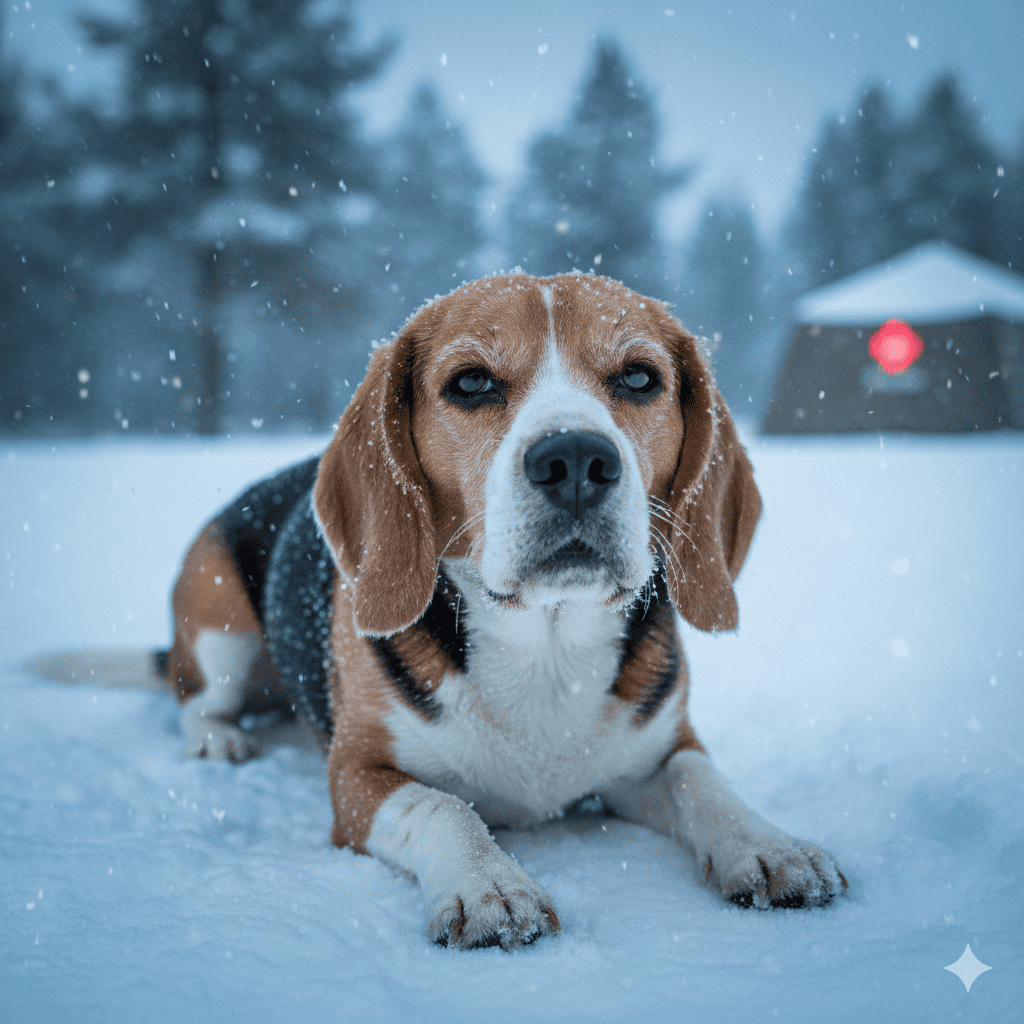
It was 4:17 AM on February 6th, 2026, when Sarah's phone rang. The voice on the other end was shaking. Her neighbor had found Bella—Sarah's six-year-old Beagle—collapsed in the backyard, unconscious, her body temperature at 94°F. Normal body temperature for a dog is between 101-102.5°F. Bella was in severe hypothermia.
Sarah had let Bella out for just fifteen minutes. Fifteen minutes to do her business in the backyard while Sarah made coffee. It was 12°F outside with wind chill dropping it to -5°F. Sarah thought the dog would be fine. She had fur, after all. Dogs are built for this, right?
Wrong. Bella spent three days in the veterinary ICU. She survived, but her paw pads had severe frostbite. Two toes on her left paw had to be amputated. The vet bill was $4,800. But the guilt Sarah carries will cost her forever.
This week, the polar vortex is bringing the coldest air of the entire winter to millions of homes. USA Today confirmed it on February 5th: temperatures are dropping to record lows across the Midwest, Northeast, and parts of the South. And thousands of dogs just like Bella are at risk right now—not because their owners are negligent, but because they don't know what they don't know.
What You'll Learn Here
I'll show you exactly how cold affects dogs differently than humans, which breeds are most vulnerable, what hypothermia and frostbite actually look like, and most importantly, how to protect your dog this winter without spending hundreds of dollars on gear that doesn't work. We'll analyze the FUAMEY winter coat—one of the most popular options on Amazon with over 8,400 reviews—and I'll give you the honest truth about what works, what doesn't, and what could save your dog's life tonight.
Do Dogs Actually Need Winter Coats? The Science
Let's kill the myth right now: not all dogs are built for cold weather. Yes, Huskies and Malamutes can sleep in snow. But your Chihuahua? Your Labrador? Your senior Golden Retriever with arthritis? They are vulnerable.
According to veterinary research, dogs start experiencing discomfort at 45°F. Below 32°F, small dogs, short-haired breeds, and senior dogs are at serious risk. Below 20°F, even medium and large breeds can develop hypothermia within 30 minutes of exposure.
Here's why: dogs lose body heat through their extremities—paws, ears, tail, and belly. Short-haired breeds like Beagles, Pit Bulls, Boxers, and Pointers have minimal insulation. Senior dogs have slower metabolisms and can't generate heat efficiently. Small dogs like Chihuahuas, Yorkies, and Dachshunds have high surface-area-to-body-mass ratios, meaning they lose heat faster than they can produce it.
Add wind chill, wet conditions, or snow, and the timeline to hypothermia accelerates dramatically. What took 30 minutes at 20°F can happen in under 10 minutes at 0°F with wind.
This is not about being a helicopter pet parent. This is about basic physiology. Your dog's body is telling you something. And if you ignore it, the consequences are brutal.
The Warning Signs You're Missing
Hypothermia doesn't announce itself. It creeps in silently. And by the time you notice, it may already be severe.
Early-stage hypothermia symptoms include:
- Intense shivering that won't stop
- Lethargy and reluctance to move
- Seeking warmth desperately (pressing against you, trying to go inside)
- Whining or anxious behavior
- Cold ears, paws, and tail
Moderate-stage hypothermia symptoms include:
- Shivering stops (this is NOT a good sign—it means the body can't generate heat anymore)
- Muscle stiffness and loss of coordination
- Slow, shallow breathing
- Dilated pupils and confusion
- Pale or blue gums
Severe-stage hypothermia symptoms include:
- Unconsciousness or collapse
- Barely detectable heartbeat
- Fixed, dilated pupils
- Body temperature below 95°F
If your dog reaches severe hypothermia, you have minutes—not hours—to get to an emergency vet. Wrap your dog in warm blankets, use heating pads (NOT directly on skin), and drive immediately. Do not wait. Do not call the vet first. Go.
Frostbite is equally insidious. It affects extremities first: ear tips, tail tip, paw pads, and scrotum in male dogs. Initial signs include pale or gray skin, coldness to the touch, and pain when the area is touched. As frostbite progresses, the skin turns blue, then black. Blisters form. Tissue dies. And in severe cases, amputation is the only option.
The tragedy is that frostbite often goes unnoticed until it's too late. Your dog may not limp. He may not cry. But days later, his paw pads start peeling, his ears turn black, and the damage is irreversible.
FUAMEY Winter Coat: Complete Analysis
What Will Attract You
The FUAMEY Dog Coat has 4.5 stars and over 8,477 reviews on Amazon. It's ranked #2 in Dog Cold Weather Coats. And for $44.99, it's one of the most affordable options that doesn't sacrifice quality.
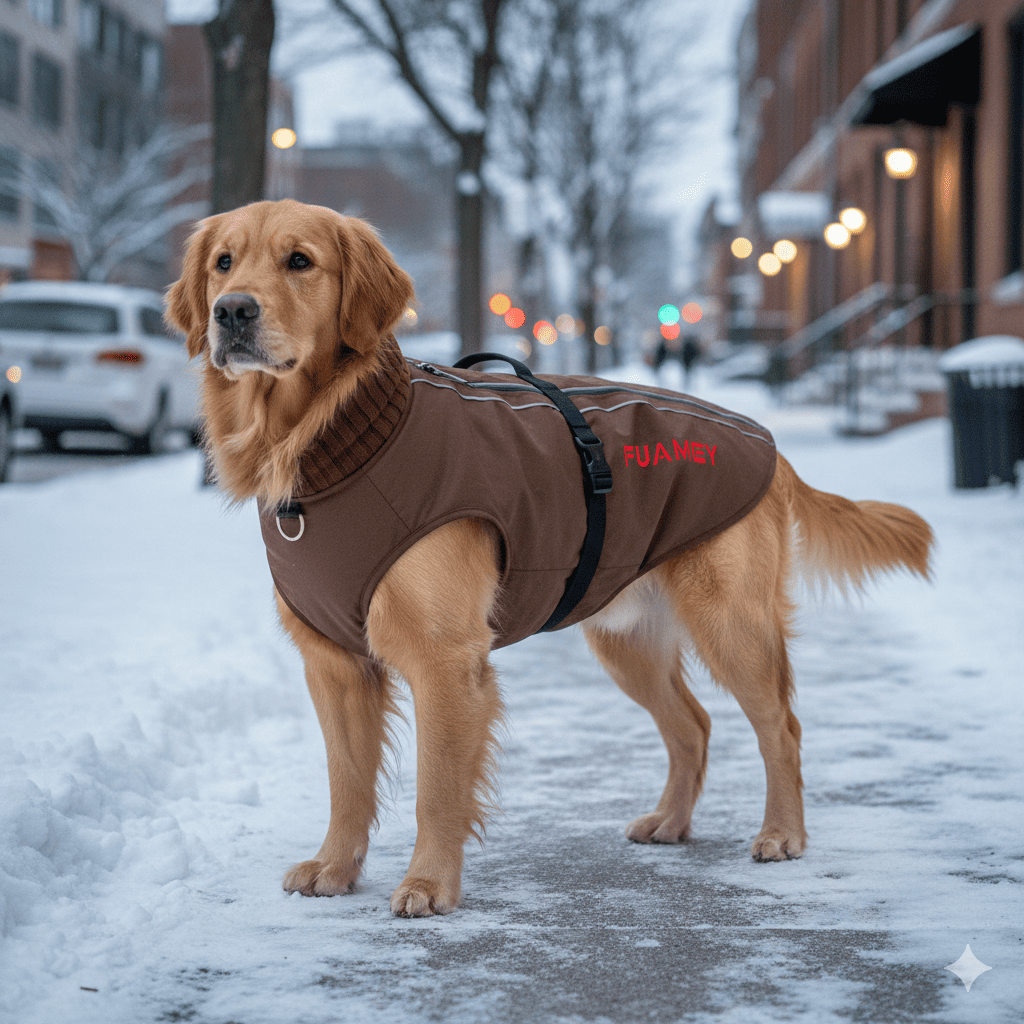
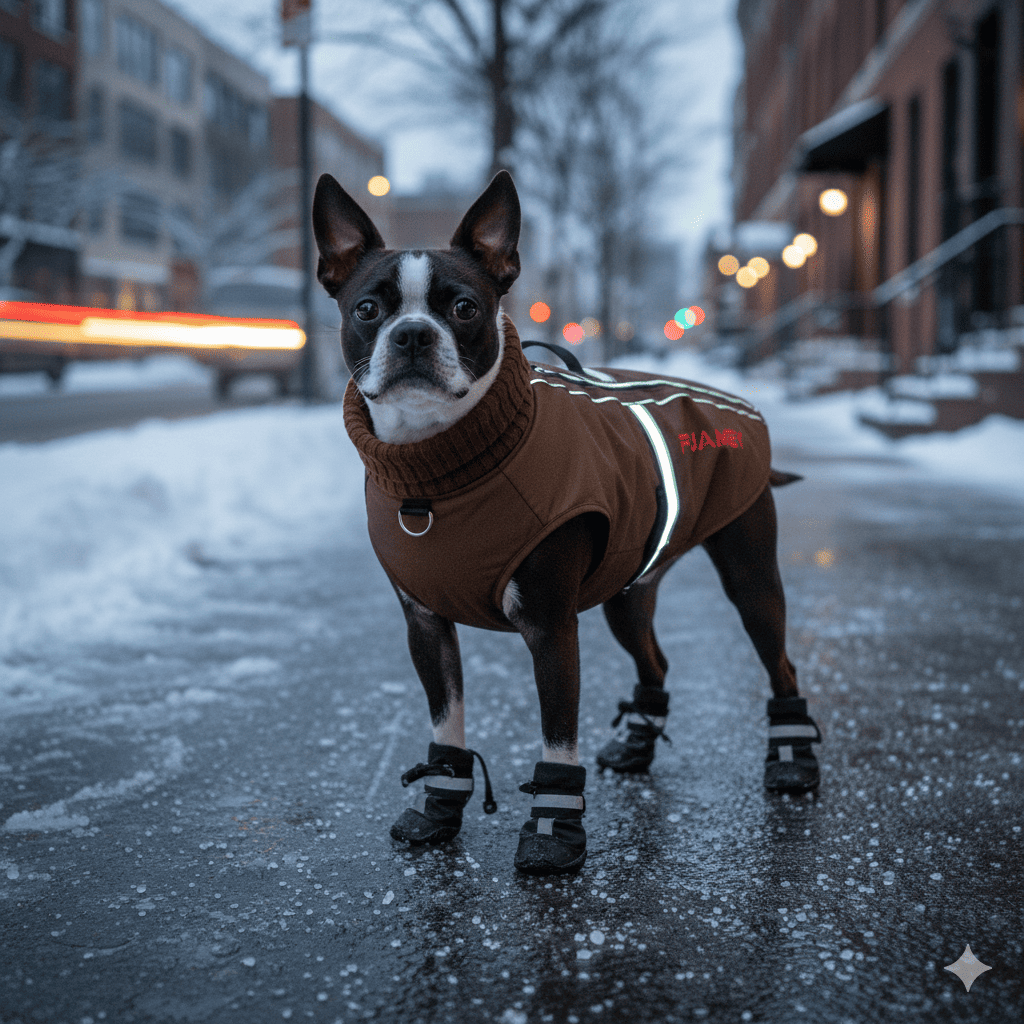
Here's what stands out immediately: the design. This isn't a flimsy vest. It's a full-coverage jacket with a waterproof outer shell, windproof fabric, and plush fleece lining. It covers the dog's back, sides, chest, and belly. The high turtleneck collar protects the neck from wind and snow. And the built-in harness with a leash ring means you don't need a separate harness—just zip up the coat and clip the leash directly.
The back zipper is a game-changer. Most dog coats use Velcro straps or complicated buckles that frustrate both you and your dog. FUAMEY uses a heavy-duty zipper that runs the entire length of the back. You unzip it, your dog steps into the leg holes, you zip it up, and you're done. It takes 15 seconds. No wrestling. No biting. No stress.
The coat comes in seven sizes: XS (14-inch chest), S (17-inch chest), M (21-inch chest), L (24-inch chest), XL (30-inch chest), XXL (35-inch chest), and XXXL (43-inch chest). This means it fits nearly every breed, from Chihuahuas to Golden Retrievers to German Shepherds.
The reflective strips are strategically placed on the back and sides. If you walk your dog at night (which many of us do in winter when daylight is limited), those strips make your dog visible to cars from a distance. This is not decorative. This is safety.
And the waterproof fabric actually works. Multiple reviews confirm that the coat repels rain, sleet, and snow. One reviewer described walking her dog in a foggy, wet evening, and the coat kept the dog completely dry.
The Honest Complications
Now for the truth you won't see in Amazon's product description: sizing is tricky. Reviews are split. Some owners say it fits perfectly. Others say it runs small. A few say it's too long.
The issue is that FUAMEY sizes by chest circumference, but not all dogs with the same chest measurement have the same body shape. A Boston Terrier with a 17-inch chest is built differently than a Dachshund with a 17-inch chest. One has a deep barrel chest. The other has a long, low body.
One verified reviewer wrote: I have a fat Boston Terrier. The large fits his chest perfectly, but the length is too long down his back. I had to cuff it over so he doesn't pee on it.
Another reviewer with a 12-pound Chihuahua ordered the small (17-inch chest) and found it snug with the fleece lining taking up space. She wished she had measured more carefully.
The lesson: measure your dog's chest at the widest point (just behind the front legs), measure the length from the base of the neck to the base of the tail, and compare both measurements to the size chart. If your dog is between sizes, go up—especially if your dog has a thick winter coat or if you plan to layer underneath.
The other complication: the turtleneck collar. Some dogs love it. Others hate it. If your dog has never worn a coat with a high collar, there will be an adjustment period. One reviewer mentioned her dog kept trying to scratch it off for the first few days. But after acclimating, the dog stopped fussing.
There's also a minor issue with the zipper at the very top. A handful of reviews mention that the last inch of the zipper doesn't stay fully closed. It's not a dealbreaker—most owners just fold the collar over to create a cuff—but it's worth noting.
The Critical Part: How to Size Correctly
Here's the step-by-step process that prevents returns and ensures your dog is actually protected:
Step 1: Use a fabric measuring tape (not a metal one). Measure your dog's chest circumference at the widest point, which is usually right behind the front legs. Write down the number.
Step 2: Measure your dog's neck circumference at the base of the neck (where a collar would sit). Write it down.
Step 3: Measure the length from the base of the neck (where the collar sits) to the base of the tail (not the tip—the base where the tail connects to the body). Write it down.
Step 4: Weigh your dog. FUAMEY provides weight recommendations for each size.
Step 5: Compare all four measurements to the size chart. If your dog is between sizes, go up. If your dog has a thick natural coat, go up. If you plan to use this coat over a sweater, go up.
One smart reviewer described ordering two sizes, trying both, and returning the one that didn't fit. Amazon's return policy makes this easy. It's better to spend an extra $50 temporarily than to have an ill-fitting coat that your dog refuses to wear.
Comparison Table: FUAMEY vs Expensive Alternatives
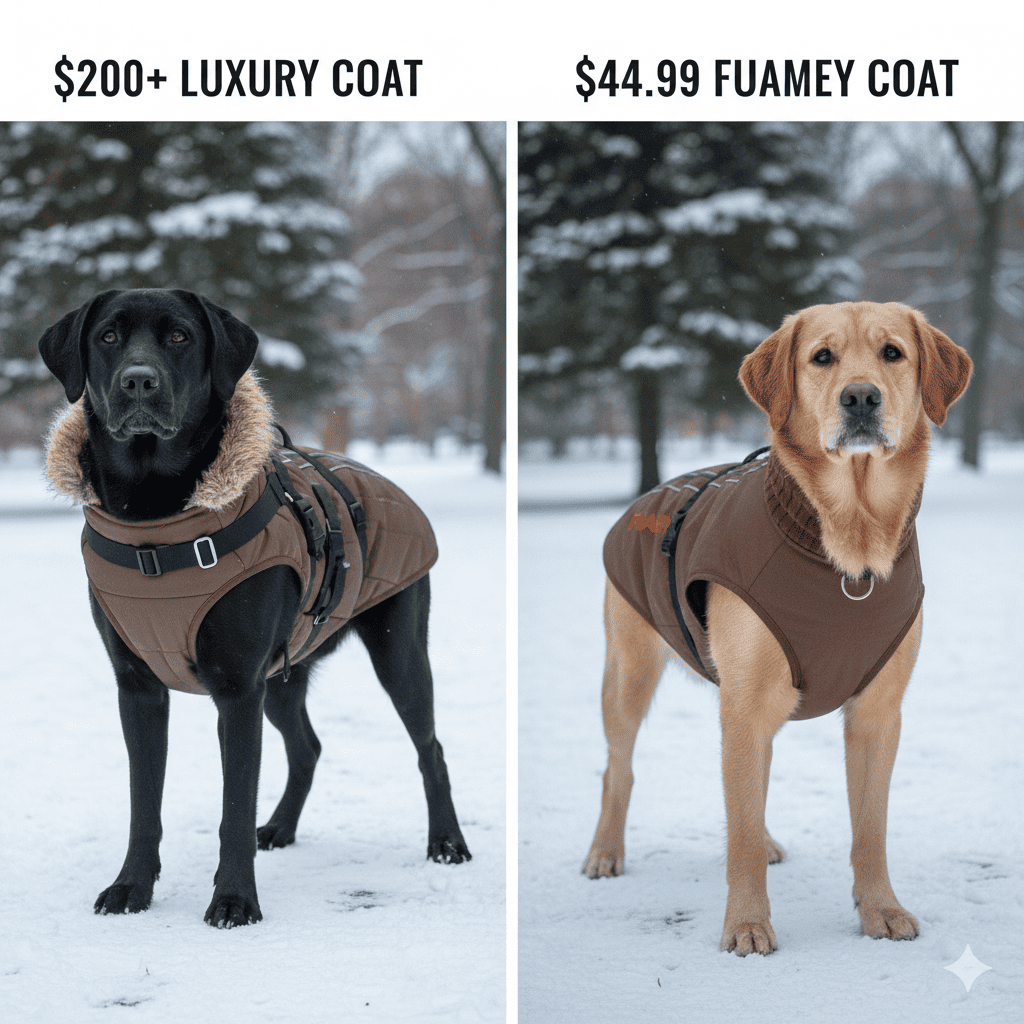
| Feature | FUAMEY | Premium Brands ($150-$250) |
|---|---|---|
| Price | $44.99 | $150-$250 |
| Waterproof | Yes | Yes |
| Windproof | Yes | Yes |
| Fleece Lining | Yes, plush | Yes, merino wool or synthetic |
| Built-in Harness | Yes, with leash ring | Rarely |
| Reflective Strips | Yes | Yes |
| Ease of Use | Back zipper, 15 seconds | Varies (buckles, Velcro, snaps) |
| Size Range | 7 sizes (XS to XXXL) | Usually 5-6 sizes |
| Durability | Good for 1-2 seasons | 3-5 seasons |
| Amazon Reviews | 4.5 stars (8,477 reviews) | 4.3-4.7 stars (fewer reviews) |
| Best For | Budget-conscious, first coat, practicality | Long-term investment, extreme conditions |
Here's my honest take: if you live in an area with brutal winters (Minnesota, Montana, Maine) and your dog spends hours outdoors daily, a premium coat might be worth it. The materials are more durable, the insulation is thicker, and they last longer.
But for most dog owners—those who take their dog out for 20-30 minute walks, quick bathroom breaks, and occasional winter hikes—the FUAMEY coat is more than sufficient. It does exactly what it promises: keeps your dog warm, dry, and visible. And at $44.99, you can replace it every season if needed and still spend less than one premium coat.
Which Dogs Need This Coat Most?
Not every dog needs a winter coat. Huskies, Malamutes, Samoyeds, and other double-coated Arctic breeds are built for extreme cold. Putting a coat on them can actually cause overheating.
But these dogs absolutely need protection:
- Short-haired breeds: Beagles, Boxers, Pit Bulls, Pointers, Dalmatians, Greyhounds, Whippets, Boston Terriers, French Bulldogs, Chihuahuas, Miniature Pinschers
- Small breeds under 20 pounds: Yorkies, Maltese, Pomeranians, Shih Tzus, Toy Poodles
- Senior dogs (7+ years): Their metabolism slows, they can't generate heat efficiently, and arthritis makes cold painful
- Puppies under 6 months: Their body temperature regulation isn't fully developed
- Dogs with health conditions: Diabetes, heart disease, kidney disease, hypothyroidism, arthritis
- Dogs with low body fat: Rescued dogs, dogs recovering from illness, naturally lean breeds
If your dog shivers, seeks warmth, lifts paws off the ground, or refuses to go outside in winter, that's your answer. He needs a coat.
Critical Steps for Proper Winter Protection
Step 1: Acclimate Your Dog to the Coat Indoors
Don't wait until it's freezing to introduce the coat. Put it on your dog indoors for 5-10 minutes daily for a week before winter hits. Reward with treats. Let him associate the coat with positive experiences. By the time you need it outside, he won't fight you.
Step 2: Layer Correctly
If temperatures drop below 10°F, consider layering. A thin fleece sweater underneath the FUAMEY coat adds extra insulation without restricting movement. But don't over-layer—if your dog is panting or trying to remove the coat, he's too hot.
Step 3: Protect the Paws
The FUAMEY coat doesn't cover paws. And paws are the most vulnerable to frostbite. Use dog boots (yes, they look silly, but they work) or apply paw balm before walks. After walks, wipe paws with a warm, damp cloth to remove ice, salt, and chemicals. Check between the toes for ice balls—those can cause pain and frostbite.
Step 4: Limit Outdoor Time
A winter coat extends safe outdoor time, but it doesn't make your dog invincible. At 20°F, even with a coat, limit walks to 20-30 minutes. At 10°F, 15 minutes max. Below 0°F, only for quick bathroom breaks (5 minutes or less). Watch your dog's body language. If he's shivering, lifting paws, or trying to go back inside, listen.
Step 5: Dry Your Dog Immediately After Walks
Wet fur loses insulation. Even if the FUAMEY coat is waterproof, your dog's legs, belly, and face may get wet from snow or slush. Towel-dry immediately when you get inside. Pay special attention to paws, ears, and the belly. If your dog is still cold, use a blow dryer on low heat (NOT high—it can burn) or wrap him in a warm blanket.
Step 6: Monitor for Hypothermia Signs
Even with a coat, hypothermia can still occur if your dog is outside too long, gets wet, or has underlying health issues. Watch for shivering, lethargy, pale gums, and coordination loss. If you see these signs, bring your dog inside immediately, warm him gradually (no hot water—it can cause shock), and call your vet.
Frequently Asked Questions
Will My Dog Overheat in the FUAMEY Coat?
Not unless you're using it in temperatures above 50°F. The coat is designed for cold weather. If your dog starts panting heavily, drooling excessively, or acting lethargic while wearing the coat, remove it immediately—those are signs of overheating.
Can I Wash the FUAMEY Coat?
Yes. Hand wash or machine wash on a gentle cycle with cold water. Air dry—do not use a dryer. The waterproof coating can degrade with high heat.
What If My Dog Refuses to Wear a Coat?
Start with short indoor sessions. Use high-value treats. Let your dog sniff and investigate the coat before putting it on. Some dogs need weeks to acclimate. Be patient. If your dog absolutely refuses and temperatures are dangerous, keep outdoor time to the absolute minimum.
Do I Need Boots If My Dog Has a Coat?
Yes, especially if you walk on salted sidewalks or in temperatures below 20°F. Paws are not protected by the coat. Boots prevent frostbite, chemical burns from salt, and ice ball formation between toes.
How Long Does the FUAMEY Coat Last?
With regular use (daily walks for one winter season), expect 1-2 years. The zipper and reflective strips may show wear first. For $44.99, that's reasonable. If you need something that lasts 5+ years, invest in a premium brand.
Can I Use This Coat for Rain?
Yes. The waterproof outer shell works for rain, sleet, and snow. But it's not a raincoat—it's insulated, so your dog may overheat if it's 60°F and raining. Use it for cold, wet conditions only.
The Final Decision
Here's what I want you to remember: this isn't about spoiling your dog. This isn't about being overprotective. This is about basic survival.
Hypothermia and frostbite are real. They happen fast. And they're preventable.
The FUAMEY coat isn't perfect. Sizing can be tricky. The zipper sometimes gaps at the top. It won't last a decade. But it does what matters most: it keeps your dog warm, dry, and visible when temperatures drop to dangerous levels. And at $44.99, it's accessible to nearly every dog owner.
But here's the truth: the coat is only part of the solution. You still need to limit outdoor time. You still need to protect paws. You still need to watch for warning signs. And you still need to trust your instincts. If your dog is shivering, he's cold. If he's lifting his paws, they're hurting. If he's trying to go inside, listen to him.
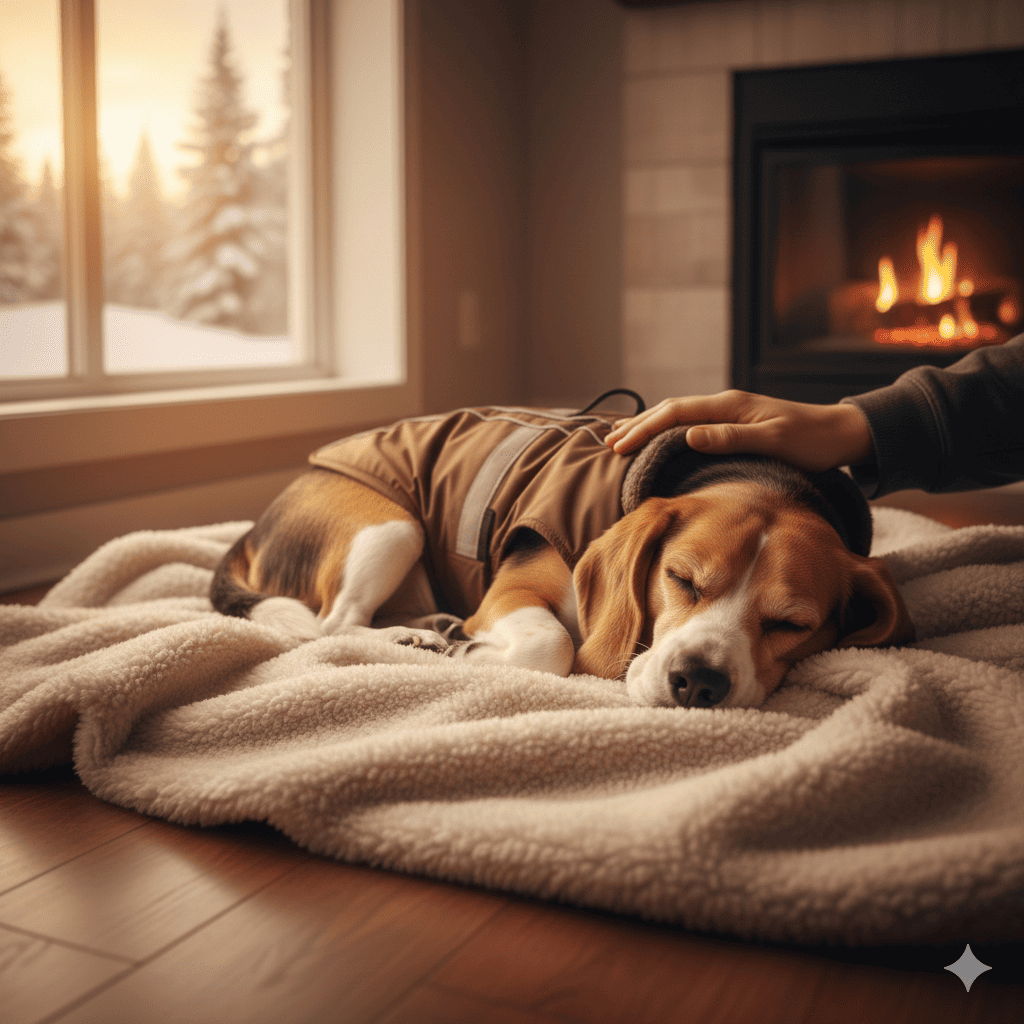
Sarah's Beagle, Bella, survived. But she lost two toes. And Sarah carries the guilt of those fifteen minutes for the rest of her life.
Don't let that be your story. The polar vortex is here. The coldest air of winter is hitting right now. And your dog is counting on you to make the right decision.
Whether you choose FUAMEY or another brand, whether you spend $45 or $200, just make the decision today. Not tomorrow. Not after a scare. Today.
Because your dog can't ask for help. But that tiny jacket—that simple act of protection—can speak for him when his body can't handle the cold anymore.
Was this helpful for your pet care journey?