PetLac Puppy Milk Replacer: A Practical Solution for Newborn Puppies
A hands-on guide to PetLac puppy milk replacer. Learn safe feeding for newborns, correct mixing, choosing the right feeding kit with bottles and syringes, and emergency nutritional support when the mother's milk isn't enough.
PetLac Puppy Milk Replacer: A Practical Solution for Newborn Puppies
The Moment Every Rescuer Dreads
What do you do when a newborn puppy needs milk right now and the mother can’t or won’t nurse?
That moment arrives suddenly. One minute you’re celebrating tiny paws; the next, the puppy feels too quiet, too light, too fragile. If you’ve been there, you know the truth: you don’t need perfection. You need something reliable, easy to prepare, and that works at 2:00 a.m.

That’s why many owners and rescuers turn to PetLac. It’s designed for the most critical stage: the first days and early weeks of life.
Another common problem is that even a good formula becomes stressful if the feeding setup fails. This guide covers both PetLac powder and the multi-size feeding kit with nipples and syringes that makes the process less chaotic, more measurable, and easier to manage.
Important: feeding with milk replacer is high-risk. Overfeeding, feeding too quickly, or using the wrong position can cause digestive upset or aspiration. Follow the label instructions and consult a veterinarian, especially with very young or weak puppies.
Why PetLac Works in Newborn Emergencies
PetLac is made for everyday situations: rejected puppies, orphans, pups needing supplementation, support during weaning, and even older dogs that need extra calories.
That range matters because most people don’t plan to bottle-feed. It happens: a large litter, a sick mother, a rescue, or a puppy that can’t keep up.
PetLac works because it addresses an urgent need and is trusted by rescuers and owners who require something dependable in a crisis.
The product is intended for intermittent or supplemental feeding, which is how most caregivers use it: as a bridge to stabilize puppies and support growth until they transition to solid food.
What’s in PetLac
When you buy a milk replacer you’re buying a nutritional stand-in for something naturally complex.
PetLac supplies vitamins, minerals, and amino acids needed for growth. It includes FOS and naturally occurring microorganisms (probiotics) to support digestion.
The guaranteed analysis is clear:
- Crude Protein (min): 29.0%
- Crude Fat (min): 28.0%
- Crude Fiber (max): 0.5%
- Moisture (max): 5.0%
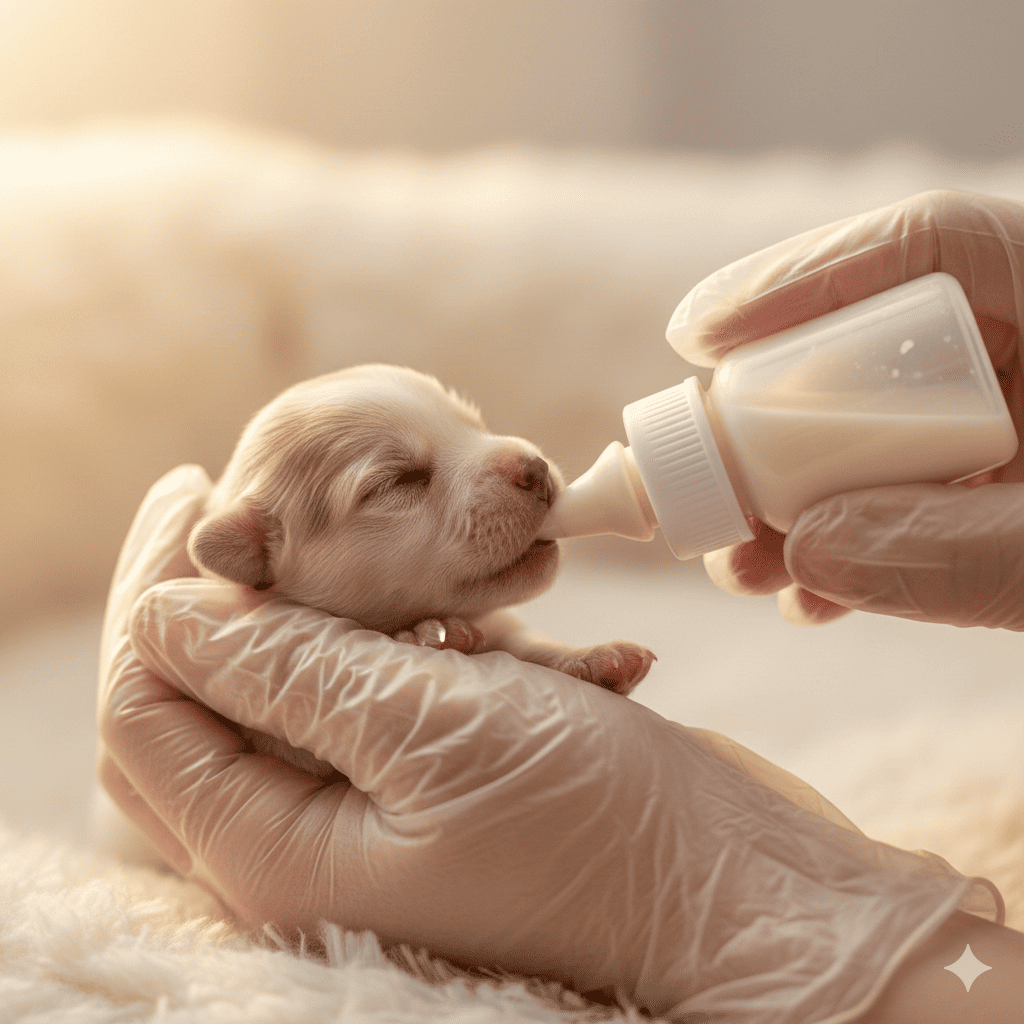
PetLac also provides mixing and feeding directions designed for moments when you’re tired and worried. It’s not a substitute for veterinary advice, but it’s a practical starting point when time is short.
Mixing PetLac
If you’ve never used a milk replacer, mixing is often the first source of stress. You don’t want it too thick, lumpy, or measured by guesswork while the puppy squeaks.
The mixing is simple:
- Mix 1 tablespoon of powder with 2 tablespoons of warm water.
- This yields about 2 1/3 tablespoons (7 teaspoons / 35 mL) of liquid.
- That amount feeds a 4 oz puppy for roughly one day.
One important detail: make sure it’s fully dissolved. Clumps clog nipples and tempt you to squeeze harder, which raises the risk of feeding too fast.
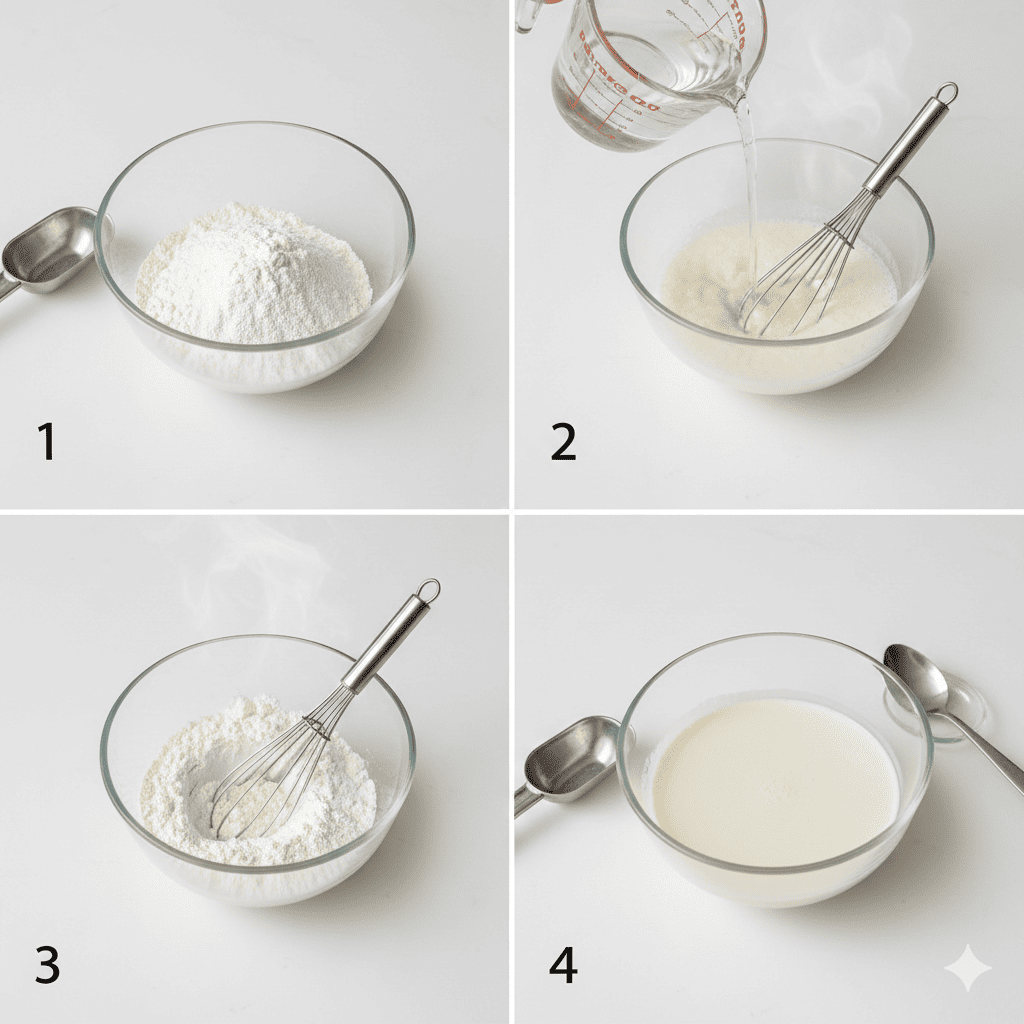
Practical tip: use a small whisk or a shaker bottle and mix until the liquid is smooth. If it’s foamy, let it settle briefly before feeding.
Feeding Newborn Puppies
Feeding newborns is not the time to improvise. If puppies can nurse from their mother, that’s ideal—especially in the first days.
PetLac emphasizes this: if possible, ensure puppies receive colostrum from the mother during the first 24–48 hours. If you can safely facilitate that, do it.
For bottle-fed puppies, PetLac recommends this practical approach:
- Feed 1 teaspoon (5 mL) per 4 ounces (115 g) of body weight every 3–4 hours.
- Weigh puppies at the start and every 3 days to monitor intake.
- Smaller or weaker puppies may need more frequent feedings.
The real rule isn’t the exact schedule—it’s the puppy’s response. Puppies should gain weight steadily and remain hydrated, warm, and active for their age. If a puppy is fading, vomiting, bloated, coughing during feeding, or not gaining weight, seek veterinary help immediately.
Moving Forward: Bowl Feeding and Weaning
You won’t bottle-feed forever. As puppies grow, you move them forward gently and safely.
Between 4 and 6 weeks you can start offering reconstituted formula in a shallow bowl for puppies to lap. But don’t stop bottle feeding until they’re eating well on their own.
One common mistake is stopping bottle support too early because a puppy “seems interested” in the bowl. Watch for consistent lapping and swallowing before reducing bottle feeds.
The Feeding Kit: Bottle, Syringe, and Multiple Nipples
If PetLac is the fuel, the feeding kit is the delivery system. In newborn care, delivery matters.
A good feeding kit includes:
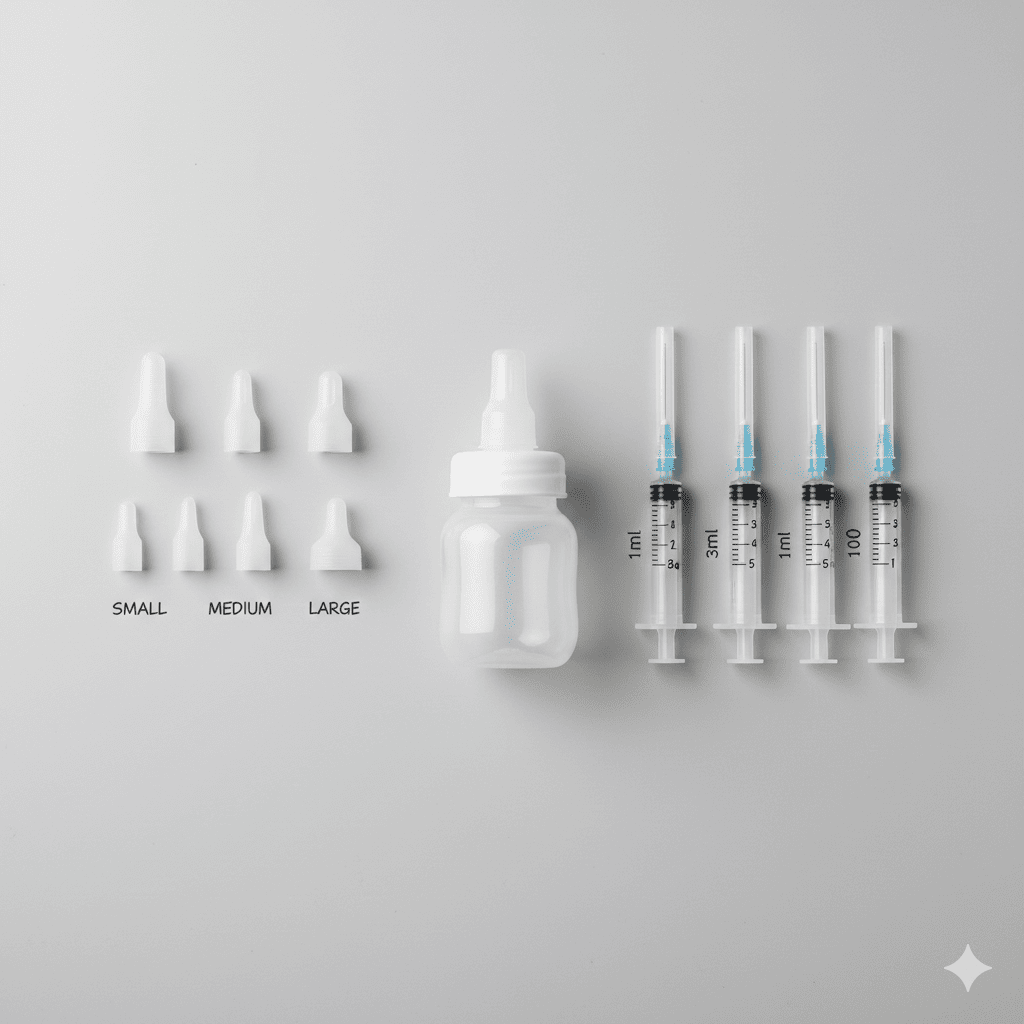
- A 60 mL squeeze bottle that’s easy to control with gentle pressure.
- Multiple nipple sizes (small/medium/large) to match different mouths and growth stages.
- Small-volume syringes (1 mL, 3 mL, 5 mL, 10 mL) for precise tiny feeds.
This isn’t just convenience: it reduces risk by helping you control flow. With newborns, “too much too fast” is one of the biggest dangers. A smaller syringe slows you down and forces intentional feeding.
How to Use PetLac with the Kit
- Use the bottle when pups are stronger and latch well—faster and less fussy.
- Use a small syringe when you need finer control, especially with tiny pups or to track intake precisely.
- Choose a nipple that allows steady flow without forcing. If the nipple is too large, pups struggle and you’ll squeeze harder.
There are real drawbacks: some nipples are too soft and tear; others fit loosely and pop off under pressure; some need the hole adjusted because the flow is too fast. That doesn’t mean avoid kits—buy them like a caregiver: inspect, test, and control flow as if the puppy’s safety depends on it. In a way, it does.
First Night Checklist
If you’re preparing for a litter—or already in the middle of one—this helps you get organized.
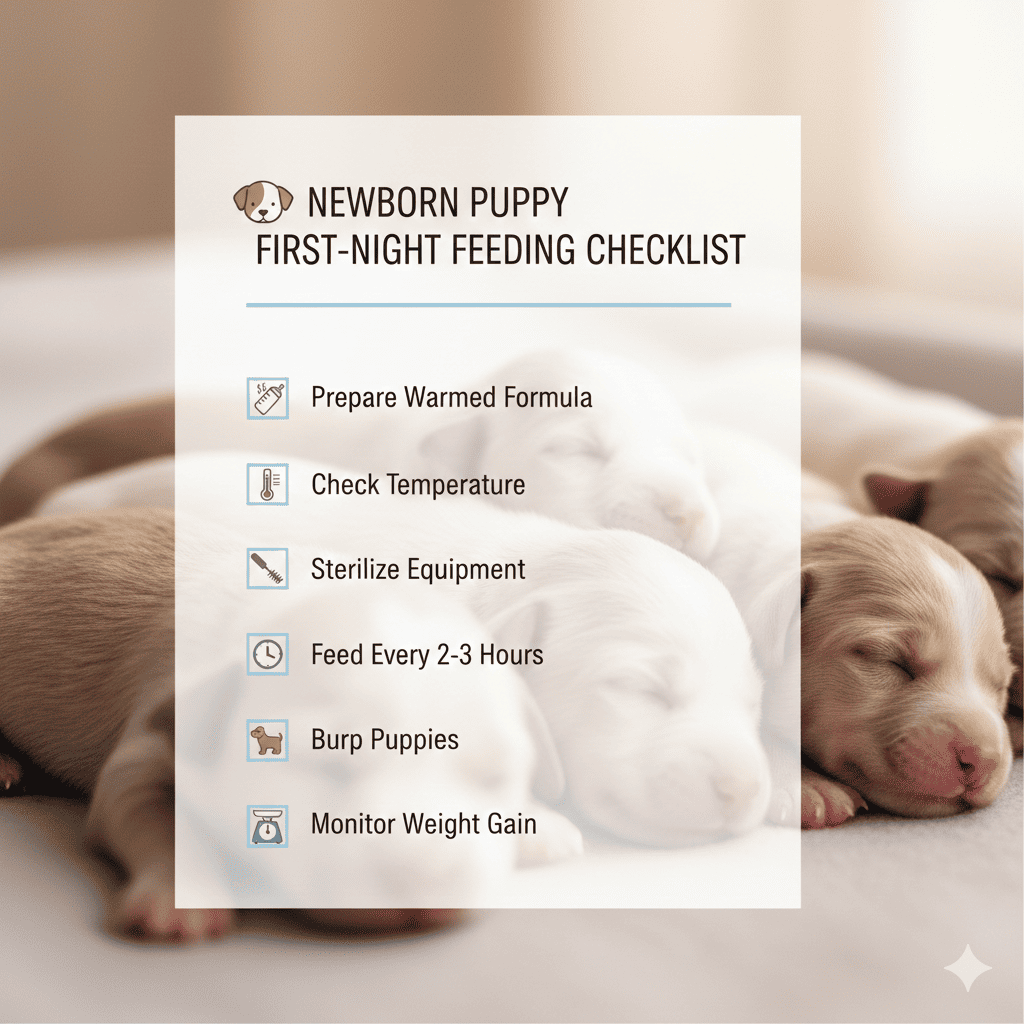
- Warm the puppy before feeding. Never feed a cold puppy.
- Mix PetLac exactly as directed (1 tbsp powder : 2 tbsp warm water) and dissolve fully.
- Start with a slow-flow approach. You can always feed again; you can’t undo aspiration.
- Measure intake, especially for small or weak pups. Small syringes are useful.
- Follow a schedule but adjust based on the puppy’s strength and veterinary guidance.
- Weigh puppies: steady gains are the best sign you’re on track.
- Clean feeding tools thoroughly after each use. Newborns are vulnerable and bacteria spread quickly.
The biggest advantage of having PetLac and a flexible feeding kit on hand is that you’re not improvising at midnight. You’re prepared.
Storage and Freshness
Milk replacer only works if it stays fresh and safe.
Storage tips:
- Store unopened powder in a cool, dry place.
- After opening, refrigerate the powder for up to 3 months or freeze for up to 6 months.
The label is clear: not for human consumption; for intermittent or supplemental feeding only.
If a product smells off, is past its date, or has been exposed to moisture, don’t risk it—especially with newborns.
Frequently Asked Questions
Can I use PetLac for older puppies?
It’s intended for newborns and weaning support. For puppies older than 6–8 weeks, transition to a balanced puppy food.
What if my puppy has diarrhea?
Digestive sensitivity is common with formula changes. Call your vet. Sometimes a slightly more diluted mix helps, but don’t adjust without professional guidance.
Can I mix it ahead of time?
Ideally prepare fresh for each feeding. If you must prepare in advance, refrigerate mixed formula up to 24 hours and warm to room temperature before feeding.
Is PetLac better than other brands?
PetLac is reliable and widely available. Esbilac and Breeder’s Edge are solid alternatives. What matters most is consistency and proper feeding technique, not the brand.
Do I need a special bottle?
Any small bottle can work, but purpose-built puppy bottles with appropriate nipples reduce mess and control flow better than improvised solutions.
Is PetLac Worth Buying?
If you need a practical milk replacer for real situations—orphans, supplementation, or weaning support—with clear mixing and feeding instructions, PetLac is a solid choice.
Pairing PetLac with a multi-size bottle, syringe, and nipple kit makes the process more controlled and measurable. That matters when you’re working with tiny mouths and very small margins for error.
Do this today: if you’re assembling an emergency newborn kit, put PetLac and a feeding kit together now, before you need them.
A puppy can’t ask for help when the mother’s milk isn’t enough. You can be prepared. That preparation saves lives.
Was this helpful for your pet care journey?