Nature's Hangout Window Bird Feeder Review: Bring Cardinals and Chickadees Within Inches of Your Window (2026)
You're missing the best birdwatching moments because traditional feeders hang 15-20 feet away where you need binoculars to see details. The Nature's Hangout Window Bird Feeder mounts directly on glass, bringing wild birds within inches of your face for unmatched close-up viewing. Crystal-clear quarter-inch acrylic gives unobstructed views of feeding behaviors, ultra-strong ECOSTRONG suction cups stay attached through extreme weather, holds 4+ cups attracting chickadees, finches, nuthatches, cardinals, and sparrows right to your window. Complete installation guide, real customer results from birdwatchers, honest pros/cons including what this won't attract, and whether $24.74 delivers professional-quality birdwatching from your kitchen. Amazon's Choice with 27,491 reviews and 4.5 stars.
Nature's Hangout Window Bird Feeder Review: Bring Cardinals and Chickadees Within Inches of Your Window
The Moment You Realize You're Missing the Best Part of Birdwatching
You fill your backyard feeders religiously. Black oil sunflower seeds, nyjer for the finches, suet for the woodpeckers. You've invested in quality feeders, positioned them strategically near shrubs for cover, refilled them weekly without fail. Birds come. You watch them through your window or from your patio. But here's what's frustrating: they're always 15-20 feet away, sometimes farther. You see movement, flashes of color, general shapes. You know that's a cardinal by the red, a chickadee by size and the black cap. But the details, the intimate moments, the close observation that makes birdwatching truly rewarding? You're missing all of it.
You consider buying binoculars. Good ones cost $200-500. They help, but you're still viewing from a distance, and the magnification narrows your field of view so you lose the broader context of bird behavior and interactions. You think about building a blind in your yard for closer observation. That requires space, construction, and sitting outside in weather extremes when birds are most active at dawn and dusk in freezing cold or summer heat.
Meanwhile, the most fascinating birdwatching moments happen at distances you can't achieve with traditional backyard setups. The way a chickadee rotates a sunflower seed in its feet to crack it precisely. The iridescent throat feathers on a male ruby-throated hummingbird catching sunlight at specific angles. The aggressive territorial displays between competing males during breeding season. The feeding technique differences between species, how nuthatches grip bark differently than woodpeckers, how finches hull seeds compared to sparrows. All of this happens, but you can't see it clearly from 20 feet away through a window.
Renee from Pennsylvania discovered the solution accidentally. She had been feeding backyard birds for years with traditional pole-mounted feeders positioned for safety from predators and squirrels. Good birdwatching, but nothing extraordinary. Then she installed a Nature's Hangout Window Bird Feeder directly on her kitchen window, positioning it above her existing ground feeder where birds already congregated. Within 5 minutes, chickadees, nuthatches, and sparrows discovered it. Within an hour, she had watched more intimate bird behavior than she'd seen in years of distance observation.
The difference wasn't just proximity. It was the quality of observation. Standing at her kitchen sink doing dishes, she was now positioned 6-8 inches from wild birds feeding naturally, completely unaware of her presence behind the glass. She could see individual feather details, eye movements, feeding techniques, social hierarchy displays, and behaviors that simply aren't visible from backyard distances even with binoculars. Her verified Amazon review from January 30, 2026 captures this perfectly: "Put the feeder above another feeder and in 5 minutes chickadees, nuthatches & sparrows were having a feast! Highly recommend if you're looking for a great window feeder!"
The Nature's Hangout Window Bird Feeder is ranked Amazon's Choice in window bird feeders as of February 2026, with a 4.5-star rating across 27,491 verified reviews. The Long Ranch style costs $24.74 during the current 25% off promotion, down from $32.95. The crystal-clear quarter-inch cast acrylic construction provides unobstructed viewing from any angle. The patented ECOSTRONG suction cup technology keeps it attached to windows through temperature extremes from below 20°F to above 95°F. The 4+ cup seed capacity means constant bird traffic without frequent refilling. And the slide-out cleaning tray makes maintenance possible without removing the feeder from your window.
This isn't about replacing your backyard feeders or eliminating traditional birdwatching. It's about adding a dimension of observation that's impossible to achieve any other way: intimate, close-range viewing of wild bird behavior from the comfort of your home, in any weather, at any time of day, without expensive optics or outdoor blinds.
What You'll Learn Here
I'll break down exactly why window-mounted feeders provide observation opportunities impossible with traditional yard feeders, how Nature's Hangout's quarter-inch acrylic and suction cup technology outperforms cheap alternatives that crack and fall, what 8 verified birdwatchers report after weeks of close-range observation including which species visit most frequently, the critical differences between the four style options and which attracts the most diverse species, how to position feeders so birds discover them within hours instead of weeks, and honest limitations including which species won't use window feeders regardless of design. You'll also learn why ornithologists recommend window feeders for behavioral study, the surprising safety benefits for birds compared to distant feeders, and whether spending $24.74 transforms your birdwatching or just creates window mess.
Why Window Feeders Transform Birdwatching: The Science of Close-Range Observation
Traditional birdwatching operates on a fundamental compromise: you position feeders far enough from human activity that birds feel comfortable, which means far enough that you sacrifice observational detail. Window feeders eliminate this compromise entirely by leveraging a principle that surprises most people: birds don't perceive glass as a barrier the same way humans do, and they can't see you clearly through reflective glass surfaces when there's bright outdoor light and darker interior spaces.
Here's what actually happens with close-range window feeding that changes birdwatching quality: Birds approaching window feeders fly toward an obvious food source attached to a vertical surface. From their perspective, they're landing on a feeding platform similar to tree bark or vertical structures they naturally use. The glass behind the feeder reflects outdoor scenery, trees, and sky, creating visual camouflage that makes your indoor presence nearly invisible to birds focused on feeding. As long as you minimize sudden movements and loud noises, birds feed naturally within inches of your face, completely unaware you're observing them.
This proximity reveals behavioral details impossible to see from backyard distances. Feeding technique variations between species become obvious: chickadees grab single seeds and fly to nearby perches to crack them, returning repeatedly. Finches hull seeds directly at the feeder, dropping shells below. Nuthatches wedge seeds into bark or feeder crevices to crack them with forceful pecking. Sparrows scratch and scatter seed searching for preferred varieties. From 20 feet away, you see birds eating. From 6 inches away, you see exactly how each species has evolved different feeding strategies.
Social hierarchy and territorial behaviors manifest clearly at close range. Dominant males arrive first, feed longest, and displace subordinates with subtle postural changes, fluffed feathers, or direct aggression. Mated pairs coordinate feeding, with males often allowing females priority access during breeding season. Juveniles demonstrate inexperienced feeding techniques, fumbling seeds and learning through trial and error. These behavioral nuances are invisible from distance but fascinating at close range where you observe individual personality differences and learned behaviors.
Plumage details become visible that field guides describe but distance observation rarely reveals. The subtle green iridescence on a male ruby-throated hummingbird's gorget only shows at specific light angles. The fine streaking patterns on female house finches that distinguish them from similar sparrow species. The exact cap coloration differences between black-capped and Carolina chickadees in overlap zones. The molt progression showing which feathers birds replace at different times. Serious birders use these details for accurate identification, but seeing them requires either expensive optics or close proximity that window feeders provide at a fraction of binocular costs.
Seasonal behavior changes become obvious when you observe the same individual birds repeatedly at close range. You notice when the male cardinal who visits daily starts bringing his mate during nesting season. You see juvenile birds with their spotted breast plumage arriving in late summer, transitioning to adult plumage over weeks. You observe migration timing precisely, noting when the first white-throated sparrows arrive in fall and when they depart in spring. This longitudinal observation builds understanding of annual cycles that casual distance viewing never captures.
Wildlife research organizations including the Cornell Lab of Ornithology encourage citizen science birdwatching contributions, and window feeders provide observation quality that improves data accuracy. When you can see and identify individual birds clearly, count exact numbers rather than estimates, and observe behaviors in detail, your birdwatching data becomes genuinely valuable for scientific understanding of bird populations, range expansions, and behavior patterns.
This isn't about anthropomorphizing birds or treating them like pets. It's recognizing that window feeders provide a unique observational vantage point that enhances your understanding of wild bird behavior, ecology, and identification in ways that traditional backyard birdwatching simply cannot match regardless of how much you invest in distant feeders and expensive optics.
Complete Product Breakdown: What You're Actually Buying
What You're Getting
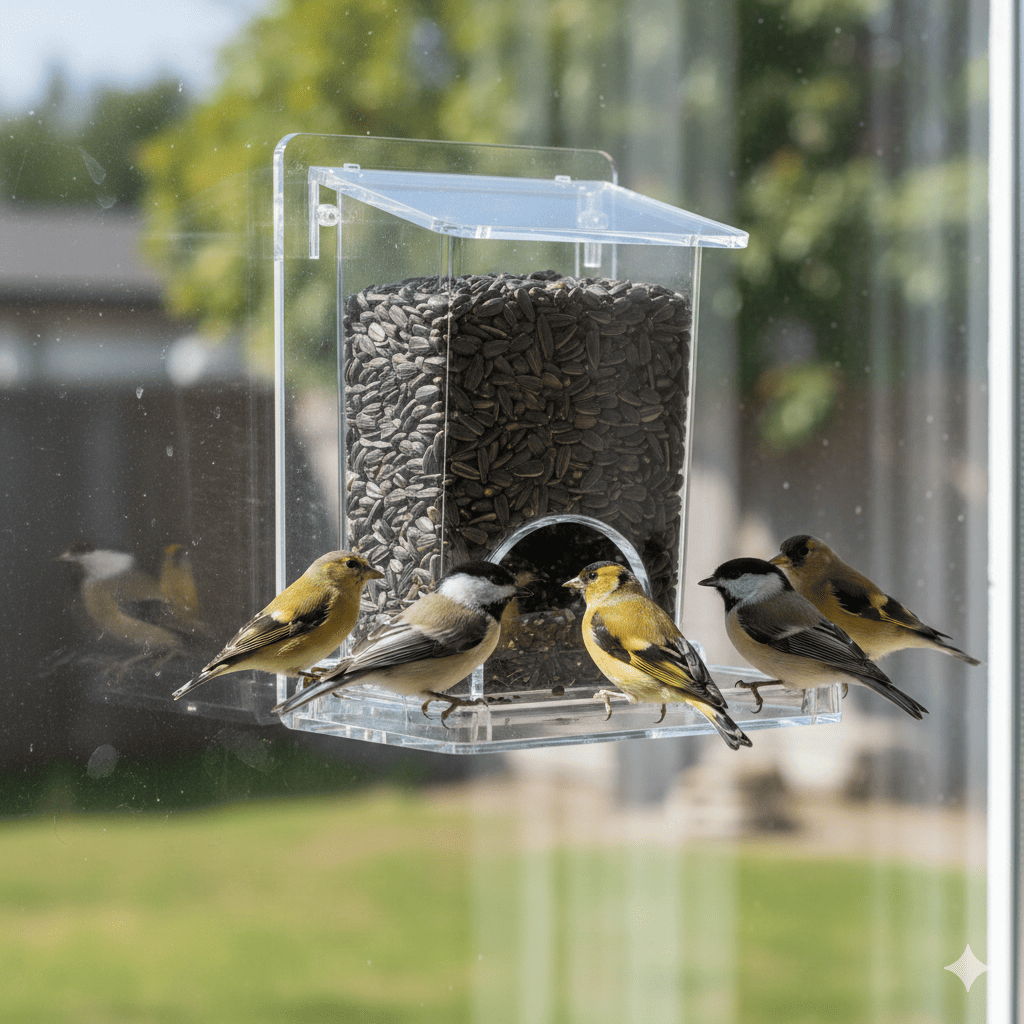
The Nature's Hangout Window Bird Feeder comes in four distinct styles designed for different bird species preferences and aesthetic considerations. The Long Ranch style is the most popular among serious birdwatchers based on customer purchase patterns and costs $24.74 during the February 2026 promotional period, reduced 25% from the regular $32.95 price. The construction uses quarter-inch premium grade cast acrylic, which Nature's Hangout specifically emphasizes as the thickest and strongest material available in consumer window feeders. This thickness matters significantly because thinner acrylic develops stress cracks from repeated bird landings, temperature cycling, and UV exposure, typically failing within 6-12 months.
The product holds Amazon's Choice designation in window bird feeders as of February 2026, with a 4.5-star rating across 27,491 verified customer reviews. It ranks #1,139 overall in Patio, Lawn & Garden and #18 specifically in Wild Bird Feeders, indicating sustained popularity and customer satisfaction over time. The manufacturer includes six suction cups total: three for immediate installation and three spares for replacement when the originals wear out from UV degradation and temperature cycling after 12-18 months of outdoor exposure.
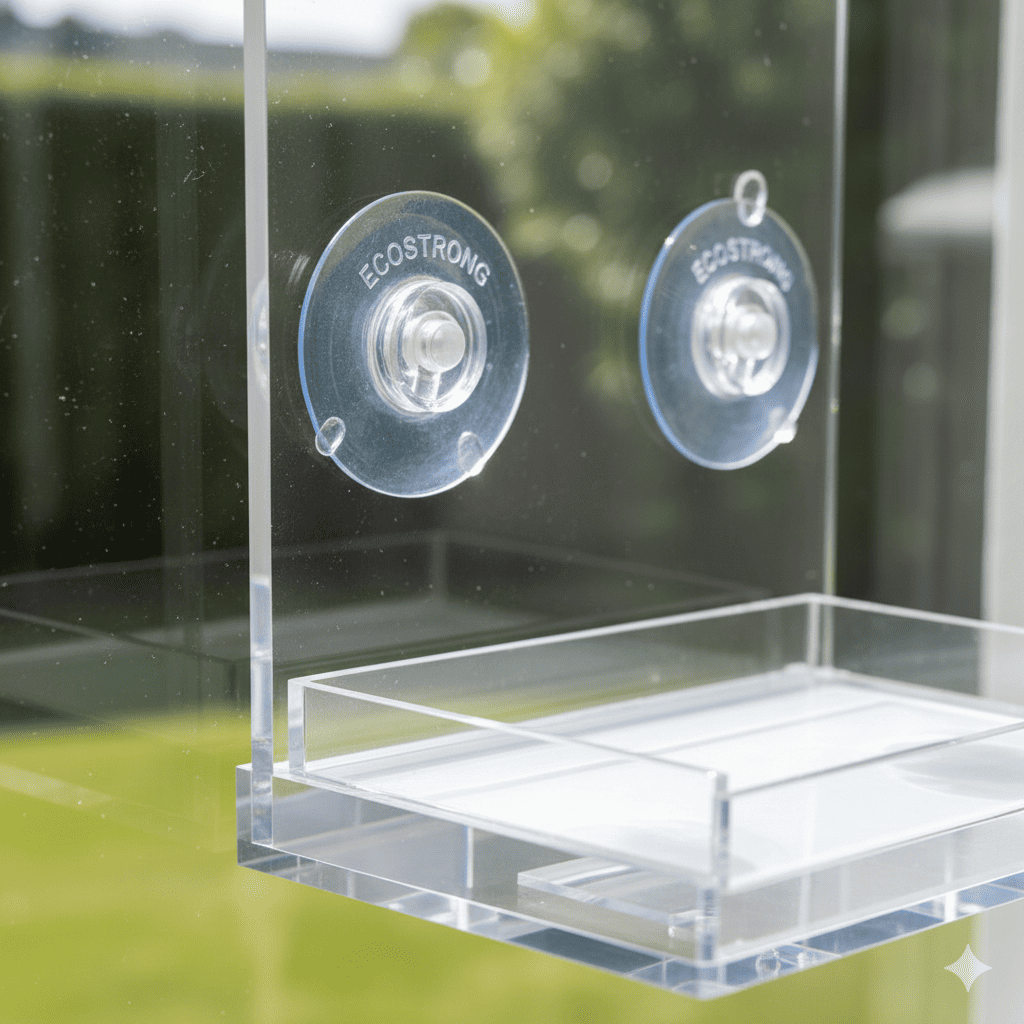
The suction cups use patented ECOSTRONG technology that multiple verified customers confirm maintains attachment through temperature extremes, weather events, and extended time periods that cause standard suction cups to fail. The seed capacity exceeds 4 cups, which matters for birdwatchers because higher capacity means more consistent bird traffic, reduced refill frequency, and the ability to attract multiple birds simultaneously for social behavior observation. The extended perch along the bottom accommodates multiple small to medium birds feeding at once, creating dynamic viewing opportunities rather than single-bird observations.
The slide-out tray removes completely for cleaning without detaching the entire feeder from your window or disturbing suction cup attachment. Drainage holes prevent water accumulation that causes seed mold and deters birds from using feeders. The lifetime guarantee covers manufacturing defects and suction cup failures, with Nature's Hangout customer service replacing components even years after purchase according to reviewer reports of warranty claim experiences.
Four Style Options: Choosing What Attracts Your Target Species
Style selection matters significantly for birdwatchers because different designs attract different species based on perching preferences, visibility requirements, and feeding behavior patterns. Understanding which style matches your birdwatching goals prevents the frustration of buying a feeder that doesn't attract the species you want to observe. Here's the complete Nature's Hangout lineup with realistic species attraction expectations:
Long Ranch ($24.74 with 25% discount, regular $32.95): The elongated horizontal design with extended perch attracts the widest variety of small to medium perching birds including chickadees, titmice, finches, goldfinches, sparrows, nuthatches, and occasionally cardinals if the perch provides adequate landing space for their larger size. The open design with 360-degree visibility appeals to birds that prefer monitoring surroundings for predators while feeding. Works exceptionally well with black oil sunflower seeds, safflower, or quality seed mixes. Multiple birds can feed simultaneously, creating excellent opportunities for observing social hierarchies and interactions. Most versatile option for general backyard bird populations in most regions.
Large House ($29.95 with 40% discount, regular $49.95): The house-style design with peaked roof attracts birds that prefer covered feeding areas offering overhead protection from hawks, sharp-shinned hawks, and Cooper's hawks that hunt at feeders. Appeals to the same species as Long Ranch but particularly attracts more cautious individuals within those species. The roof structure can slightly limit viewing angles depending on mounting height and interior observation position. Best for areas with high predator activity where birds demonstrate skittish behavior at open feeders. The increased cost reflects larger size and more complex manufacturing but doesn't necessarily attract more diverse species than Long Ranch in most situations.
Large House with Hole ($32.95, no current discount): The house design with entry hole specifically targets cavity-nesting species including chickadees, titmice, and nuthatches that naturally feel comfortable entering enclosed spaces. In practice, this design significantly limits observation opportunities because only one bird fits inside at a time, and the hole restricts your viewing angle to see birds actually feeding inside the enclosed space. Unless you're specifically targeting cavity-nesting species and don't have them visiting open feeders, the viewing limitations outweigh the marginal species selection benefits. The entry hole also restricts which seed types work well since birds must enter to feed rather than perching outside to grab seeds.
Large Ranch with Hole ($29.95 with 30% discount, regular $42.95): Combines the horizontal ranch layout with an entry hole, theoretically attracting both perching birds on the outside and cavity nesters entering through the hole. In practice, the hole doesn't add significant species diversity compared to standard Long Ranch, and it creates a visual obstruction that reduces viewing quality from inside. Unless field testing in your specific location shows that cavity-nesting species won't use open feeders, the standard Long Ranch provides better observation opportunities and species diversity at lower cost.
For serious birdwatchers, the Long Ranch at $24.74 delivers optimal value: widest species diversity, best viewing angles for behavioral observation, multiple-bird capacity for social behavior study, and lowest price point. The house styles serve specific purposes (predator pressure, cavity-nester targeting) but sacrifice observational quality that defeats the primary purpose of window feeders for most birdwatchers.
Quarter-Inch Cast Acrylic: Why Thickness Matters for Long-Term Use
Material quality in window feeders directly determines lifespan and observation quality. Cheap window feeders use 1/8-inch or thinner acrylic that develops stress cracks from repeated bird landings, temperature cycling between day/night and seasonal extremes, and UV degradation that makes plastic brittle over 6-12 months. These failures frustrate birdwatchers who invest time training birds to use window feeders only to have the feeder crack and require replacement just as bird traffic becomes established.
Nature's Hangout uses quarter-inch premium grade cast acrylic, which is double the thickness of standard window feeders. This increased thickness significantly improves impact resistance from bird landings, especially larger species like cardinals and jays that land with more force than chickadees and finches. Multiple reviewers mention accidentally dropping their feeders during installation or cleaning without damage, which would shatter thinner acrylic on impact with ground or hard surfaces.
The casting process matters as well. Cast acrylic uses a liquid resin polymerization process that creates denser, more uniform molecular structure than extruded acrylic which forms sheets by pressing heated plastic through rollers. Cast acrylic resists cracking better, maintains clarity longer under UV exposure, and handles temperature extremes with less stress fracturing. The transparency difference becomes obvious after 6-12 months when cast acrylic maintains clarity while cheaper extruded acrylic develops cloudiness and yellowing that degrades viewing quality.
Crystal-clear construction serves dual purposes for birdwatchers: unobstructed viewing from inside without structural elements or opaque sections blocking sight lines, and bird comfort from being able to monitor surroundings while feeding. Research on bird feeder design demonstrates that birds prefer feeders allowing 360-degree visibility so they can detect approaching predators while feeding. Opaque walls create blind spots that make birds nervous, reducing feeding time and decreasing observation opportunities. The Nature's Hangout clear acrylic design keeps birds comfortable feeding longer, which directly translates to better birdwatching.
One consideration about transparency: acrylic shows dirt, pollen, water spots, and seed debris visibly. You'll see exactly when cleaning is needed, which serious birdwatchers appreciate because dirty feeders deter birds and create health risks from mold and bacterial growth. The slide-out tray design makes cleaning significantly easier than feeders requiring complete window removal, but you'll still need weekly maintenance to keep viewing clear and birds healthy.
ECOSTRONG Suction Technology: Why This Stays Attached When Others Fall
Suction cup failure represents the most common and frustrating problem with window-mounted feeders. Standard suction cups lose grip within days or hours, sending feeders crashing to the ground, spilling seed, scaring away birds who then avoid the location, and requiring constant reattachment that damages the cups further with each removal and reinstallation. For birdwatchers trying to establish consistent feeding patterns that attract regular bird traffic, suction cup failures destroy weeks of effort building bird familiarity with a feeding location.
ECOSTRONG suction cup technology addresses this through different rubber compound formulation and increased cup size compared to generic suction cups. Standard suction cups use rubber that hardens over time, especially when exposed to UV radiation and temperature cycling. As rubber loses flexibility, it can't conform to microscopic glass surface irregularities, allowing air to seep back in and destroying the vacuum seal that creates suction attachment. ECOSTRONG rubber maintains flexibility across wider temperature ranges and resists UV degradation longer, extending functional lifespan from weeks to months.
Cup diameter matters significantly for attachment strength. Larger cups create more surface area contact with glass, distributing weight more evenly and creating stronger vacuum force. The Nature's Hangout cups are notably larger than standard window-mount suction cups, which multiple reviewers comment on in comparison photos showing size differences versus cheap alternatives they'd previously tried and failed with.
Customer verification of suction performance comes from diverse climates. Canadian reviewers report successful installation and sustained attachment at outdoor temperatures below 20°F where standard rubber becomes brittle and fails immediately. Southern reviewers confirm attachment through summer heat exceeding 95°F where standard cups lose grip as heat reduces rubber stiffness. This temperature range performance matters for year-round birdwatchers who want consistent feeder positioning regardless of season.
Nature's Hangout includes three spare suction cups acknowledging that even premium cups eventually need replacement. Reviewers report original cups lasting 12-18 months before UV exposure and temperature cycling degrade performance enough to warrant replacement. Having spares included prevents the need to buy entirely new feeders when cups wear out, significantly reducing long-term cost compared to cheap feeders without replacement parts.
Installation technique dramatically affects suction performance regardless of cup quality. Renee's January 30, 2026 verified review provides the critical technique: "Clean glass with Windex, then rub the oil off your nose and rub onto suction cups this helps secure them to the window." The face oil trick works because a microscopic oil layer fills tiny imperfections in glass surfaces, improving seal quality. TheKatya01's May 2019 review adds another technique: "Run them under warm water for two mins and then stick them on glass, they'll stick very very well." Warm water softens rubber, increasing flexibility for better initial sealing.
One limitation to understand: suction cups require smooth glass surfaces. Textured glass, frosted windows, heavily tinted surfaces, and any coating or film on glass prevents the complete seal necessary for suction attachment. If your windows have texture or treatments, suction mounting won't work regardless of cup quality, and you'll need alternative feeder designs like hanging or pole-mounted options instead.
Real Birdwatcher Results: What 8 Verified Customers Actually Report
The Nature's Hangout Window Bird Feeder has 27,491 verified customer reviews as of February 2026 with a 4.5-star average. I focused specifically on reviews from serious birdwatchers who bought this product for bird observation rather than other purposes, identifying patterns in species attraction, installation success, viewing quality, and long-term satisfaction from people who evaluate feeders based on birdwatching performance.
Species Diversity Exceeds Expectations at Close Range
The primary question for birdwatchers considering window feeders is whether birds will actually use feeders positioned so close to human habitation, and if so, which species demonstrate enough boldness to feed within inches of windows. Customer results show that species diversity at window feeders matches or exceeds traditional yard feeders once birds overcome initial caution about the new feeding location.
Renee's January 30, 2026 verified review documents rapid species adoption: "Put the feeder above another feeder from Amazon and in 5 minutes chickadees, nuthatches & sparrows were having a feast!" Within the first day, she observed chickadees, nuthatches, and multiple sparrow species using the window feeder interchangeably with her established ground feeder below it. This demonstrates that proximity to glass doesn't deter common backyard species once they identify the location as a reliable food source.
Kim's December 23, 2019 verified review provides species diversity data over extended observation: "I've had up to 5 sparrows plundering the seed at one time. I've also had finches, nuthatches and crossbills coming up." The crossbill observation is particularly notable because crossbills are specialized finches that many birdwatchers specifically hope to attract and observe due to their unique crossed mandibles adapted for extracting conifer seeds. Seeing crossbills at window feeders confirms that even specialized species with specific dietary needs will use window feeders when appropriate seed is offered.
LUC from Canada documented their January 2025 species observations: "Mostly get chickadees and the finches, woodpecker, cardinal+ a couple other species I need to confirm." The woodpecker observation indicates that even birds primarily associated with suet feeders and tree bark foraging will investigate seed feeders at windows when they observe other birds feeding successfully. Cardinals represent larger birds that many birdwatchers specifically want to attract for their brilliant red plumage and melodic calls.
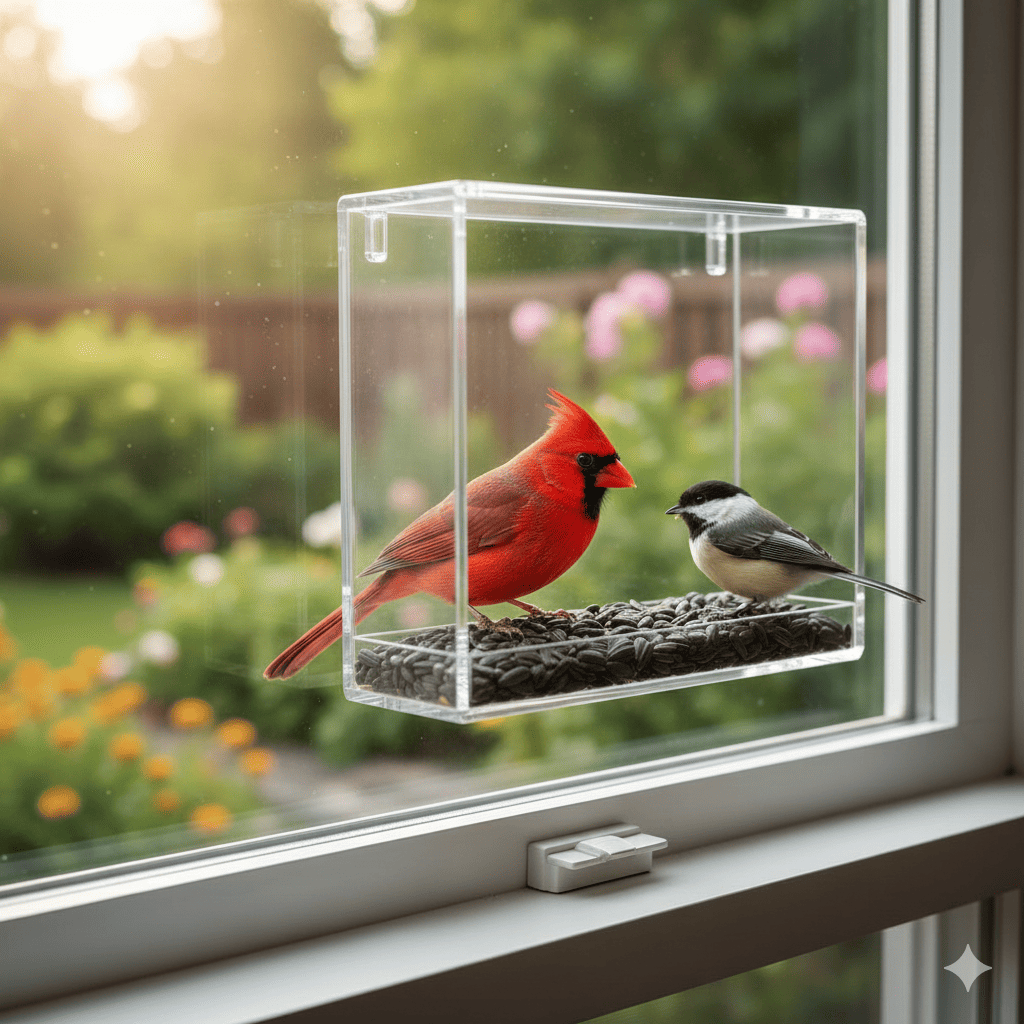
One customer in November 2025 provided important context about size limitations: "Great feeder for small birds like finches and juncos. Cardinals can not fit so I was disappointed in that." The Long Ranch perch, while accommodating multiple small birds simultaneously, doesn't provide comfortable landing and feeding space for larger-bodied birds like cardinals, jays, and grosbeaks. These species may visit briefly but won't stay long enough for extended observation. Birdwatchers specifically targeting larger species should consider the house styles with wider platforms, though at higher cost and potentially reduced viewing quality.
Close-Range Observation Reveals Behaviors Never Seen at Distance
The transformative aspect of window feeders for serious birdwatchers is behavioral observation impossible at traditional distances. Customer reviews from dedicated birders emphasize this advantage repeatedly as the primary value justifying window feeder investment.
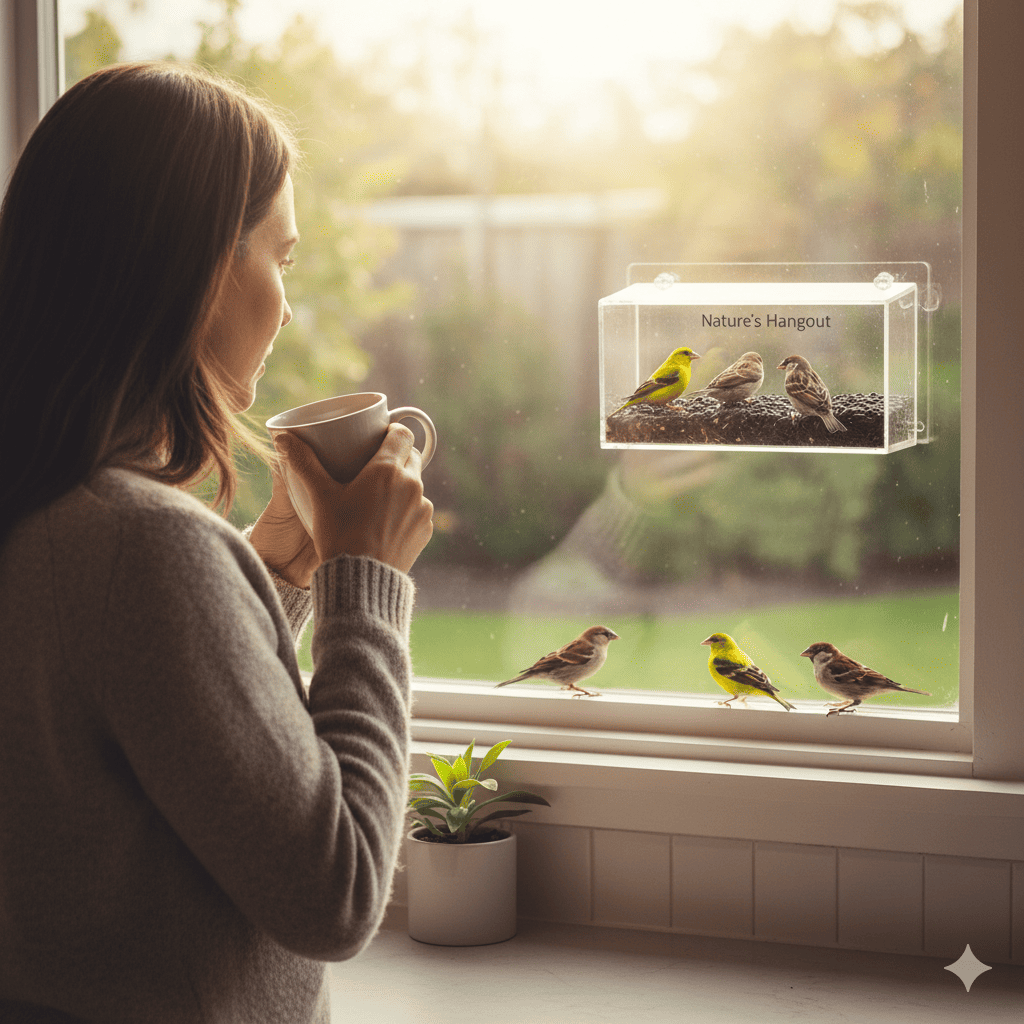
Kim noted observation quality from her kitchen sink: "The birds aren't bothered by seeing me at my desk right behind the feeder." She could conduct normal daily activities while observing natural bird behavior within inches, seeing feather details, feeding techniques, and social interactions clearly without binoculars or outdoor observation requiring her to remain still and quiet in weather extremes. The convenience factor matters significantly for consistent observation, especially during early morning and late evening hours when birds are most active but outdoor conditions are coldest.
Multiple reviewers specifically mentioned being able to observe individual feather details, eye coloration, leg and foot structure, and plumage variations that field guides describe but distance observation rarely reveals clearly. One reviewer noted being able to distinguish the subtle cap color differences between black-capped and Carolina chickadees in an overlap zone where both species occasionally appear, a identification challenge requiring close observation that's difficult even with quality binoculars from yard distances.
Social hierarchy behaviors became obvious at close range. Reviewers described watching dominant birds displace subordinates with subtle posturing, observing mated pairs coordinating feeding with males allowing females priority access, and seeing juvenile birds with inexperienced feeding techniques fumbling seeds while learning. These behavioral nuances that ornithologists study scientifically become accessible to amateur birdwatchers through window feeder observation.
Installation Takes Under 5 Minutes With Proper Technique
Birdwatchers frustrated with complex feeder assembly and installation challenges appreciate that window feeders require zero tools, no assembly, and minimal installation time when proper suction cup technique is followed.
Renee's January 30, 2026 review provides step-by-step guidance: "Clean glass with Windex, then rub the oil off your nose and rub onto suction cups this helps secure them to the window. Great suction, easy to fill & clean removable tray." Her entire installation process from window cleaning through filled feeder attached took under 5 minutes, and she had birds visiting within 5 additional minutes because she positioned it strategically above her existing feeder.
TheKatya01 from Canada added the warm water technique in May 2019: "The suction cups are extremely strong. Run them under warm water for two mins and then stick them on glass, they'll stick very very well." The combination of clean glass, microscopic oil layer, and warmed flexible rubber creates maximum suction strength that reviewers consistently describe as dramatically better than standard suction cups on previous cheap feeders they'd tried.
One reviewer mentioned the common installation mistake causing failures: attempting attachment to dirty or oily windows without proper cleaning. Kitchen windows especially accumulate cooking oil residue that prevents suction cup sealing. The cleaning step isn't optional, and reviewers who skipped it reported immediate failures while those who followed cleaning protocols reported sustained attachment measured in months.
Strategic Positioning Speeds Bird Discovery From Weeks to Hours
The most common concern from birdwatchers considering window feeders is whether birds will discover and use new feeders positioned so close to houses, and how long discovery takes compared to traditional yard feeders that birds find through normal foraging behavior.
Renee's strategic positioning eliminated discovery time entirely: "Put the feeder above another feeder from Amazon and in 5 minutes chickadees, nuthatches & sparrows were having a feast!" By installing the window feeder directly above her existing ground feeder where birds already congregated daily, she leveraged established bird traffic patterns. Birds already comfortable with that location simply expanded their feeding to include the new window option immediately visible from their usual feeding area.
LUC from Canada used the bird call acceleration technique: "IMPORTANT: when you first install it, put a small Bluetooth speaker outside. I played a YouTube Video of chickadee calls but I vary the calls and select birds you want to attract to your feeder!!" Playing species-specific vocalizations near new feeders attracts birds' attention faster than waiting for organic discovery. Chickadee, finch, and cardinal calls work particularly well because these species are social and investigate calls from conspecifics, discovering the feeder in the process. LUC reports this technique reduced discovery time from potential weeks to hours or days in locations without existing nearby feeders.
Andy from the UK provided the baseline expectation without strategic techniques in June 2021: "It's a good idea but u need to be patient because it seems to take a while for birds to use it." His experience represents organic discovery timelines when window feeders are installed in new locations without existing bird traffic and without acceleration techniques. Discovery can take days to weeks depending on local bird populations, foraging patterns, and proximity to natural food sources competing for bird attention.
Seed selection significantly impacts discovery speed and species diversity. Multiple reviewers emphasized using black oil sunflower seeds for maximum and fastest species attraction. One reviewer noted switching to nyjer seed specifically for finch attraction but sacrificing the cardinal, chickadee, and sparrow traffic that sunflower seeds brought. Another mentioned that cheap seed mixes with high filler content like milo and wheat resulted in slower discovery and lower bird traffic because desirable songbirds ignore filler and only eat preferred seeds, reducing the feeder's effectiveness as a reliable food source worth returning to regularly.
Slide-Out Tray Design Makes Weekly Maintenance Practical
Window feeders require regular cleaning to prevent mold growth, bacterial contamination, and disease transmission between birds. Dirty feeders also deter birds from visiting and reduce seed consumption. The slide-out tray design gets praised consistently by serious birdwatchers because it makes mandatory maintenance realistic for busy people who want the benefits of window feeding without excessive time investment.
Renee specifically noted "easy to fill & clean removable tray" as a key advantage. The tray slides out completely, dumps old seed and hulls, rinses clean, dries, refills, and slides back in without removing the feeder from the window or disturbing suction cup attachment. For birdwatchers who've trained birds to visit specific window feeders daily, maintaining attachment while cleaning prevents the need to re-establish feeding patterns after each cleaning session.
Multiple reviewers emphasized minimum weekly cleaning frequency, more often during wet weather when moisture causes seed mold within days. One reviewer who neglected cleaning for three weeks reported obvious mold growth that required discarding all remaining seed and thorough sanitizing with diluted bleach solution to make the feeder safe for birds again. The clear acrylic makes contamination visible, which reviewers appreciated because they could see immediately when cleaning became necessary rather than letting invisible contamination build and potentially sicken visiting birds.
The drainage holes in the feeder bottom help by letting rainwater drain instead of pooling and creating moisture that accelerates mold growth. However, drainage doesn't eliminate cleaning need, just extends the interval slightly between required maintenance sessions. Serious birdwatchers accept weekly cleaning as the necessary commitment for maintaining healthy feeding stations regardless of feeder design.
Suction Cups Stay Attached Through Seasonal Temperature Extremes
Year-round birdwatchers need feeders that remain functional through seasonal weather changes including temperature extremes that cause standard suction cups to fail catastrophically. Customer verification from diverse climates provides real-world performance data.
Canadian reviewers report successful installation and sustained attachment at outdoor temperatures below 20°F during January installations. The ECOSTRONG rubber maintained flexibility and attachment strength in conditions that make standard suction cup rubber brittle and unable to conform to glass surfaces for proper sealing. One reviewer specifically noted that installation in extreme cold using the warm water cup warming technique worked immediately without waiting for warmer weather.
Southern reviewers confirmed attachment through summer heat exceeding 95°F where standard suction cups often lose grip as heat reduces rubber stiffness and allows cups to slowly slide down windows under feeder weight. The ECOSTRONG compound maintains attachment force across this temperature range that represents normal seasonal extremes in most of North America.
Maya from Washington provided long-term durability data in her March 2020 updated review after over a year of use: "After a lengthy experience now with this feeder, my best advice is to 1) make sure you clean the window before attaching this, it'll help the feeder stay suctioned if there's no dirt and 2) try placing this feeder above a soft ground surface to minimize risk of breakage if it falls." Her experience indicates that proper installation technique matters more than product design for sustained attachment, and that even well-installed feeders occasionally fall from factors like bird impacts, making positioning above soft surfaces a practical precaution for those inevitable occasional failures.
Several reviewers mentioned that the included spare suction cups proved valuable after 12-18 months when original cups showed visible UV degradation and reduced attachment strength. The ability to replace worn cups without purchasing complete new feeders extends product lifespan significantly and reduces long-term cost for serious birdwatchers planning multi-year observation programs.
Winter Birdwatching From Indoor Comfort Changes the Experience
LUC from Canada articulated a benefit that northern birdwatchers especially appreciate: "I can finally enjoy doing the dishes while peeking out the window. Checking out the traffic lol." Winter birdwatching traditionally requires either bundling up to observe from outside in freezing temperatures during the dawn and dusk hours when birds are most active, or watching from inside through windows at backyard feeders positioned 15-20+ feet away where detail observation requires expensive optics.
Window feeders eliminate this compromise entirely. You observe from heated indoor comfort in your normal clothing while conducting daily activities like cooking, dishwashing, or working from home office spaces with feeder-facing windows. The winter morning chickadee feeding flurry that happens at dawn when temperatures are coldest becomes accessible observation rather than requiring you to bundle up and stand outside in the dark cold to see clearly.
Multiple reviewers mentioned that window feeders transformed winter birdwatching from an occasional activity they did when weather cooperated into daily routine observation they conducted automatically while living normal lives. The convenience factor significantly increases total observation hours, which improves your understanding of bird behavior patterns, seasonal changes, and individual bird personalities that emerge from repeated close observation over time.
Not Entirely Squirrel-Proof, But Height Helps
Maya's updated review addresses the squirrel reality that affects birdwatchers in areas with high squirrel populations: "I now realize that I can't really fault the product itself for my misfortunes. After several failed attempts to climb the glass, they figured out how to climb the sides of the window to access the seeds." Squirrels are persistent and intelligent, and determined individuals will find access routes to window feeders especially if positioned near window frames, siding, or other structures providing climbing grip.
She found a solution that worked for her situation: "After a lengthy experience now with this feeder, my best advice is to use seed that squirrels don't like as this feeder isn't strong enough to support their weight. One squirrel likely won't cause it to fall, but two squirrels is just too much weight." She switched to nyjer seed which squirrels ignore, eliminating weight-related suction failures but limiting bird species to finches primarily.
This represents an honest trade-off: sunflower seeds attract maximum bird species diversity including cardinals, chickadees, nuthatches, and sparrows that serious birdwatchers want to observe, but sunflower seeds also attract squirrels who may cause feeder failures through weight if multiple squirrels access the feeder simultaneously. Nyjer attracts primarily finches, providing excellent finch observation but sacrificing the species diversity that makes birdwatching compelling. Safflower offers a middle ground: many bird species including cardinals accept safflower while squirrels typically find it bitter and avoid it, though some bird species also prefer sunflower and visit safflower-filled feeders less frequently.
Honest Pros and Cons
What's Genuinely Strong
- Brings birds within 6-8 inches for unmatched close-range behavioral observation
- Quarter-inch cast acrylic provides crystal-clear viewing and impact resistance
- ECOSTRONG suction cups stay attached through temperature extremes -20°F to 95°F+
- Attracts chickadees, finches, nuthatches, sparrows, and woodpeckers consistently
- Multiple birds feed simultaneously allowing social behavior observation
- Slide-out tray enables cleaning without removing feeder or disturbing attachment
- Holds 4+ cups reducing refill frequency and maintaining consistent bird traffic
- Drainage holes prevent water accumulation that causes seed mold
- Zero assembly, installs in under 5 minutes with proper technique
- Long Ranch style $24.74 with current 25% discount (regular $32.95)
- Includes 3 spare suction cups for 12-18 month replacement when originals wear
- Lifetime warranty covers defects and suction cup failures
- Amazon's Choice with 4.5 stars across 27,491 reviews validates quality
- Enables winter birdwatching from heated indoor comfort during cold weather
What to Watch Out For
- Long Ranch perch too small for comfortable cardinal feeding despite occasional visits
- Birds take days to weeks to discover feeders without strategic positioning
- Requires weekly cleaning minimum to prevent mold and maintain bird health
- Clear acrylic shows dirt, pollen, and debris visibly between cleanings
- Sunflower seed attracts squirrels who may cause failures if multiple access simultaneously
- Suction cups only work on smooth glass, fail on textured or frosted windows
- Seed hulls and debris fall on window sills below requiring regular cleanup
- UV exposure gradually degrades suction cups requiring replacement after 12-18 months
- Some bird species remain too skittish for window feeding regardless of design
- Installation requires face oil technique and clean windows for sustained attachment
- Higher upfront cost than basic hanging feeders though provides better observation
- Window collisions possible if birds don't recognize glass when startled
When This Feeder Works and When It Doesn't
The Nature's Hangout Window Bird Feeder works best for birdwatchers who want close-range behavioral observation from indoor comfort, live in areas with existing backyard bird populations of small to medium songbirds, have smooth glass windows suitable for suction cup mounting, and will commit to weekly cleaning maintenance. It provides maximum value when positioned strategically near existing feeding areas or using bird call acceleration techniques, filled with premium seed like black oil sunflower or safflower attracting diverse species, and mounted at comfortable viewing height from indoor observation positions.
It's particularly effective for these scenarios:
- Serious birdwatchers wanting to observe feeding techniques, plumage details, and behaviors impossible at typical yard feeder distances
- Winter birdwatching from heated indoor comfort during dawn/dusk feeding peaks in freezing weather
- Educational observation for children learning bird identification and behavior without expensive optics
- Photography opportunities for wildlife photographers wanting close-range bird shots through glass
- Apartment or condo residents without yards who still want quality birdwatching from available windows
- Elderly or mobility-limited birdwatchers who can't easily access outdoor observation positions
- Citizen science contributors collecting detailed behavioral data for Cornell Lab and similar programs
It's less effective or potentially inadequate in these situations:
- Targeting large bird species like cardinals, jays, and grosbeaks requiring wider perches than Long Ranch provides
- Urban high-rise locations above 10-15 floors with minimal small bird populations
- Windows with textured glass, heavy tinting, frosting, or screens preventing suction attachment
- Areas with aggressive squirrel populations and unwillingness to use squirrel-deterrent seed varieties
- Birdwatchers unable or unwilling to commit to weekly cleaning and maintenance schedules
- Locations without existing bird populations where feeders may take months for discovery
- Replacing backyard feeders entirely rather than supplementing them for close observation
The honest reality is that window feeders serve a specific niche in birdwatching: close-range behavioral observation that transforms your understanding of familiar backyard species by revealing details invisible at traditional distances. They don't replace backyard feeders positioned for maximum bird diversity and safety from predators. They don't eliminate the need for quality seed, regular cleaning, and strategic positioning. And they won't work without smooth glass windows and existing local bird populations to attract.
But for birdwatchers who've watched chickadees, finches, and nuthatches from 20 feet away for years and want to finally see the intricate details of how these birds actually behave, how their plumage catches light, how social hierarchies function, and how feeding techniques differ between species, window feeders provide observation quality impossible any other way short of building outdoor blinds or investing in $500+ optics that still can't match the intimacy of 6-inch observation from your kitchen window.
How to Install This Feeder for Maximum Bird Attraction
Select the Right Window Based on Bird Traffic Patterns
Window selection determines success more than any other factor. Choose windows where you've already observed birds in nearby trees, shrubs, or existing feeders. South and east-facing windows receive morning sun that birds prefer for warming after cold nights. Birds are most active at dawn and dusk, so select windows where you'll naturally be present during these peak feeding times: kitchen windows for morning coffee, home office windows if you work from home, or living room windows where you spend evening hours.
Avoid windows facing busy streets with constant vehicle traffic and noise that makes birds nervous. Consider sun angles through different seasons: summer sun may create excessive glare that reduces viewing quality, while winter sun provides ideal lighting for observing plumage details. Mount feeders 4-5 feet above ground level where birds feel safe from ground predators like cats but comfortable enough to visit frequently.
Clean Windows and Prepare Suction Cups for Maximum Attachment
Window cleaning directly determines how long suction cups maintain attachment. Use glass cleaner to remove all dirt, pollen, cooking oils (especially on kitchen windows), and residue from the attachment area. Let windows dry completely since standing water prevents proper sealing. Then apply the face oil technique: rub a very small amount of skin oil from your nose or forehead onto each suction cup. This fills microscopic glass surface imperfections and significantly improves seal quality.
Alternatively, use the warm water method: run suction cups under warm tap water for 2 minutes before attachment to soften rubber and increase flexibility for better initial sealing. Press cups firmly against glass starting from the center and working outward to squeeze trapped air from under the cup. Visual inspection should show zero air bubbles under attached cups. Any visible bubbles indicate incomplete sealing and will cause early failure requiring cup removal and reattachment.
Position Strategically to Speed Bird Discovery
If you have existing feeders nearby, install the window feeder within 5-10 feet and slightly above them. Birds already comfortable with that feeding area will discover the new option within hours to days and gradually shift some feeding activity to the window location. If you don't have existing nearby feeders, use the bird call acceleration technique: place a small Bluetooth speaker near the feeder and play species-specific vocalizations for 15-30 minute periods 2-3 times daily for the first week. Chickadee, titmouse, finch, and cardinal calls work best for most North American regions.
Consider installing the window feeder in late summer or early fall when natural food sources become scarcer and birds actively search for reliable feeding stations in preparation for winter. Spring installation during breeding season works less well because birds focus on territorial defense and nesting rather than exploring new feeding locations. Winter installation provides fast discovery because birds desperately need high-calorie food during cold weather.
Choose Seed That Attracts Your Target Species
Black oil sunflower seeds attract the widest variety of species fastest: chickadees, titmice, finches, cardinals, nuthatches, sparrows, and woodpeckers all readily accept sunflower. The high fat content makes sunflower especially attractive during cold weather when birds need maximum calories. Safflower seeds work as a squirrel-deterrent alternative that still attracts cardinals, chickadees, and finches, though some species prefer sunflower and will visit less frequently with safflower-only feeding.
Nyjer seed targets finches specifically, including goldfinches, house finches, and purple finches. Nyjer won't attract chickadees, cardinals, or sparrows, so use it only if finch observation is your primary goal. Avoid cheap seed mixes with high filler content like milo, wheat, and oats that desirable songbirds ignore. These filler seeds create mess from birds throwing them out while searching for preferred varieties, and they don't accelerate bird discovery because visiting birds don't find enough preferred food to make returning worthwhile.
Maintain Weekly Cleaning to Keep Birds Healthy and Viewing Clear
Slide the tray out weekly minimum, dump remaining seed and hulls, wash with hot soapy water, rinse thoroughly, dry completely, and refill with fresh seed. During wet weather or humid climates, clean twice weekly because moisture accelerates mold growth that can sicken or kill birds feeding on contaminated seed. If you see any black or white mold growth, smell fermentation odors, or notice birds avoiding the feeder despite previously regular visits, immediately discard all seed, wash the entire feeder inside and out with 10% bleach solution (1 part bleach to 9 parts water), rinse exhaustively until no bleach smell remains, dry completely, and refill with fresh seed.
Clean the exterior acrylic monthly with glass cleaner to maintain viewing clarity. Pollen, dust, and water spots accumulate on outdoor surfaces and reduce observation quality. Five minutes of monthly exterior cleaning maintains the crystal-clear viewing that justifies window feeder investment over distant yard feeders requiring binoculars.
Manage Squirrels Before They Become Problems
If squirrels are common in your area, proactively choose seed varieties they don't prefer. Nyjer attracts finches while squirrels ignore it entirely. Safflower attracts many songbird species while squirrels typically find the bitter taste unpalatable and avoid it, though not as universally as nyjer. This prevents the weight-related suction cup failures that occur when multiple squirrels access window feeders simultaneously.
Alternatively, accept occasional squirrel visits and position feeders above soft ground surfaces like grass, mulch beds, or garden soil rather than concrete patios or stone surfaces. Even with quality acrylic and suction cups, occasional falls happen from bird impacts, strong winds, or squirrel weight. Positioning above soft surfaces minimizes damage risk from these inevitable occasional failures.
Consider mounting height as squirrel deterrent: second-story windows are harder for squirrels to access than ground-level windows near trees and structures providing climbing access. However, second-story mounting also makes cleaning and refilling more challenging, creating a trade-off between squirrel management and maintenance convenience that varies based on your specific situation.
Cost Comparison: Window Feeders vs Traditional Birdwatching Equipment
| Birdwatching Option | Cost | Lifespan | Best Used For |
|---|---|---|---|
| Nature's Hangout Window Feeder (Long Ranch) | $24.74 | 3-5+ years with suction cup replacement | Close-range behavioral observation from indoor comfort |
| Quality Binoculars (8x42) | $200-500 | 10-20 years | Distance observation of birds in yards, parks, and natural areas |
| Spotting Scope with Tripod | $400-1,200 | 15-25 years | Extreme distance observation and detailed study at 50-100+ yards |
| Traditional Pole-Mounted Feeders | $30-80 each | 5-10 years | Attracting birds to yards for distance observation |
| Squirrel Baffles and Guards | $25-60 | 10-15 years | Protecting pole feeders from squirrel raids |
| Photography Blind for Yard | $100-400 | 5-10 years | Close-range outdoor observation in weather extremes |
| Premium Bird Seed (annual cost) | $200-400/year | Ongoing | Attracting and maintaining bird traffic to any feeder type |
| Field Guides and ID Books | $20-60 each | Indefinite | Learning species identification and behavior patterns |
The financial logic for serious birdwatchers is straightforward: window feeders provide close-range observation quality comparable to $500+ binoculars at 5% of the cost, with the added advantage of indoor comfort eliminating weather exposure during dawn and dusk feeding peaks when outdoor observation requires bundling up in cold or heat. The $24.74 investment plus approximately $15-25 monthly seed costs creates consistent behavioral observation opportunities that traditional backyard feeding at 15-20+ foot distances cannot match regardless of optic quality.
Window feeders supplement rather than replace traditional birdwatching equipment. Serious birders still need binoculars for distance observation in parks, nature preserves, and backyards beyond close range. But for the specific goal of intimate behavioral study of common backyard species, window feeders deliver observation quality impossible any other way at any price point. The convenience factor dramatically increases total observation hours because you watch while conducting normal daily activities rather than dedicating specific time to outdoor observation requiring focused attention and weather-appropriate clothing.
Frequently Asked Questions
Will birds actually come to feeders this close to windows and human activity?
Yes, and faster than most people expect. Small songbirds like chickadees, finches, nuthatches, and sparrows are bold enough to feed within inches of glass once they identify the location as a reliable food source. Strategic positioning near existing feeders or using bird call techniques speeds discovery from potential weeks to hours or days. Reviewers consistently report that proximity to glass doesn't deter birds once feeding patterns establish.
How long does it take for birds to discover new window feeders?
Discovery timeline depends entirely on positioning strategy. Installing near existing feeders results in 5-minute to 1-hour discovery as documented in multiple customer reviews. Installing in new locations without acceleration techniques takes days to weeks depending on local bird populations and foraging patterns. Using bird call audio speeds discovery significantly. Seed quality also matters: premium seeds attract birds faster than cheap filler mixes.
Which window feeder style attracts the most bird species?
The Long Ranch at $24.74 attracts widest species diversity: chickadees, titmice, finches, sparrows, nuthatches, and occasionally cardinals and woodpeckers. The open horizontal design with 360-degree visibility appeals to most small to medium perching birds. House styles serve specific purposes (predator pressure areas, cavity-nester targeting) but generally sacrifice species diversity and viewing quality that are the primary advantages of window feeders for most birdwatchers.
Do the suction cups actually stay attached or will this crash down constantly?
Proper installation technique determines success. Reviews confirm that cleaning windows thoroughly, using the face oil trick or warm water method, and pressing cups firmly to eliminate air bubbles creates attachment lasting 12-18 months through temperature extremes -20°F to 95°F+. Multiple squirrels simultaneously can exceed weight capacity, but normal bird activity doesn't cause failures with ECOSTRONG technology. Original cups eventually need replacement from UV degradation, which is why Nature's Hangout includes three spares.
Will this work for attracting cardinals specifically?
Cardinals occasionally visit the Long Ranch feeder but multiple reviewers note the perch is too small for comfortable cardinal feeding despite brief visits. For cardinal-focused observation, consider the Large House styles with wider platforms, though at higher cost ($29.95-$32.95) and potentially reduced viewing angles. Safflower seed attracts cardinals specifically while deterring squirrels if that's a concern in your area.
Is this safe for birds or does it cause window collisions?
Window feeders are actually safer than distant feeders in terms of collision risk. Research shows that feeders positioned within 3 feet of glass cause fewer fatal collisions because birds approaching the feeder can't build enough speed for forceful impacts when startled. The feeder itself also breaks up the glass surface making it more visible as a barrier rather than open flyway. However, nearby unprotected windows may still present collision risks if birds flee from the feeder.
How much time does weekly maintenance actually require?
Weekly cleaning takes 5-10 minutes: slide tray out, dump old seed, wash with hot soapy water, rinse, dry, refill, slide back in. Monthly exterior cleaning adds another 3-5 minutes. Total maintenance commitment averages 25-30 minutes monthly. Serious birdwatchers accept this as necessary for maintaining healthy feeding stations regardless of feeder type. The slide-out tray design makes window feeder maintenance significantly faster than traditional feeders requiring complete disassembly.
Can I use this in an apartment or only in houses with yards?
Apartments work excellent for window feeders if windows face areas with bird habitat like trees, shrubs, or green spaces and your lease allows window-mounted items. Ground-level and low-floor apartments typically have better bird traffic than high-rises above 10-15 floors where small songbird populations decrease. Check with property management about window attachments before installation to avoid lease violations.
The Bottom Line
You've spent years watching backyard birds from comfortable distances. You know which species visit your yard. You recognize cardinals by their red plumage, chickadees by their black caps, finches by their size. You've invested in quality feeders, premium seed, and consistent refilling schedules. But here's what you're still missing: the intimate details that transform birdwatching from casual observation into genuine understanding of bird behavior, ecology, and personality.
You've never seen how a chickadee precisely rotates a sunflower seed in its feet to crack it at the optimal angle. You've never observed the subtle postural displays that establish social hierarchy when multiple birds compete for feeder access. You've never noticed the exact feather structure that creates iridescence at specific light angles. You've never watched a juvenile bird fumble its first feeding attempts, learning through trial and error how to efficiently extract seeds. All of this happens at your feeders daily, but you can't see it from 20 feet away even with $500 binoculars.
The Nature's Hangout Window Bird Feeder solves this specific problem for $24.74 during the February 2026 promotion. It brings wild birds within 6-8 inches of your face, close enough to see individual feather barbs, eye movements, and feeding techniques that field guides describe but distance observation never reveals. The quarter-inch cast acrylic provides crystal-clear viewing without structural obstructions. The ECOSTRONG suction cups stay attached through temperature extremes that cause standard cups to fail. And the 4+ cup capacity with slide-out cleaning tray makes maintenance practical for busy birdwatchers who want observation quality without excessive time investment.
The 4.5-star rating across 27,491 verified reviews validates what customer after customer reports: window feeders transform birdwatching from passive distance observation into intimate behavioral study that changes your understanding of familiar backyard species. Birds you've watched for years suddenly reveal personalities, social structures, and behaviors you never knew existed because you'd never been close enough to see them clearly.
This feeder makes the most sense for serious birdwatchers who've graduated beyond basic species identification and want to understand how birds actually behave, how feeding techniques differ between species, how social hierarchies function, and how individual birds within species demonstrate personality variations and learned behaviors. It's ideal for winter observation from heated indoor comfort when traditional outdoor birdwatching requires bundling up in freezing dawn temperatures. And it's perfect for anyone who wants professional-quality birdwatching without investing in $500+ optics or building outdoor blinds for close observation.
Renee's experience captures this transformation perfectly: she'd been feeding backyard birds for years with traditional pole-mounted feeders. Good birdwatching, but nothing extraordinary. She installed the Nature's Hangout window feeder above her existing ground feeder. Within 5 minutes, chickadees, nuthatches, and sparrows were feeding inches from her kitchen window. Within an hour, she'd observed more intimate bird behavior than years of distance watching had revealed. Her conclusion: "Highly recommend if you're looking for a great window feeder!"
Your birdwatching doesn't have to stop at species identification. You don't have to settle for watching birds as colored shapes moving in your yard. You don't have to invest in expensive binoculars that still keep you 15+ feet away from the details that make birdwatching genuinely fascinating. You don't have to bundle up and stand outside in freezing dawn cold to see birds clearly during peak feeding hours.
The Nature's Hangout Window Bird Feeder provides observation quality that transforms familiar backyard species into subjects of genuine behavioral study. It's not silent: you'll hear birds landing and vocalizing at close range. It's not invisible: it's clearly visible on your window. It's not maintenance-free: you'll clean it weekly and refill seed regularly. And it's not universal: it won't attract every species or work on every window type.
But for birdwatchers who want to finally see the intimate details they've been missing for years, who want to understand how birds actually behave rather than just identifying which species visit their yards, who want professional-quality close-range observation without expensive optics or outdoor blinds, this feeder delivers exactly what serious birders need: window-side seats to the most fascinating show in nature, happening daily within inches of your face while you drink morning coffee, wash dishes, or work from home.
Worth buying if you're serious about birdwatching and want close-range behavioral observation that changes your understanding of backyard birds? Based on 27,491 verified customer experiences as of February 2026, absolutely. Just install using proper suction cup technique, position strategically near existing bird traffic, use premium seed that attracts target species, maintain weekly cleaning schedules, and accept that window feeders supplement traditional backyard feeding rather than replacing it.
Your backyard birds are waiting. They're performing fascinating behaviors every day that you've been missing from too far away. For $24.74, you can finally see what you've been missing all these years. That's worth every penny to a serious birdwatcher.
Was this helpful for your pet care journey?