How To Stop Dog Chewing: The Real-Life Guide That Actually Works (2026)
Your dog has turned your home into a chew toy. Shoes disappear, remote controls grow teeth marks, and chair legs look like beaver projects. You shout “no,” hide things on higher shelves, buy random toys, and still come home to destruction. This guide explains why dogs chew in the first place (teething, boredom, anxiety, hunger, and simple exploration), what you must change today in your home setup, and how to redirect chewing calmly without shouting or punishment. You’ll learn how to puppy-proof your house, which chew toys actually satisfy real chewing needs, how to use taste deterrent sprays safely, and how to build a daily routine that burns mental and physical energy. Clear warning signs show when chewing is really a symptom of separation anxiety or a medical issue and when it is time to call a vet or behaviorist instead of just buying another toy.
How To Stop Dog Chewing: The Real-Life Guide That Actually Works
The Moment You Realize This Isn’t “Just A Phase”
Your dog has officially declared war on your stuff. One day it is a chewed slipper, the next day the TV remote, and then you notice the corners of the couch quietly disappearing. You tell yourself it is just a puppy phase, but weeks pass and the chewing does not slow down. Every time you turn your back, something new ends up in your dog’s mouth.
You try the obvious fixes. You shout “no” when you catch them chewing. You stack shoes on higher shelves and shut bedroom doors. You order a couple of random toys online and hope they magically solve everything. But the pattern repeats: the dog ignores those toys and goes straight back to table legs, chargers, or kids’ toys. It feels personal and frustrating, especially when you are the one paying to replace everything.
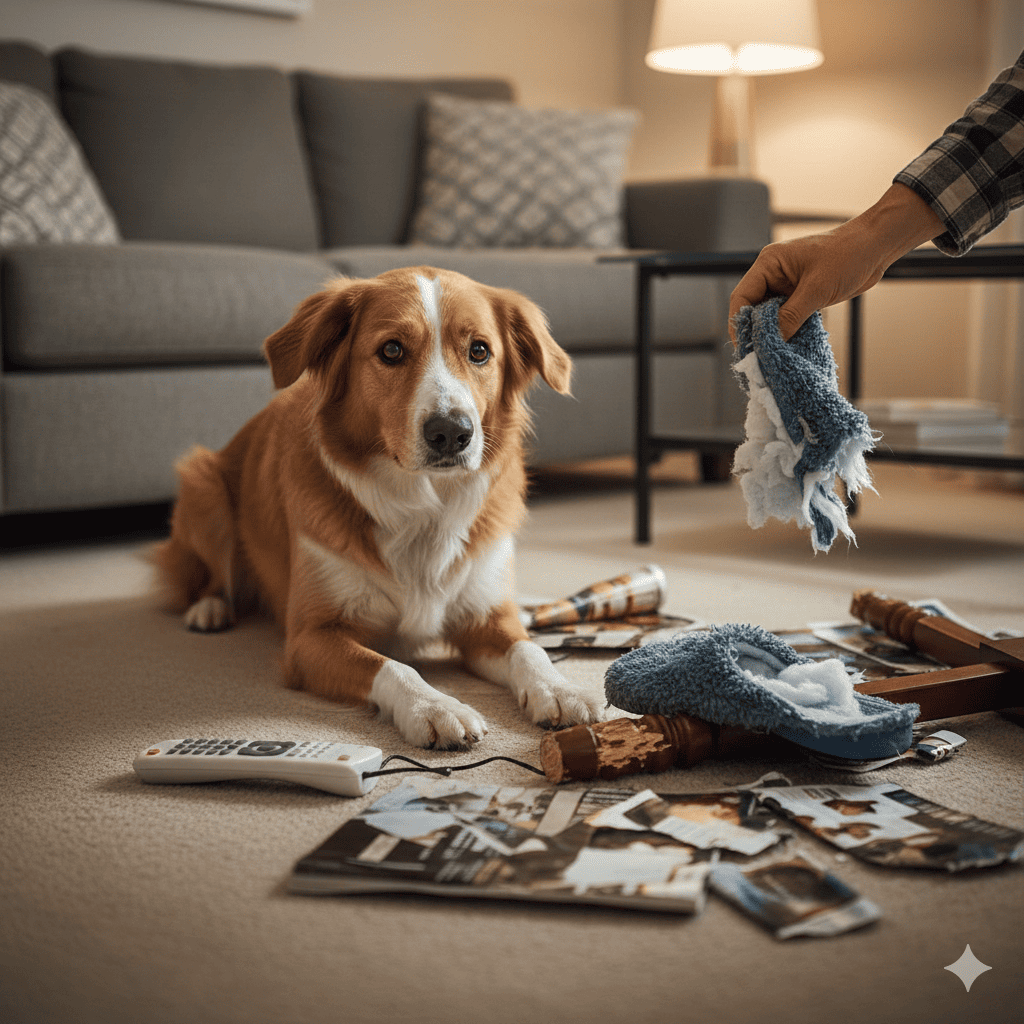
The truth is simple and a bit uncomfortable: chewing is a normal dog behavior, not a moral failure. Dogs chew to explore the world, relieve stress, soothe teething pain, and burn excess energy. If you do not give them a plan and clear options, they will create their own plan out of whatever they can reach. This guide walks you through turning that chaos into calm, step by step, with strategies that work in real homes, not just in training manuals.
First Step: Understand Why Your Dog Is Chewing
Before you can stop chewing, you have to understand the “why” behind it. The same behavior can mean very different things depending on your dog’s age, routine, and emotions. When you know the cause, choosing the right solution becomes much easier and faster.
These are the most common reasons dogs chew:
- Teething and exploration: Puppies between about 3 and 6 months chew to relieve gum pain and to explore their world with their mouths.
- Boredom and lack of exercise: Adult dogs with too much energy and not enough stimulation often turn to chewing as their “job.”
- Stress or separation anxiety: Some dogs chew doors, frames, or crates when they are panicked about being alone.
- Hunger or frustration: Dogs on very restricted diets or inconsistent feeding schedules sometimes start chewing and raiding trash in search of anything edible.
- Accidental reinforcement: If chewing always gets attention (even angry attention), some dogs keep doing it because it reliably gets a reaction.
Take a few days to notice patterns. Does your dog chew mainly when you are gone? Only in the late afternoon before dinner? Right after noisy or stressful events? A simple diary of when, where, and what they chew often reveals the root cause faster than guessing.
Make Your Home “Chew-Safe” Before You Train
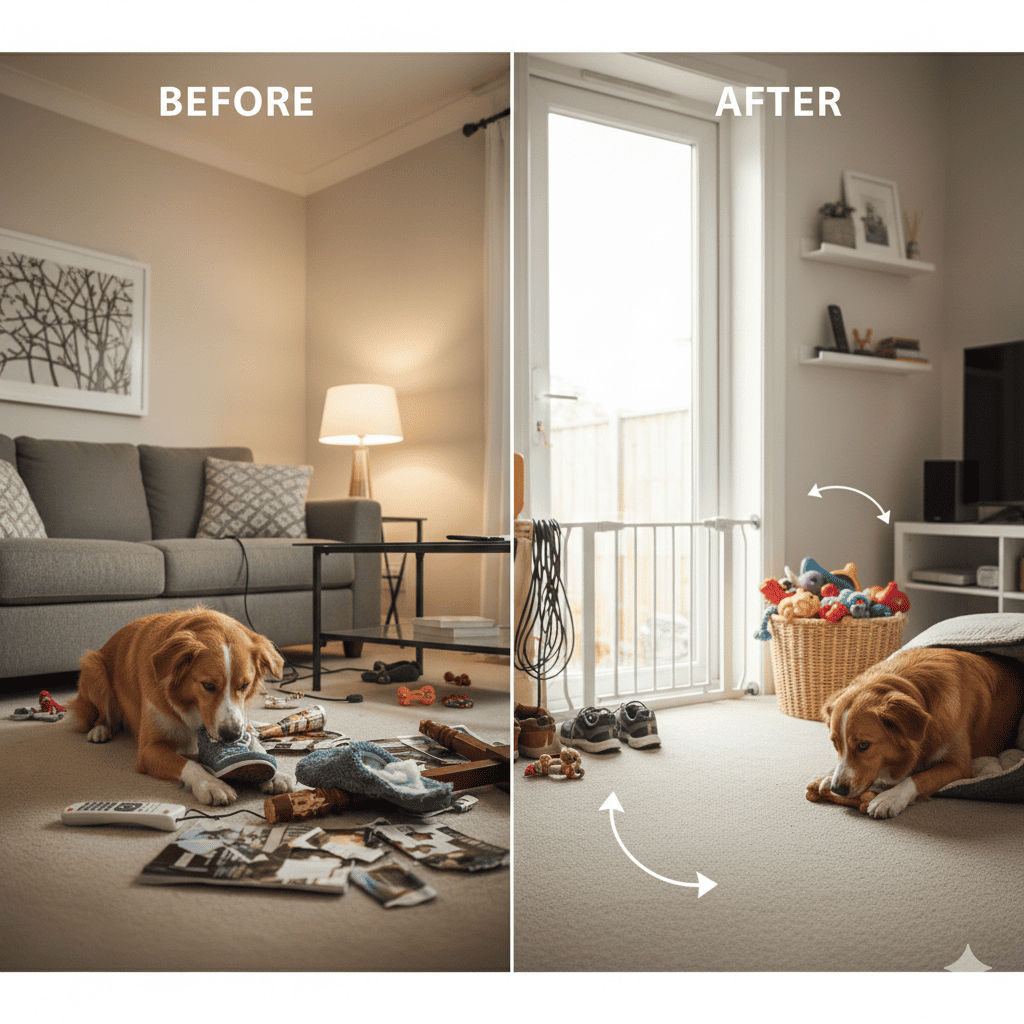
The fastest way to reduce damage is not a command; it is management. Every time your dog successfully destroys something, the behavior gets reinforced because chewing feels good, relieves tension, or tastes interesting. Your first mission is to make it much harder for them to make bad choices.
Start with these changes:
- Pick up obvious targets: shoes, kids’ toys, cables, remote controls, glasses, and anything soft and easy to shred.
- Use baby gates or closed doors to block access to rooms with furniture you really care about.
- Consider a safe confinement area (a crate or a dog-proof room) for times when you genuinely cannot supervise.
- Keep trash cans covered or behind doors to stop scavenging and chewing on food containers.
This is not “giving up.” It is buying time so your dog cannot rehearse the bad habit while you teach them the new rules. Think of it like toddler-proofing: you do not rely only on “no,” you also remove temptation.
Give Your Dog Better Things To Chew (That Actually Work)
The second pillar is simple: if you want to stop destructive chewing, you must give your dog legitimate, satisfying chewing outlets. A single random toy tossed into the living room is not enough for most dogs, especially energetic youngsters.
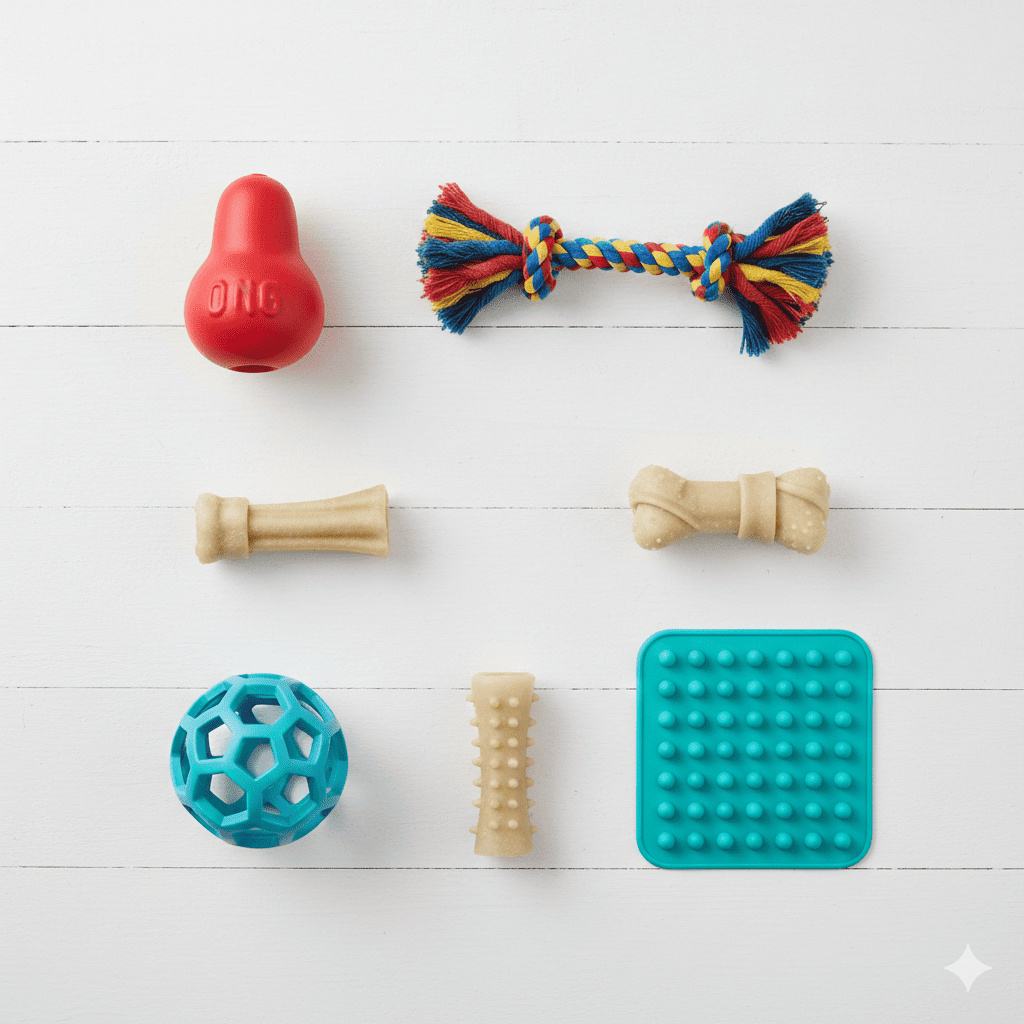
Build a small “chew toolkit” with variety and purpose:
- Durable rubber toys: Think thick, hollow toys you can stuff with food or freeze. These encourage long, focused chewing.
- Rope toys and textured chews: Great for dogs that love to shred and tug, and can help massage the gums.
- Dental chews recommended by your vet: These give your dog a job and support oral health at the same time.
- Food puzzles and lick mats: Your dog has to work and lick to get the food, which tires the brain and mouth together.
Rotate toys every few days so they stay exciting instead of becoming “background noise.” For many dogs, feeding at least one meal per day through a puzzle toy or stuffed chew dramatically reduces boredom chewing.
How To Redirect Chewing Without Yelling
Even with a safer home and better toys, your dog will sometimes grab the wrong thing. What you do in that moment determines whether they learn or just get more anxious. Yelling, chasing, or grabbing things out of their mouth can turn it into a game or make them guard objects.
Use this calm, consistent sequence instead:
- When you see your dog chewing something off-limits, calmly approach without shouting.
- Say a short interrupt word like “uh-uh” or “hey” in a neutral tone.
- Immediately offer a high-value chew toy or stuffed toy and gently move it near their nose.
- When they switch to the allowed item, praise warmly and, if needed, add a small treat.
Over time, your dog starts to learn the pattern: human appears, forbidden object disappears, a better chew appears, and praise follows. You are not just stopping chewing; you are teaching what should go in their mouth instead. Later, you can add formal cues like “drop it” and “leave it,” but the foundation is calm, consistent redirection.
Exercise and Mental Work: The Hidden Fix Most Owners Skip
A tired brain and body chew less. Many “chewing problems” are really “I have way too much energy” problems. No amount of scolding will fix a young dog that spends 22 hours a day bored inside with nothing meaningful to do.
Build a simple daily routine:
- At least one brisk walk or play session every day, suited to your dog’s age and health.
- Short training sessions (5–10 minutes) to practice basic cues or tricks.
- One or two puzzle feeders or stuffed toys used when you are busy or about to leave the house.
- Regular calm “settle” time afterward, so your dog learns how to relax after activity.
For many families, just combining more movement, mental games, and safe chews reduces destructive chewing by half within a few weeks. Your dog is not trying to annoy you; they are trying to meet their needs with the tools available.
Taste Deterrent Sprays: Helpful Tool, Not Magic Fix
Anti-chew sprays (like bitter apple or citrus-based products) can help protect specific surfaces while you work on training. They make furniture legs, baseboards, or table corners taste unpleasant, encouraging your dog to move on to something else.
Use them wisely:
- Test on a small hidden area first to ensure they do not stain or damage the surface.
- Reapply regularly at first, because scents and tastes fade over time.
- Always combine them with providing a clear, attractive alternative chew nearby.
- Do not rely on sprays alone; they are a bandage, not a full treatment plan.
Some dogs ignore taste deterrents or even seem to like them, so treat them as one tool in a bigger toolkit, not a cure-all.
When Chewing Is Really Anxiety (And You Need Extra Help)
Sometimes chewing is not just about boredom or teething. If your dog mainly destroys things when left alone, targets doors, window frames, or crates, or also shows signs like pacing, howling, or accidents in the house, separation anxiety might be involved.
In those cases, focus on:
- Very gradual practice being alone, starting with just seconds or minutes.
- Leaving special long-lasting chews only when you go out, so your departure predicts something positive.
- Keeping departures and returns low-key, without big emotional scenes.
- Contacting a vet or certified behavior professional if the dog panics badly or injures themselves.
Medical issues like dental pain, gum disease, or gastrointestinal discomfort can also increase chewing. If the behavior is new, extreme, or your dog seems uncomfortable, a veterinary exam is an important part of the solution.
What Not To Do (If You Want Real Progress)
It is tempting to punish hard when you see expensive items ruined, but certain reactions reliably backfire. Dogs do not connect delayed punishment with something they chewed hours ago; they only learn that humans sometimes come home angry for reasons they do not understand.
Avoid these common mistakes:
- Rubbing your dog’s nose in the chewed object or “showing” it to them after the fact.
- Hitting, alpha-rolling, or using harsh physical corrections.
- Chasing your dog when they grab something, turning it into a fun game of keep-away.
- Leaving highly tempting items within reach and then blaming the dog for taking them.
Kind, consistent management and redirection work far better than fear. The goal is not to convince your dog that humans are dangerous; the goal is to convince them that chewing the right things always pays off.
The Bottom Line: From Chaos To Calm Chewer
Stopping dog chewing is not about finding a magic command or a miracle spray. It is about understanding why your dog chews, blocking easy access to the wrong things, and giving them excellent, rewarding alternatives. Add in better exercise, mental work, and calm redirection, and most dogs go from “house destroyer” to “polite chewer” much faster than you expect.
If after a few weeks of consistent effort your dog is still chewing heavily, especially when alone or to the point of hurting themselves, that is your sign to bring in reinforcements. A vet visit and a certified trainer or behaviorist can help uncover anxiety or medical issues that no amount of DIY training will fix alone. Your dog is not broken; they just need a plan that matches their real needs.
Frequently Asked Questions
- Why do dogs chew destructively even when they have toys?
- Destructive chewing usually signals unmet needs: too much pent-up energy, boredom, teething pain in puppies, or separation anxiety. A toy alone cannot fix these root causes. Pair the toy with adequate exercise, mental stimulation, and a consistent routine to see real improvement.
- At what age does puppy chewing typically stop?
- Most puppies finish teething between 6 and 7 months. However, adolescent chewing driven by boredom or energy can continue until 18-24 months. Consistent redirection and sufficient exercise will shorten this phase significantly.
- Are bitter sprays safe for dogs and effective long-term?
- Yes, bitter sprays approved for pets are non-toxic. Their effectiveness is short-term: they interrupt the chewing habit but do not address the underlying cause. Use them as a temporary deterrent while you work on exercise, enrichment, and training.
- How much daily exercise does a dog need to reduce chewing?
- Most medium and large breeds need at least 45-60 minutes of aerobic exercise per day. High-energy breeds like Border Collies or Huskies may need 90 minutes or more. Mental exercise (puzzle feeders, training sessions, sniff walks) counts toward that total and is often more tiring than physical exercise alone.
- When should I consult a vet or trainer about my dog's chewing?
- Seek professional help if the chewing is compulsive (the dog cannot stop even when exhausted), if it started suddenly in an adult dog with no prior history, or if the dog is also showing other anxiety signs like pacing, excessive barking, or self-harm. A vet can rule out medical causes; a certified trainer or behaviorist can design a targeted behavior plan.
Was this helpful for your pet care journey?