Fi Nano Microchip for Dogs: Why Your Pup Needs One (And What You Must Know Before Buying)
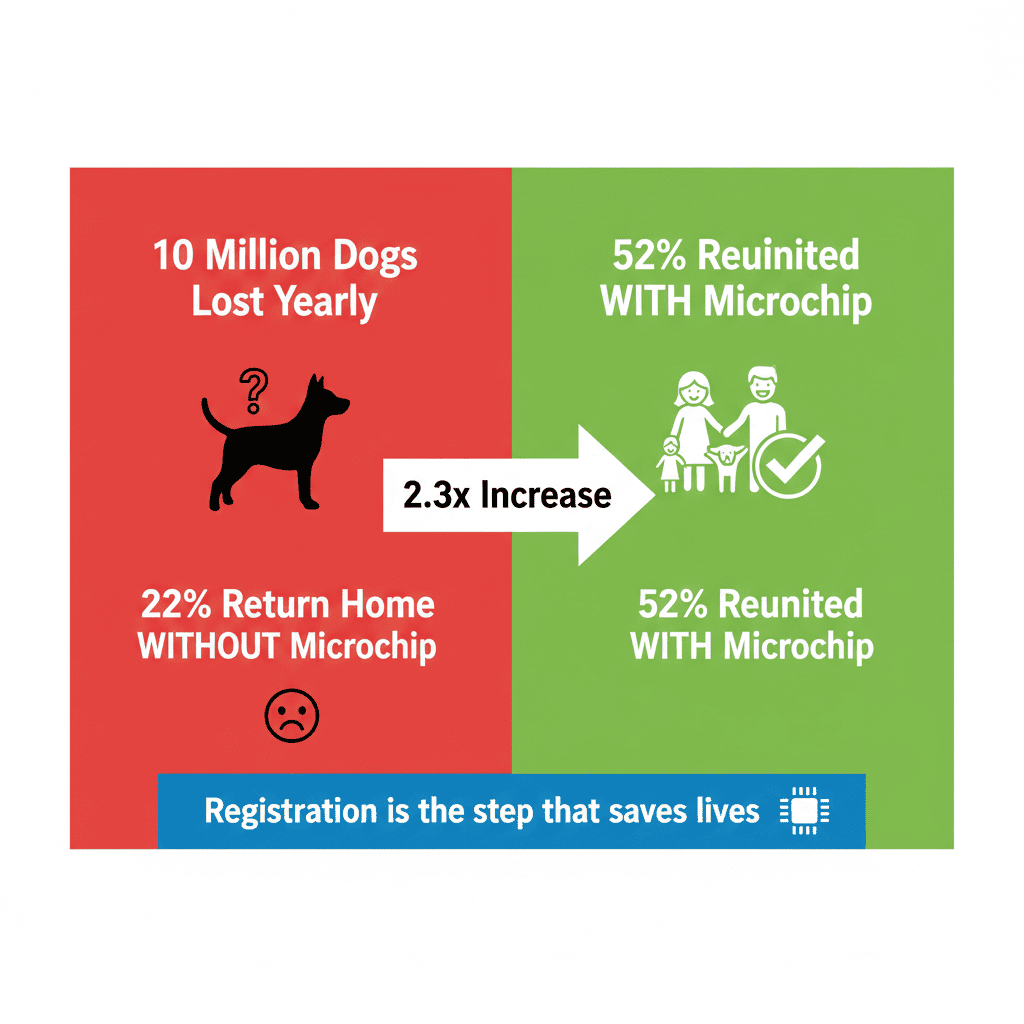
10 million dogs get lost every year. Only 22% are returned without a microchip—but 52% are reunited when they have one. Fi Nano microchips cost $5 per unit, offer free lifetime registration at nano.tryfi.com, work with all universal scanners (ISO 11784/11785), and come in 1-pack or 20-pack sizes. Learn how it works, what to verify before implanting, and why registration is the step that saves lives.
Fi Nano Microchip for Dogs: Why Your Pup Needs One (And What You Must Know Before Buying)
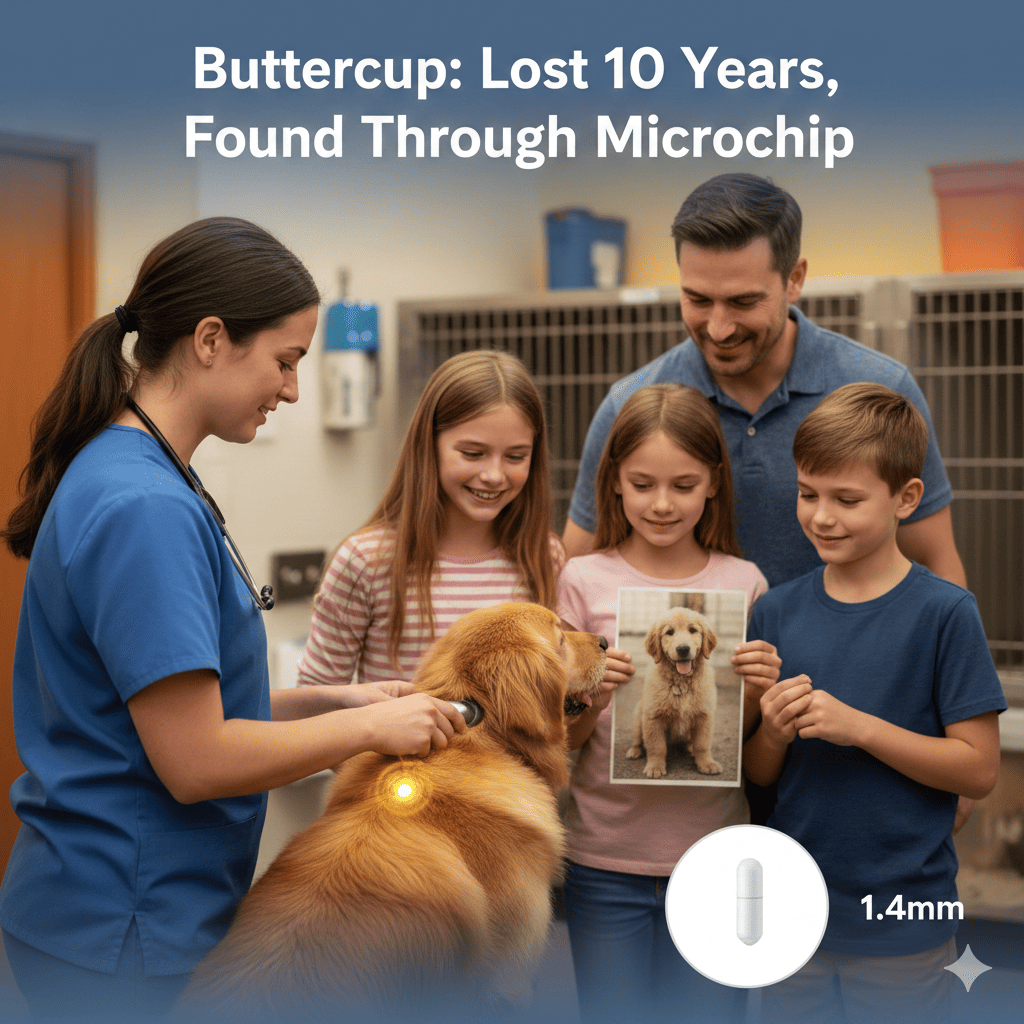
Buttercup was lost in 2016. Her family searched for 10 years. They posted flyers. They called shelters weekly. They never stopped hoping.
In 2026, a shelter in a different state scanned a stray dog that came in. A microchip number appeared on the scanner. One search in the universal database later, and the shelter had a name: Buttercup. A phone number. A family that never stopped waiting.
Buttercup went home.
That's the difference a tiny grain of rice under the skin can make.
The Numbers That Change Everything
Right now, approximately 10 million dogs and cats are lost or stolen every year in the United States alone. Not missing temporarily. Lost.
Here's where it gets brutal: without a microchip, only 22% of lost dogs are ever returned to their owners. For cats, it's even worse—less than 2%.
But here's what changes the game:
Dogs with microchips? Over 52% are reunited with their families. For cats, that jumps to 38.5%.
That's not a small difference. That's the difference between your dog coming home and spending the rest of your life wondering what happened to him.
And yet, only about 60% of microchipped pets are actually registered. Which means thousands of microchipped dogs are essentially invisible because their registration information is outdated or missing.
Registration is the step that saves lives. Not the chip itself. The registration.
What Is a Microchip, Really?
A microchip is a tiny computer chip, about the size of a grain of rice. Inside that grain is a unique 15-digit identification number that will stay with your dog for his entire life.
It is NOT GPS. This is the biggest confusion I see.
Your microchip will not tell you where your dog is right now. It will not show his location on a map. If you want real-time tracking, you need a GPS collar (which is a separate product).
What a microchip DOES: It provides permanent identification. If your dog is found by anyone—a stranger, a shelter, a veterinary clinic—they can scan him with a radiofrequency scanner. That scanner reads the unique number. Then, that number is looked up in a universal database. The database shows which registry has your dog's information. The registry shows your phone number. You get called. Your dog comes home.
That's it. That's the entire system.
It works because it uses an international standard called ISO 11784/11785, which means any modern veterinary scanner anywhere in the world can read it. Your dog could be found in another state, another country, and the same process works.
No batteries. No WiFi. No charging. Just a passive chip that waits to be scanned, and a database that's searchable 24/7.
Fi Nano Microchip: What Makes It Stand Out
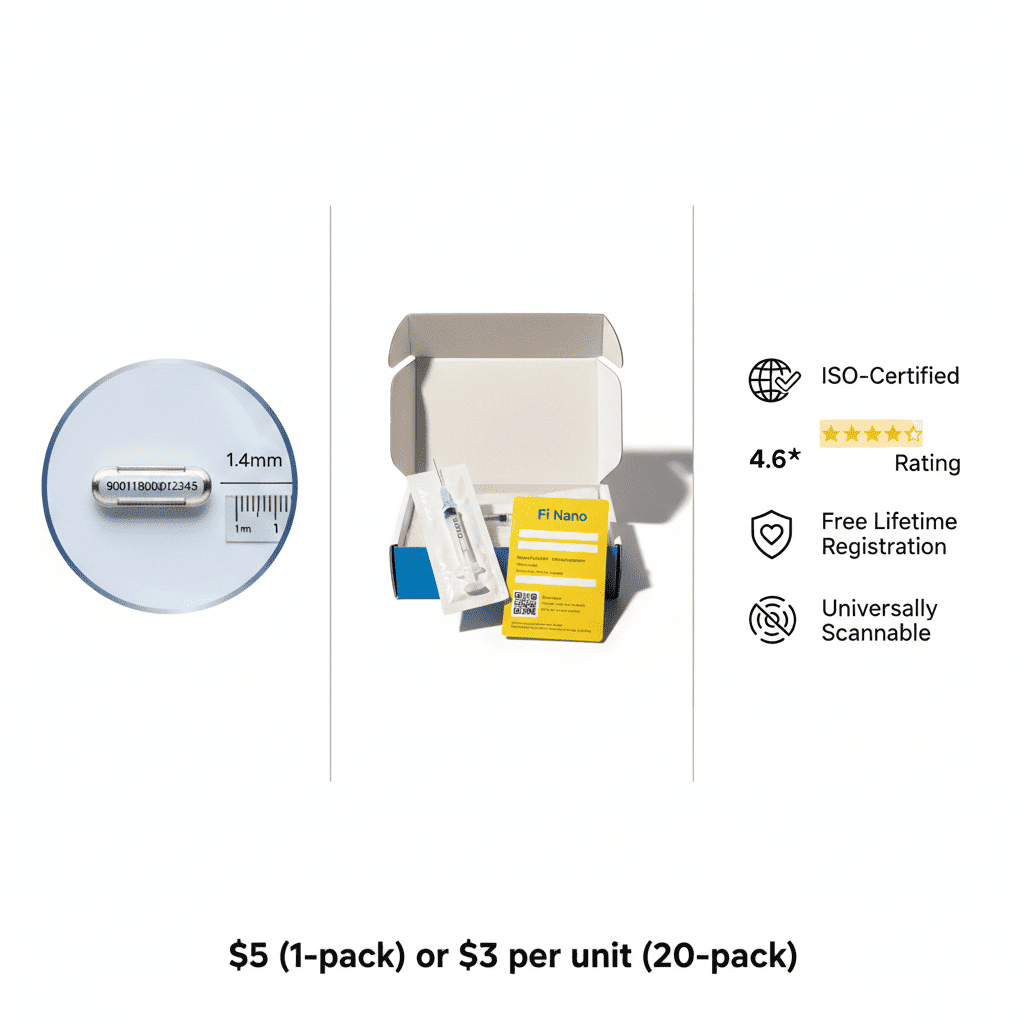
The Size: Fi Nano microchips are 1.4 millimeters in diameter. That's smaller than most competitors. Why does size matter? Because the smaller the chip, the smaller the needle, and the smaller the injection site. Your dog feels less. There's less trauma. Smaller breeds, puppies, and cats appreciate this.
The Price: $5 per chip for the 1-pack. If you buy the 20-pack (for rescues, breeders, or people with multiple dogs), the cost drops to $3 per unit. That's competitive.
The Registration System: Fi Nano microchips are registered and updated FREE FOR LIFE at nano.tryfi.com. No annual fees. No surprises. You register once, update anytime from your phone, and you're done. The registration information stays with Fi's database forever.
The Compatibility: Fi Nano is ISO-certified and ICAR-registered. It works with all universal scanners. This is non-negotiable. You want a chip that any shelter, any vet, anywhere can read.
The Reviews: 4.6 to 4.8 stars across Amazon (depending on pack size), with hundreds of verified reviews. Most users report ease of registration, good scanner readability, and—most importantly—successful reunions when their dogs got lost.
The Reality Check: In 2023, one user reported receiving microchips with duplicate identification numbers. This is extremely rare (1 report out of 700+), but it's important to know about. Why? Because it highlights the importance of the next step.
The Checklist Before You Buy (and Before You Implant)
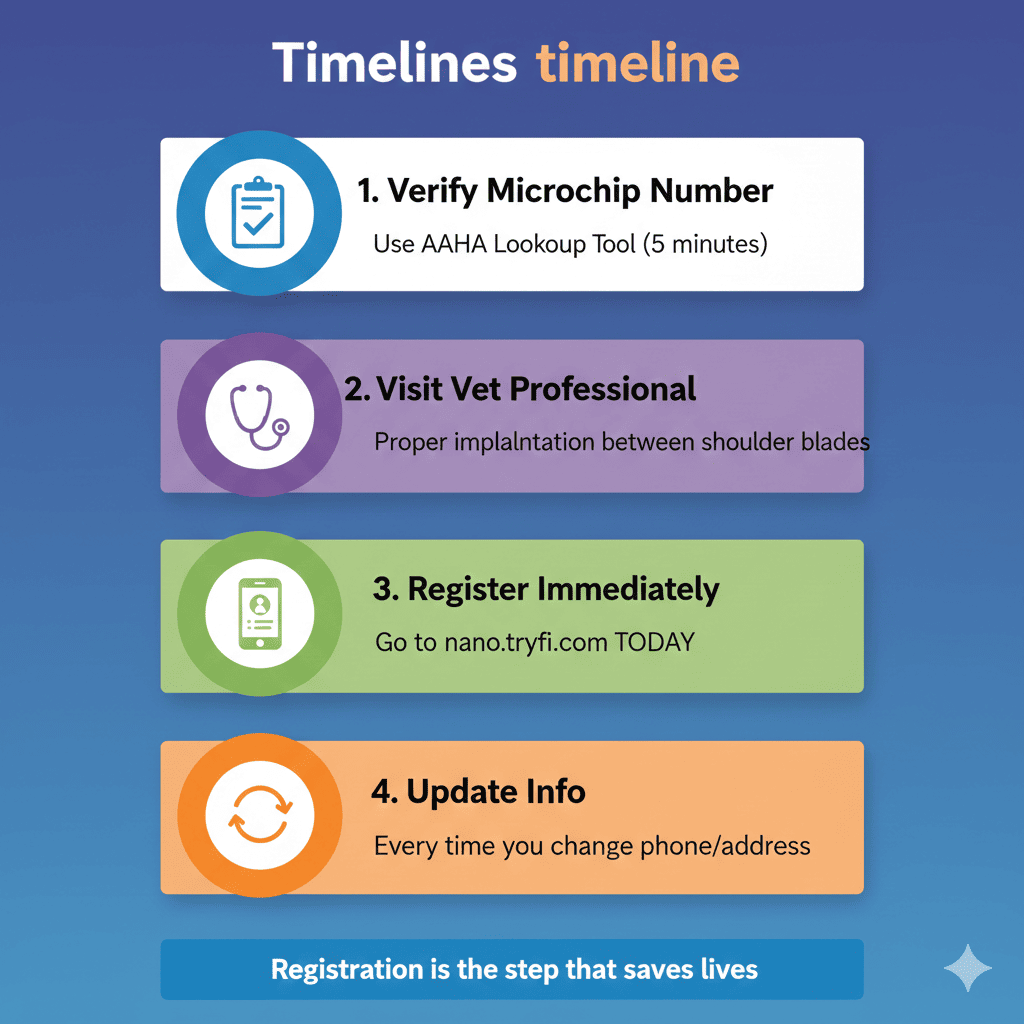
Step 1: Verify the Microchip Number Is Unique
This is the step that almost nobody does, but it's the one that prevents disaster.
When your Fi Nano arrives, you'll get a yellow card with the microchip number on it. Before you take your dog to the vet for implantation, verify that number using the AAHA Universal Pet Microchip Lookup Tool (available online, free). This tool lets you search if that number is already registered to someone else.
If it is, contact Fi Nano support immediately for a replacement.
If it's not, you're good to go.
This takes 5 minutes. It prevents a lifetime of administrative chaos if your dog ever gets lost.
Step 2: Have a Trained Professional Implant It
The Fi Nano package says clearly: "For implantation by a trained professional veterinarian only."
Listen to this.
Yes, some people do implant microchips at home. Yes, some report success. But here's what can go wrong if it's done incorrectly: chip migration (the chip moves from its implantation site), infection, bleeding, nerve damage, even shock in rare cases.
Your veterinarian knows:
- Exactly where to place it (between the shoulder blades, in the dorsal area)
- The correct angle for insertion
- How deep to go
- How to maintain sterile conditions
- How to verify the chip works after implantation
- How to monitor for complications
The cost of a vet implantation is usually $25–$50. Compare that to a lifetime of worry if something goes wrong. Do it right.
Step 3: Register Immediately (Not Later, Not Tomorrow—Today)
This is the most critical step, and it's the one 40% of people skip.
An unregistered microchip is completely useless. It's just a number under the skin with no connection to you.
After implantation, go home and register at nano.tryfi.com/register immediately. You'll need:
- The microchip number (on your yellow card)
- Your dog's name
- Your dog's date of birth (approximate is fine)
- Your full name
- Your phone number (two if you have one)
- Your email address
- Your current address
Registration takes 3 minutes. Do it today.
Step 4: Update Your Information Whenever It Changes
This is the silent killer of lost pet reunions.
Imagine your dog gets lost, someone finds him, a shelter scans his chip, and the microchip database shows a phone number from 5 years ago. A number you no longer use. An address you moved from. Contact information they can't verify.
Your dog stays in the shelter. Or worse.
Any time your phone number, address, or email changes, log into nano.tryfi.com and update it. Takes 2 minutes.
1-Pack vs 20-Pack: Which One Do You Need?
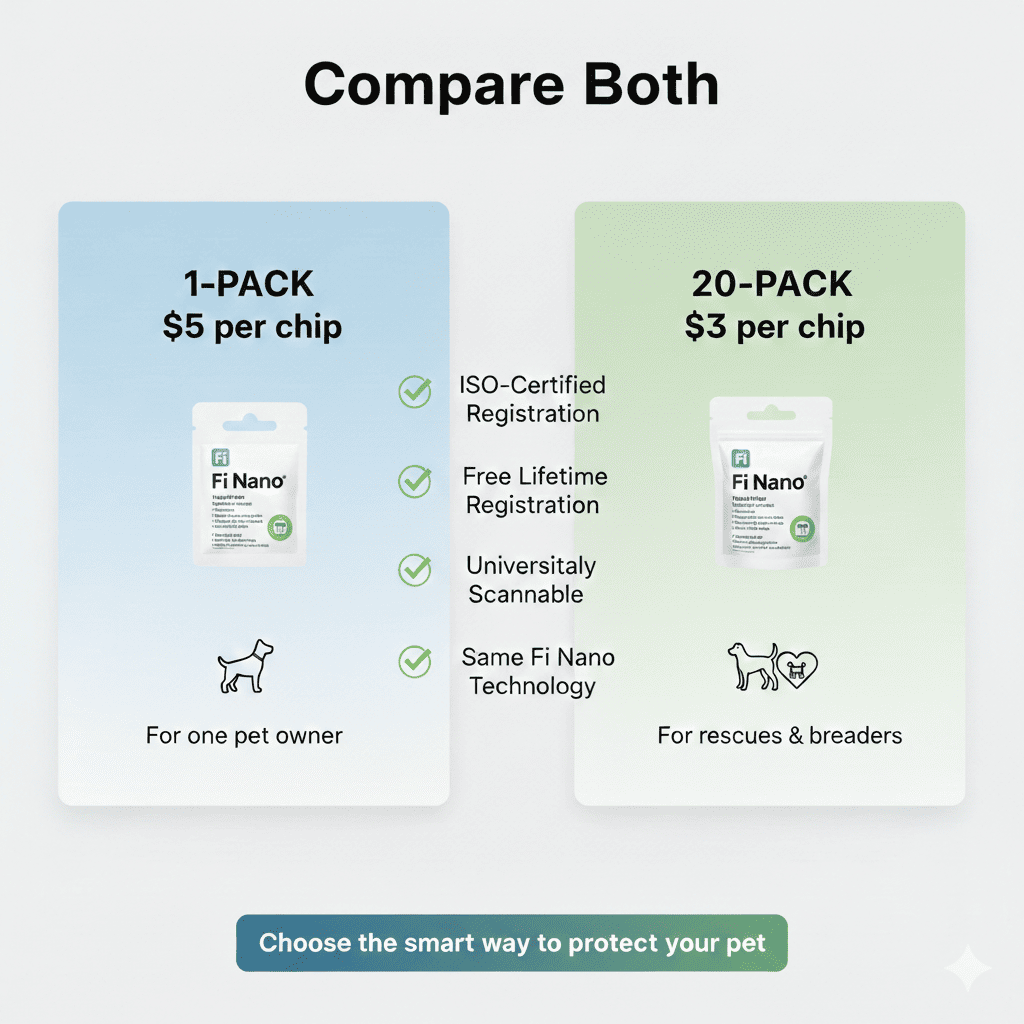
The 1-Pack ($5) is for individual dog owners. One dog, one microchip, one registration. This is what most pet owners buy.
The 20-Pack ($60, or $3 per chip) is for rescues, shelters, breeders, or people with multiple dogs. The per-unit cost is lower, but you're buying in bulk. This is for organizations or people managing multiple animals.
Choose based on your situation. The microchip itself is identical—it's the same Fi Nano technology. The only difference is quantity and price per unit.
Frequently Asked Questions
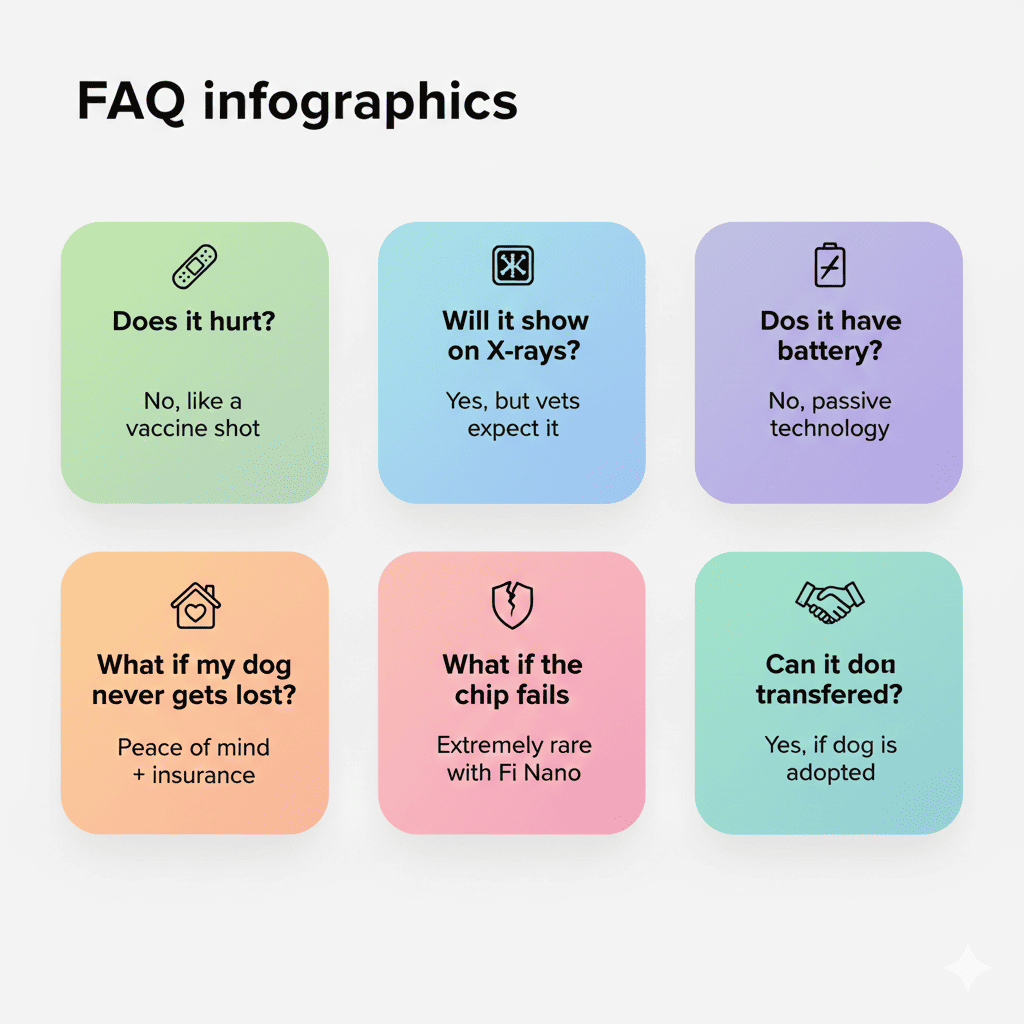
Does the microchip hurt?
No. It's comparable to a vaccine injection. Most dogs barely react. The needle is tiny, the process is quick, and it's over before your dog realizes what happened. The fear is usually worse than the reality.
Will it show up on X-rays?
Yes. If your dog ever needs an X-ray, the microchip will appear as a small dense metallic object. Vets expect this. It's not concerning.
Does the microchip have a battery?
No. Modern microchips are completely passive. The scanner itself emits a radiofrequency field that activates the chip to transmit its number. No power source needed. It lasts the life of your dog.
What if my dog never gets lost?
Then the microchip is like insurance you never had to use—which is the best outcome. The peace of mind alone is worth it. And statistically, one in three dogs WILL get lost at some point. You're protecting against odds.
What if the microchip fails?
Failure is extremely rare with quality microchips like Fi Nano. They're designed to last a dog's entire life. But if one does fail, you simply get a new one implanted. It happens maybe once in thousands of chips.
Can the microchip be transferred if my dog is adopted?
Yes. If your dog changes owners (adoption, rehoming, etc.), the new owner can request a transfer at nano.tryfi.com. The registration is updated to the new owner's information. The chip number stays the same, but now it points to the new contact details.
What if my dog's chip migrates?
Some chips naturally move slightly from their original implantation site over time. This is called chip migration. In most cases, it doesn't cause problems. Scanners are designed to detect chips across a broader area. If a chip migrates and becomes unreadable, your vet can relocate it or implant a new one.
The Truth About the AAHA Lookup Tool
When a dog is found and scanned, the shelter or vet gets a number. They then use the AAHA Universal Pet Microchip Lookup Tool (aaha.org/microchip-search) to search for that number.
The AAHA tool doesn't show your personal information directly. Instead, it shows which registry or database has information about that microchip number, and which phone numbers to call.
This is why Fi Nano's free lifetime registration at nano.tryfi.com is so important. YOUR database needs to be registered, searchable, and kept current. The AAHA tool just points people toward your registry. Your registry is what has your actual phone number.
Why Now?
Your dog doesn't need a microchip until he does. And when he does, it's usually urgent.
The best time to microchip your dog is when he's young, healthy, and at the vet for routine care (vaccines, spay/neuter). You're already there. The cost is minimal. The peace of mind is permanent.
A Fi Nano microchip costs $5. Your dog's life is worth infinitely more.
Buttercup's family searched for 10 years. Don't let that be you.
Where to Buy
Fi Nano Microchip - 1-Pack: $5 on Amazon
Single microchip for one dog | Free lifetime registration | 4.6★ rating
Fi Nano Microchip - 20-Pack: $60 on Amazon ($3 per chip)
Bulk option for rescues, breeders, or multiple dogs | Free lifetime registration | 4.8★ rating
Both come with sterile needle, syringe, and registration instructions. Both are universally scannable. Both offer free lifetime registration at nano.tryfi.com.
Final Thought
A microchip is the simplest insurance policy you can give your dog. It costs less than a single meal out. It lasts forever. It has no maintenance.
And if your dog ever gets lost, it might be the difference between a happy reunion and a lifetime of heartbreak.
Buttercup's microchip brought her home after 10 years. Your dog's might bring him home in 10 hours.
That's why you buy it today.
Was this helpful for your pet care journey?