Dog Allergy Chews with Omega-3 + Quercetin Review: Real Relief for Itching and Paw Licking (41 Verified Results)
Your dog won't stop licking his paws. The scratching keeps you both awake at 3 AM. These allergy chews combine quercetin (nature's Benadryl), omega-3 fish oil, and probiotics in one soft chew that dogs actually eat like treats. Complete ingredient breakdown, 8 verified customer testimonials from February 2026, honest pros and cons, and the critical difference between masking symptoms and addressing root causes of canine allergies. Amazon's Choice with 5.0 stars across 41 reviews at $25.99.
Dog Allergy Chews with Omega-3 + Quercetin Review: Real Relief for Itching and Paw Licking
The 3 AM Wake-Up Call Every Dog Owner Knows
It's 3:17 AM. You hear it again. That sound. Lick, lick, lick, lick. Your dog is at it again—paws, belly, maybe the base of his tail. You've been through this cycle for weeks now. The scratching during dinner. The obsessive paw licking that leaves his fur stained and his skin raw. The constant ear shaking that makes you wonder if something's seriously wrong.
You've tried different shampoos. You wipe his paws after walks. You limit outdoor time during high pollen days. Maybe you even spent money on a vet visit where they ruled out fleas and infections but couldn't give you a clear answer beyond "seasonal allergies" and a prescription that costs $60 per month and makes your dog drowsy.
And here you are again. 3 AM. Wide awake. Watching your dog suffer from something invisible.
Kimberly from Pennsylvania felt this exact frustration. She has two dogs with dry, itchy skin who drove her "nuts with paw licking," as she described it in her verified Amazon review on February 4, 2026. She tried multiple products over months. Nothing worked long-term. Then she found these dog allergy chews on Amazon—$25.99 for a 200-count jar. She was skeptical. But the 5.0-star rating across 41 verified reviews caught her attention.
Within days of starting the chews, both dogs came running when they heard the container opening. Within two weeks, "their paw licking has almost completely stopped and their bottom paws seem to be softer," Kimberly reported. The ingredient list wasn't the usual filler junk—quercetin, omega-3 fish oil, probiotics, zinc, vitamin E. Real compounds with actual veterinary research behind them.
This isn't a miracle cure. Allergies don't work that way. But it's a tool—one that addresses multiple root causes of canine allergies instead of just masking symptoms with antihistamines that barely work. And if you're reading this at 3 AM while your dog licks himself raw, you deserve to know if this might actually help.
What You'll Learn Here
I'll break down exactly what's inside these chews, how each ingredient works based on veterinary research, what 8 real verified customers reported after weeks of consistent use, the honest limitations you won't see in marketing copy, and whether this $25.99 supplement makes sense compared to prescription options costing five times as much. You'll also learn how to identify the difference between cheap allergy chews loaded with fillers and formulations that actually address inflammation, histamine release, and skin barrier breakdown.

Why Your Dog Can't Stop Itching: The Real Problem
Canine allergies aren't as simple as "my dog is sensitive to pollen." They're a cascade of immune system failures, inflammatory overreactions, and skin barrier breakdowns that create a self-perpetuating cycle of misery.
Here's what actually happens inside your dog's body: His immune system encounters an allergen—pollen, dust mites, mold spores, certain food proteins. In a healthy dog, the immune system ignores these harmless substances. But in allergic dogs, the immune system freaks out. It produces IgE antibodies that bind to mast cells concentrated in the skin, ears, and gastrointestinal tract. When that allergen shows up again—even in tiny amounts—those primed mast cells explode, releasing histamine and dozens of other inflammatory compounds.
Histamine causes the immediate itching, redness, and swelling you see within minutes. But histamine is just the opening act. The real damage comes from leukotrienes, prostaglandins, and pro-inflammatory cytokines that flood the tissues and create chronic inflammation that lasts for days. This inflammation damages the skin barrier—the protective layer of lipids and proteins that normally keeps allergens out and moisture in. Once that barrier breaks down, even more allergens penetrate deeper into the skin, triggering even more mast cell activation. The cycle repeats and worsens.
Add in secondary complications—bacterial and yeast infections that thrive in inflamed, damaged, moist skin—and you've got a dog who can't stop itching no matter how many medicated baths you give him.
Veterinary research confirms that approximately 10-15% of dogs suffer from environmental allergies, with breeds like Bulldogs, Golden Retrievers, Labrador Retrievers, West Highland White Terriers, and Boxers at significantly higher genetic risk. Food allergies affect another 1-2% of dogs. And here's the brutal reality: most allergic dogs aren't dealing with just one trigger. They're sensitized to multiple allergens simultaneously, and over time, that sensitization list often grows longer.
Conventional treatments focus almost exclusively on suppressing symptoms after the damage starts. Antihistamines like Benadryl block histamine from binding to receptors—but they don't stop mast cells from releasing it, and they don't address the other inflammatory mediators causing ongoing damage. Steroids like prednisone shut down inflammation across the board but come with serious side effects during long-term use. Apoquel targets specific immune signaling pathways but costs $80-150 monthly and symptoms return the moment you stop.
That's where comprehensive supplements come in. They don't replace veterinary care for severe cases. But they address the underlying dysfunctions—mast cell stability, inflammatory cascade modulation, skin barrier integrity, and gut-immune axis balance—that perpetuate allergic suffering in the first place.
Complete Ingredient Breakdown: What's Actually Inside
What You're Getting
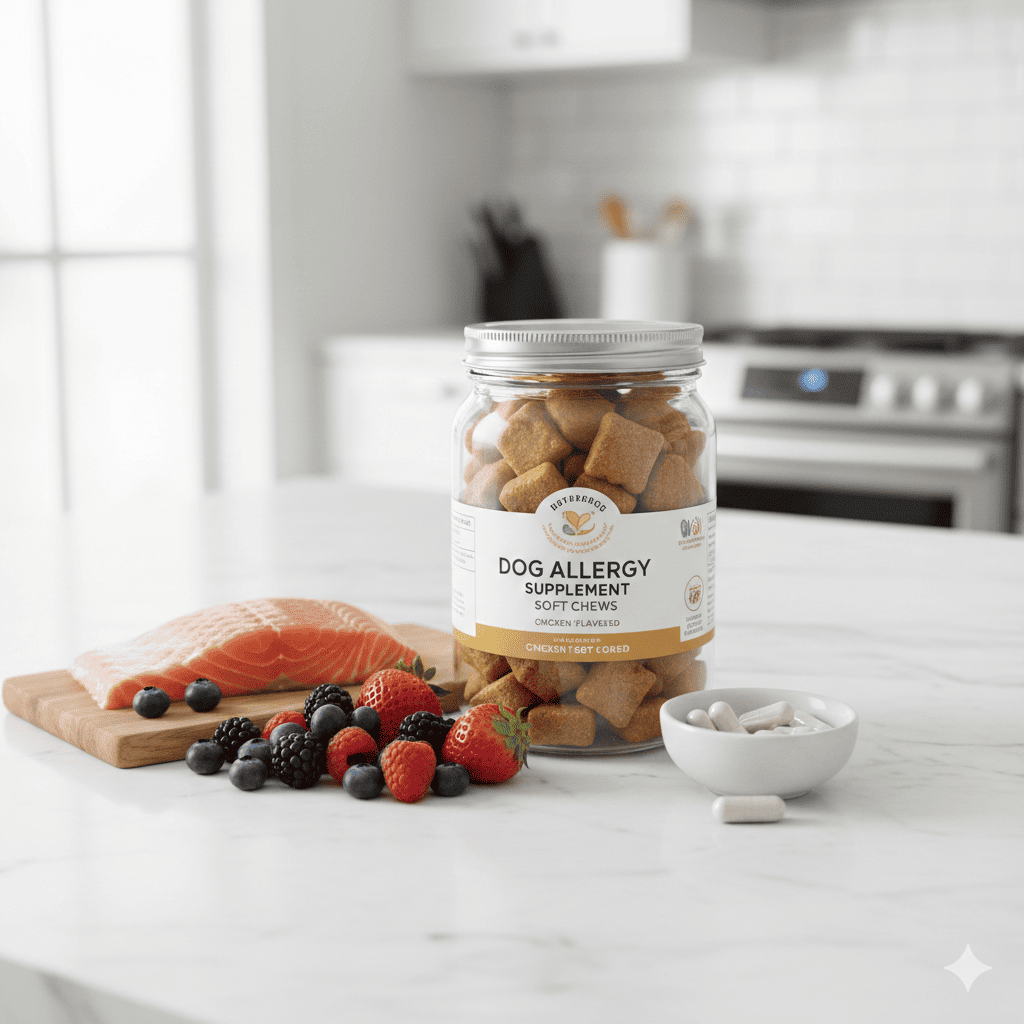
These dog allergy chews come in a 200-count container priced at $25.99. Each chew weighs approximately 2 grams and delivers a combination of five primary active ingredients: quercetin, omega-3 fish oil, probiotics with prebiotics, zinc, and vitamin E. The chews are formulated to be wheat-free, corn-free, and soy-free—important because these grains are common food allergens in dogs. The natural chicken flavor makes them palatable enough that multiple verified customers report their dogs eat them willingly as treats rather than requiring the wrestling match typical of most supplements.
The product holds Amazon's Choice designation and ranks #35 in the Dog Itch Remedies category as of February 2026. Over 400 purchases happened in the past month alone, with 41 verified customer reviews maintaining a perfect 5.0-star average. The manufacturer describes it as vet-formulated and safe for long-term use. The packaging emphasizes dual-action allergy and skin support targeting seasonal and environmental allergies specifically.
Quercetin: The Mast Cell Stabilizer
Quercetin is a plant-derived bioflavonoid found naturally in apples, berries, and certain herbs. It's often called "nature's Benadryl," but that nickname dramatically undersells what it actually does at the cellular level.
Benadryl works exclusively by blocking histamine from attaching to H1 receptors on target tissues—it's like putting a lock on the door after the burglar is already inside. Quercetin does block histamine receptors too, but more importantly, it stabilizes mast cells so they don't release histamine in the first place. Research published in veterinary pharmacology journals demonstrates that quercetin inhibits calcium channels in mast cell membranes. Mast cell degranulation—the explosive release of histamine and inflammatory mediators—requires a surge of calcium ions flowing into the cell. When quercetin blocks those calcium channels, degranulation can't occur even when the mast cell encounters an allergen.
A landmark study specifically tested quercetin on mast cells isolated from dogs and found that it inhibited histamine release significantly. The researchers confirmed that quercetin's mechanism involved preventing the calcium influx required for degranulation, essentially stabilizing the mast cells before they could dump their inflammatory payload.
But quercetin doesn't stop at mast cell stabilization. It also inhibits multiple enzymes that produce inflammatory mediators downstream. It blocks lipoxygenase, the enzyme that converts arachidonic acid into leukotrienes—potent inflammatory molecules that cause prolonged itching and tissue swelling. It inhibits cyclooxygenase-2, which produces prostaglandins that drive pain and inflammation. And it blocks NF-kappa B, a master regulatory protein that turns on genes for dozens of pro-inflammatory cytokines.
Additionally, quercetin acts as a potent antioxidant, neutralizing reactive oxygen species that damage skin cell membranes and perpetuate inflammation. This antioxidant activity helps protect the skin barrier from oxidative damage that occurs during chronic allergic inflammation.
One limitation worth noting: quercetin has poor water solubility and gets metabolized relatively quickly by liver enzymes, which can limit its bioavailability when given orally. That's why it's often formulated with fat sources like fish oil—both of which can enhance absorption. This formula includes omega-3 fish oil, which likely improves quercetin absorption through lipid-mediated transport mechanisms.
Omega-3 Fatty Acids: Rebuilding the Skin Barrier
Omega-3 fatty acids—specifically EPA and DHA derived from fish oil—represent one of the most extensively researched supplements for canine skin health. They don't work like antihistamines that provide rapid symptom relief. Instead, they work by fundamentally changing the composition of cell membranes and shifting the types of inflammatory mediators your dog's body produces.
Here's the mechanism: Every cell membrane contains fatty acids that get converted into signaling molecules called eicosanoids. When cell membranes are rich in omega-6 fatty acids—which dominate most commercial dog foods—the eicosanoids produced are pro-inflammatory. When you supplement with omega-3 fatty acids, those EPA and DHA molecules gradually incorporate into cell membranes over weeks of consistent intake. Once incorporated, they get converted into anti-inflammatory eicosanoids instead, including resolvins and protectins that actively shut down inflammatory cascades.
This shift in the inflammatory balance produces measurable clinical effects. Research examining dogs with atopic dermatitis who received omega-3 supplementation showed significant improvement in clinical scores compared to placebo groups. The improvements included reduced scaling, better coat quality, and decreased itching intensity.
Beyond shifting inflammatory mediator production, omega-3s enhance skin barrier function by supporting ceramide synthesis. Ceramides are the lipid molecules that act like mortar between the brick-like skin cells, preventing water loss and blocking allergen penetration. Dogs with chronic allergies often have depleted ceramide levels in their skin, leading to increased transepidermal water loss and easier allergen penetration. Omega-3 supplementation helps restore ceramide levels, strengthening the barrier against environmental allergens.
Research also shows omega-3s reduce production of pro-inflammatory cytokines including interleukin-1, interleukin-6, and tumor necrosis factor-alpha—the same inflammatory proteins targeted by expensive biologic medications.
The effects aren't immediate. You need consistent daily supplementation for 4-8 weeks before seeing measurable clinical improvements because it takes time for omega-3 fatty acids to incorporate into cell membranes throughout the body. But the effects are real and backed by multiple veterinary clinical trials.
Probiotics and Prebiotics: The Gut-Skin Connection
The concept that gut health influences skin health might sound like wellness marketing pseudoscience—until you examine the research on the gut-skin axis. This connection is real and increasingly well-documented in veterinary dermatology literature.
Approximately 70% of the immune system resides in gut-associated lymphoid tissue. The composition of bacteria living in the intestinal tract directly influences how the immune system develops, how it responds to allergens, and how much systemic inflammation it generates. Dogs with chronic allergies frequently show gut microbiome dysbiosis—an imbalance where beneficial bacterial species decline while potentially problematic species proliferate.
This dysbiosis amplifies allergic disease through multiple mechanisms. It increases intestinal permeability, allowing bacterial components and undigested food proteins to cross into the bloodstream and trigger inflammatory immune responses. It reduces production of short-chain fatty acids like butyrate, which normally help maintain immune tolerance and reduce inflammatory signaling. And it skews immune responses toward allergic Th2-type reactions rather than balanced responses.
Probiotic supplementation—particularly with Lactobacillus and Bifidobacterium strains—helps restore microbial balance. Research demonstrates that specific probiotic strains can reduce allergic inflammation by enhancing populations of regulatory T-cells that calm excessive immune responses, reducing pro-inflammatory cytokine production, and strengthening tight junctions between intestinal cells to restore barrier integrity.
These chews include both probiotics and prebiotics, creating a synergistic combination that supports both colonization and sustained growth of health-promoting species.
One important caveat: probiotic benefits are strain-specific and require consistent daily supplementation. You won't see dramatic overnight transformations, but after 4-6 weeks of regular use, many dogs show improved digestion, reduced systemic inflammation markers, better immune regulation, and consequently, reduced allergic symptoms.
Zinc and Vitamin E: Antioxidant and Barrier Support
Zinc plays essential roles in skin barrier function, immune regulation, wound healing, and antimicrobial defense. Zinc deficiency—surprisingly common in dogs with chronic inflammation or gastrointestinal malabsorption—manifests as poor coat quality, slow wound healing, increased susceptibility to skin infections, and impaired immune responses. Zinc supplementation supports keratinocyte differentiation, the process by which skin cells mature and form protective layers with intact barriers.
Vitamin E functions as the primary lipid-soluble antioxidant protecting cell membranes from oxidative damage. In allergic dogs, chronic inflammation generates massive quantities of reactive oxygen species that damage the lipids in skin cell membranes and immune cell membranes. This oxidative damage perpetuates inflammation and weakens skin barriers. Vitamin E neutralizes these reactive species while also modulating immune responses toward less inflammatory profiles.
Together, zinc and vitamin E provide synergistic support for skin integrity and immune balance that complements the anti-inflammatory effects of quercetin and omega-3s, creating a comprehensive multi-mechanism approach rather than a single-target intervention.
Real Customer Results: What 8 Verified Reviewers Actually Report
These dog allergy chews launched on Amazon in November 2025 and as of February 2026 have accumulated 41 verified purchase reviews with a 5.0-star average. I read every review to identify patterns, realistic timelines, and honest feedback beyond the star ratings.
Paw Licking Stops Within 1-2 Weeks
The most consistent feedback across multiple reviews: paw licking either stops completely or reduces dramatically within 7-14 days of starting the chews.
Kimberly verified purchase, February 4, 2026 wrote: "I have two dogs that have dry itchy skin and drive me nuts with paw licking. They seem to love the taste and come running as soon as they hear the container opening. Since starting, their paw licking has almost completely stopped and their bottom paws seem to be softer. The itching has also became a lot less which is a huge deal for them. We have tried so many products and this one seems to be great!!!"
Annabelle verified purchase, January 30, 2026 reported similar results with three dogs: "This allergy skin and coat relief has helped all 3 of my dogs a lot! They seem more playful and don't lick their paws as much as well as less ear scratching!"
Coat Quality Improves Noticeably
Multiple reviewers specifically mentioned improvements in coat shine and texture—an effect consistent with omega-3's role in skin barrier health and ceramide production.
Sean verified purchase, February 6, 2026 described his pug's transformation: "I have a pug and a chihuahua/poodle mix and my pug started developing an itching and scratching so I bought these and started giving them both twice a day with their meals. It's been over a week and my pug's skin is noticeably much better which I am super happy about. But the kicker is how much more shiny and healthy both their coats are. They love the taste and they eat them like treats."
MrReviewIt verified purchase, January 21, 2026 echoed this: "I'm so glad that I found these chews my dogs coat has been shinier and healthier more than ever. He can't wait for me to pull them out. He absolutely loves them."
Dogs Actually Eat Them Willingly
The palatability factor matters more than most people realize. The best-formulated supplement in the world is useless if your dog refuses to eat it or spits it out. Multiple reviewers emphasized that their dogs eat these chews enthusiastically without fighting.
Kirsten Norris verified purchase, February 4, 2026 kept it simple: "My dogs loves this product! Even will eat them as treats with no problem!"
HT Cummer verified purchase, February 7, 2026 noted: "These chews are soft and palatable, making them easy for dogs to consume, even for picky eaters. The blend of allergy-fighting ingredients with omega fatty acids helps improve skin condition and reduce itching, providing noticeable relief for dogs suffering from seasonal allergies or skin sensitivities."
Rapid Symptom Reduction in One Week
Scott Rowlands verified purchase, January 30, 2026 reported particularly fast results: "Great product for the money!! We live in the country with 3 dogs who have bad allergies. The itching has subsided quite substantially after just a week! My dogs LOVE the flavor and beg for these treats. Another great product by this company!! I'm happy with the ingredients and recommend giving them a try whether you have an itchy dog or not!"
Comparable Effectiveness to Previous Supplements
Aardvark verified purchase, January 31, 2026 provided useful comparative context: "I used to give my dog a different omega 3 supplement that worked and this one gives similar results - good product."
Honest Pros and Cons
What's Genuinely Strong
- Multi-mechanism formula addresses mast cell stability, inflammation, skin barrier integrity, and gut-immune axis—not just histamine blocking
- Research-backed ingredients with documented mechanisms in veterinary literature
- High palatability based on consistent customer feedback—dogs willingly eat them as treats
- Affordable at $25.99 for 200 chews (50-100 day supply depending on dog size)
- Vet-formulated and free from wheat, corn, and soy—common allergens in commercial dog foods
- Natural chicken flavor appeals to most dogs based on verified testimonials
- Amazon's Choice designation and #35 ranking in Dog Itch Remedies category
- Perfect 5.0-star average across 41 verified customer reviews
- 400+ units sold in past month indicates growing adoption
What to Watch Out For
- No disclosed quantities for key active ingredients per chew
- Results require 1-3 weeks of consistent daily use—not suitable for acute allergic emergencies
- Supplements don't replace veterinary diagnosis—your dog might need antibiotics for secondary infections
- Chicken flavor could be problematic for dogs with chicken protein allergies
- Limited long-term data—most reviews cover days to weeks, not months or years
- Won't address environmental allergen exposure—you still need management strategies
- Some dogs may experience temporary digestive changes when starting probiotics
- Lack of any negative reviews raises questions about selection bias
When These Chews Work and When They Don't
These dog allergy chews work best for dogs with mild to moderate environmental allergies causing chronic itching, paw licking, ear scratching, and mild skin inflammation without active secondary infections. They provide maximum benefit when used consistently as part of a comprehensive approach that includes environmental allergen management, appropriate nutrition, regular bathing, and monitoring for complications.
They're less effective—or potentially ineffective—in these scenarios:
- Acute allergic reactions with facial swelling or respiratory distress requiring emergency veterinary care
- Active skin infections with hot spots, pustules, or foul-smelling discharge requiring antimicrobial treatment
- Primary food allergies requiring elimination diet trials with novel protein sources
- Severe atopic dermatitis with extensive lesions requiring multimodal pharmaceutical management
- Parasitic infestations from fleas, mites, or lice requiring antiparasitic medications
- Endocrine disorders mimicking allergies like hypothyroidism or Cushing's disease
The honest reality is that most dogs with moderate to severe allergies benefit most from combination approaches: supplements providing anti-inflammatory support and barrier health maintenance, prescription medications managing severe flare-ups, medicated shampoos addressing secondary infections, environmental controls reducing allergen exposure, and regular veterinary monitoring catching complications early.

How to Use These Chews Correctly
Confirm Your Dog Actually Has Allergies
Before spending money on allergy supplements, schedule a veterinary examination to rule out skin infections, parasites, endocrine disorders, and autoimmune conditions that mimic allergies but require fundamentally different treatments.
Start with Recommended Dosing
Give 2 chews daily for dogs under 25 pounds, 2-3 chews for dogs 25-50 pounds, and 3-4 chews for dogs over 50 pounds. Start at the lower end and give consistently for at least 2-3 weeks before deciding effectiveness.
Administer with Meals
Give chews with food rather than on an empty stomach. This enhances absorption of fat-soluble compounds like quercetin and omega-3s while reducing the risk of nausea that some dogs experience with probiotics on empty stomachs.
Document Changes Objectively
Keep a simple daily log: rate your dog's scratching severity on a 1-10 scale, count paw licking episodes, note changes in coat quality or ear scratching frequency. This objective documentation helps you determine if the supplement is genuinely working.
Combine with Environmental Management
Supplements work significantly better when you're simultaneously reducing allergen exposure. Wipe your dog's paws and belly after outdoor walks. Bathe weekly with hypoallergenic shampoo during peak allergy season. Use HEPA air purifiers. Wash bedding weekly in hot water. These simple environmental controls amplify supplement effectiveness.
Set Realistic Timeline Expectations
Week 1 might show subtle improvements—perhaps 20-30% reduction in scratching. Week 2 could bring more noticeable changes—maybe 40-60% reduction in paw licking. By week 4, you should have clear evidence of whether this supplement meaningfully helps your dog or not.
Cost Comparison: Supplements vs Prescription Options
| Treatment Option | Monthly Cost | Best Used For |
|---|---|---|
| These Allergy Chews | $13-26 | Mild-moderate environmental allergies, chronic maintenance, prevention during allergy season |
| Apoquel | $80-150 | Moderate-severe allergies needing rapid symptom control |
| Cytopoint | $60-150 per injection | Severe pruritus, rapid itch relief needed |
| Prednisone | $15-30 | Severe acute flare-ups, short-term crisis management |
| Atopica | $100-200 | Severe atopic dermatitis, long-term management |
| OTC Antihistamines | $5-15 | Mild allergies with predominantly histamine-mediated symptoms |
For dogs with mild to moderate environmental allergies who aren't currently suffering from active skin infections or self-traumatic wounds, starting with these chews makes both financial and physiological sense. You're spending $13-26 monthly instead of $80-150 for prescription options, and you're addressing multiple underlying dysfunctions rather than just blocking one signaling pathway.
But if your dog is in acute distress right now—scratching so intensely he's creating wounds, unable to sleep due to itching—you need faster pharmaceutical intervention to achieve rapid control while simultaneously starting supplements for long-term maintenance.
Frequently Asked Questions
How long before I see results?
Most verified customers report noticeable improvements within 7-14 days of consistent daily use. Give it a full month of consistent use before making a final judgment about effectiveness.
How many chews should I give my dog daily?
Typical recommendations suggest 2 chews daily for small dogs under 25 pounds, 2-3 chews for medium dogs 25-50 pounds, and 3-4 chews for large dogs over 50 pounds. The 200-count container provides 50-100 days depending on your dog's size.
Can I give this to dogs with sensitive stomachs?
The formula is wheat-free, corn-free, and soy-free. However, the probiotic component may cause temporary digestive changes during the first 3-5 days. Give with meals to minimize digestive upset risk.
Will this work for food allergies?
Probably not as a primary treatment. Food allergies require identifying and eliminating trigger proteins through systematic elimination diet trials. However, these chews might help reduce the inflammatory cascade while you're working through the diagnostic process with your veterinarian.
Can I use this alongside prescription medications like Apoquel?
Generally yes, but confirm with your veterinarian first. These supplement ingredients work through different mechanisms than Apoquel, so they typically complement rather than interfere with pharmaceutical treatments.
What if my dog won't eat the chews?
Based on verified customer testimonials, palatability appears to be a strength—multiple reviewers specifically mention their dogs eating them enthusiastically as treats. If your dog refuses them, try crushing one chew and mixing it with wet food or peanut butter.
The Bottom Line
This isn't about finding a magic bullet that makes allergies vanish forever. Canine atopic dermatitis is a chronic condition requiring ongoing management, environmental controls, and often multiple complementary interventions throughout your dog's life.
What these dog allergy chews offer is a research-backed, multi-mechanism tool that addresses several fundamental dysfunctions driving allergic disease—mast cell instability allowing excessive histamine release, inflammatory mediator cascades causing tissue damage, compromised skin barriers letting allergens penetrate, and gut dysbiosis amplifying systemic inflammation. At $25.99 for 200 chews providing 50-100 days depending on your dog's size, it represents one of the most affordable interventions available that actually targets root causes rather than just masking symptoms temporarily.
The perfect 5.0-star rating across 41 verified reviews is remarkable and suggests consistent positive experiences. The ingredients have legitimate therapeutic rationale backed by peer-reviewed veterinary research.
This supplement makes the most sense for dogs with mild to moderate environmental allergies causing chronic itching, paw licking, and ear scratching without active secondary infections. It's ideal as maintenance therapy for dogs who've achieved initial symptom control with prescription medications but need ongoing support to prevent relapse. And it's a reasonable first-line intervention for newly diagnosed allergic dogs before escalating to more expensive pharmaceutical options if supplements alone prove insufficient.
Kimberly's two dogs with chronic paw licking represent an ideal use case: mild to moderate environmental allergies with persistent symptoms that responded within two weeks to consistent supplementation. Your dog might respond similarly—or your dog might have more severe disease requiring prescription medications or specialized veterinary dermatology care that supplements alone can't provide.
The only way to know is to try intelligently: Get veterinary diagnosis first to confirm you're actually dealing with allergies. Start at recommended doses and give it a full 3-4 weeks of consistent daily use. Monitor objectively using a symptom log. Combine supplementation with environmental allergen management and appropriate bathing routines. And maintain realistic expectations—you're looking for meaningful improvement, not miraculous transformation.
If it works for your dog, you've found an affordable tool that improves quality of life without the cost and potential side effects of long-term prescription medication use. If it doesn't produce meaningful improvement after four weeks of proper use, you've spent $26 learning that your dog's condition requires different approaches.
Your dog can't tell you that his skin burns constantly. He can't explain that inflammation keeps him awake at 3 AM. He can't verbalize that the constant itching makes him miserable. He depends entirely on you to observe his suffering, seek appropriate diagnosis, and find interventions that actually work.
Whether these dog allergy chews are the right tool depends entirely on your dog's specific diagnosis, severity, and response to treatment. But based on the documented mechanisms of action for these ingredients, the consistent positive feedback from verified customer testimonials, the affordable price point, and the low risk profile, it's worth serious consideration as part of a comprehensive management approach for canine environmental allergies.
Just remember: Supplements are tools, not miracles. Use them intelligently as part of an overall strategy that includes proper diagnosis, environmental management, appropriate hygiene, and veterinary monitoring. Monitor results objectively over weeks. And don't hesitate to escalate to pharmaceutical interventions when your dog's suffering demands faster relief than supplements alone can provide.
Worth trying for most dogs with chronic mild-moderate allergies? Based on the evidence available in February 2026, absolutely. Just maintain realistic expectations, give it adequate time to work, commit to consistent daily administration, and stay brutally honest about what you're actually observing.
Was this helpful for your pet care journey?