Stop Scrubbing Your Floors Every Morning: The Pee Pad That Actually Works for Puppy Training
Every new puppy owner knows the moment — you wake up, walk into the kitchen, and find a puddle on the floor before you even get your coffee. Puppy training pads sound like a simple fix, but most cheap options leak, bunch up, or fall apart after a single use. This review covers the Amazon Basics Leak-Proof Pee Pads, a 5-layer super absorbent disposable training pad that converts liquid into gel on contact, features a built-in attractant that guides your dog straight to the pad, and stays leak-free with a plastic lining on all four sides — currently the number one best seller in Pet Supplies with over 221,000 verified reviews rated 4.4 out of 5 stars, with 90,000+ units sold in the past month alone.
Stop Scrubbing Your Floors Every Morning: The Pee Pad That Actually Works for Puppy Training
You Have Cleaned That Spot on the Floor Before
It is 6:45 in the morning. You shuffle into the kitchen half-asleep, and your foot finds the cold, wet patch on the tile before your eyes do. Your puppy looks at you with complete innocence. The paper towels are already gone because you used the last roll yesterday on the exact same situation.
You bought cheap pads from the dollar store. They soaked through in one use. You tried folding up old towels, but they slide across the floor and smell like a problem by Wednesday. You even tried those scented pads that were supposed to attract your dog — and your dog walked around them like they were a trap.
The real issue is not your puppy. Puppies learn fast when the right tools are in place. The problem is that most pee pads on the market are built thin, built cheap, and built to fail after the first serious accident. The Amazon Basics Pee Pads are built differently — and 90,000 households figured that out last month alone.
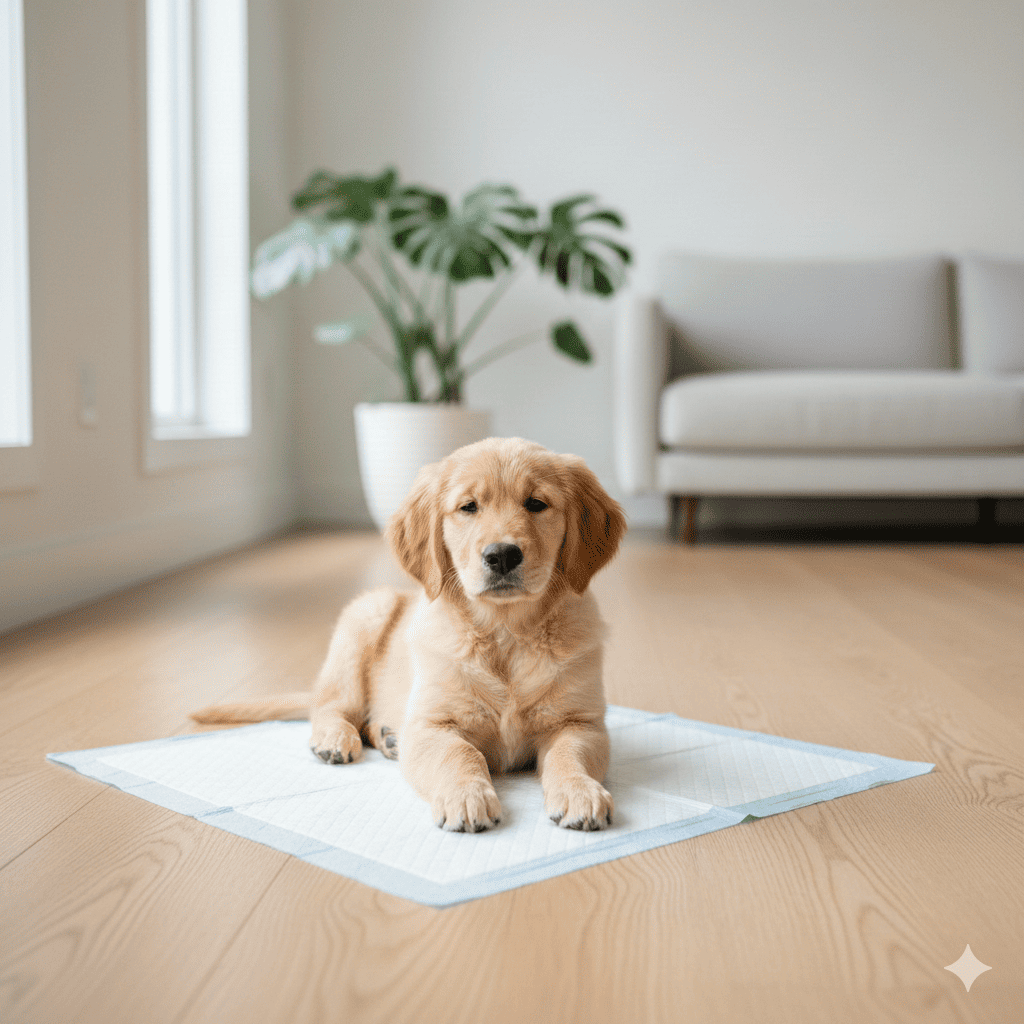
Why Most Pee Pads Fail Your Dog (and Your Floor)
A pee pad looks simple. It is a flat square that sits on the floor. How complicated can it be? Turns out, pretty complicated — because the difference between a pad that works and one that does not comes down entirely to what is happening inside those layers.
Single-layer and two-layer pads absorb the first round reasonably well. The moment your dog goes back to the same spot — which puppies always do, because the scent draws them back — the pad is already saturated at the center. Liquid spreads to the edges, pools under the plastic backing, and ends up on your floor anyway. You have essentially just redirected the mess, not contained it.
The other failure point is the edge. Most standard pads have no border protection. Your dog steps on the corner, the pad folds up, and the next use goes straight onto the hardwood underneath. After a week of that, you are not just cleaning up accidents — you are refinishing floors.
What the Amazon Basics Pad Actually Does
The design here starts with five distinct layers, each doing a specific job. The top surface is a quilted quick-dry layer that wicks moisture downward on contact. Your dog steps off the pad with dry paws instead of tracking wet prints across your kitchen. That alone makes cleanup faster and reduces the spread of mess beyond the pad zone.
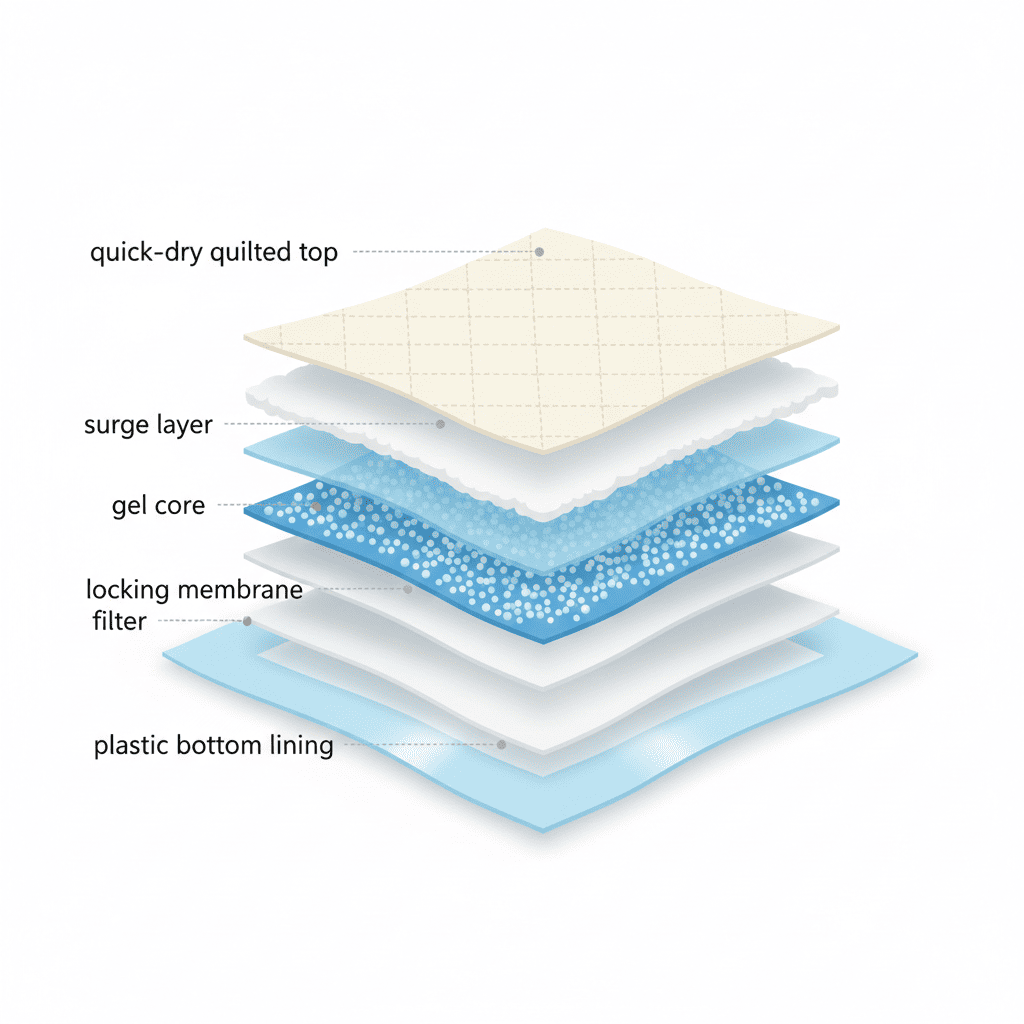
Below that sits a surge layer that channels liquid toward the center core instead of letting it spread toward the edges. The core itself is super absorbent and converts liquid into gel the moment it makes contact — the same technology used in high-end adult incontinence products. Once it is gel, it is locked. It does not un-absorb. It does not pool back up when your dog steps on the pad again.
The fourth and fifth layers are a locking membrane and a full plastic lining with a raised border on all four sides. That border is the detail that most competing pads skip entirely. It acts as a physical barrier that keeps liquid contained within the pad surface, even when your dog goes near an edge or misses the center. Your floor stays dry. The pad stays in its lane.
The Built-In Attractant That Changes Training
Here is the feature that separates a good potty training session from a frustrating one: the pad has a chemical attractant built directly into the surface. When your puppy smells it, their instinct is to go on the pad rather than explore the rest of the room for an alternative spot. You are not just hoping your dog finds the pad — you are using the pad itself as part of the training signal.
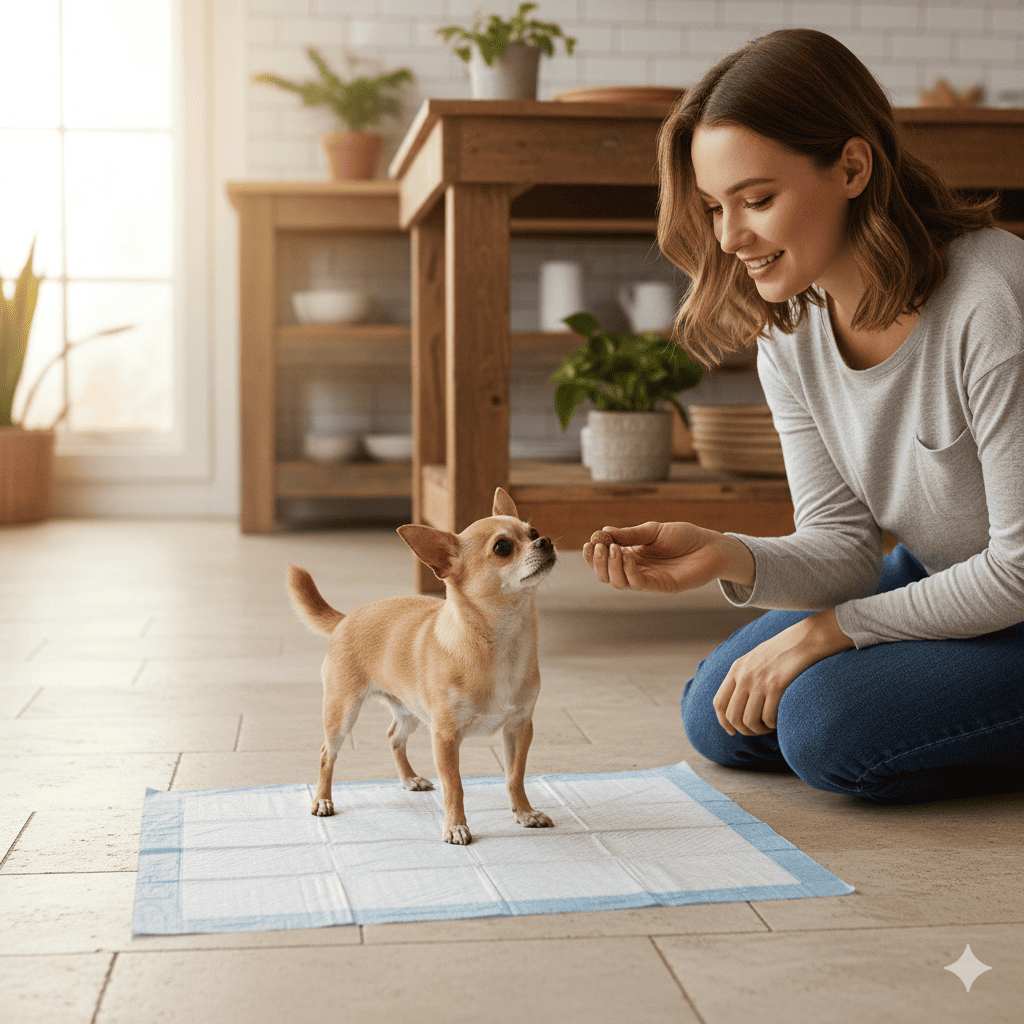
Dog trainers consistently point to scent-based location cues as one of the fastest ways to build pad habits in young dogs. When you combine a pad with a built-in attractant with immediate positive reinforcement — a treat and enthusiastic praise the moment they finish — most puppies make the connection within days, not weeks. The pad is not just catching accidents. It is actively teaching.
To get the fastest results, place the pad near the door your dog uses most frequently, confine your puppy to a small area while they are still learning, and take them to the pad directly after every meal, nap, and play session. Those are the three highest-probability moments for a puppy to need to go, and catching even two out of three builds the habit faster than any other method.
Who These Pads Work Best For
The most common buyers fall into four clear situations — and each one gets real, daily value from this product:
- New puppies under six months: Still building bladder control, still learning where to go. The attractant and quick-dry surface make pad training faster and cleaner than any alternative during this stage.
- Senior dogs with weakening bladders: Owners with dogs aged 10 and older report using these pads in two or three spots around the house — near the front door, in the kitchen, near the dog's sleeping area — to catch accidents before they become a floor-scrubbing event. One verified buyer noted her 13-year-old dog remembered how to use pads immediately.
- Apartment dogs without fast outdoor access: Elevator buildings, upper-floor units, cold-weather climates, or late-night situations where going outside every two hours is not realistic. The pad becomes a reliable indoor option that does not create a secondary mess problem.
- Small breed dogs trained primarily indoors: Yorkies, Chihuahuas, and other toy breeds often live most of their bathroom routine indoors by design. These pads hold up through five to six uses for small dogs, making the per-use cost extremely low.
What Real Buyers Are Saying After Months of Use
One verified buyer used the X-Large size through six months of puppy training. She described the absorption as excellent and the quick-dry surface as genuinely different from other brands she had tried. Her only note was that the pads do not have adhesive on the bottom — she recommended the XL size for dogs that do not always land in the center of the pad, which gives significantly more margin for error.
A second buyer switched to these after going through a roll of paper towels every three days cleaning up after her senior dog's accidents. Her verdict: the pads reduced her cleanup dramatically, the dog adapted to them immediately, and the floor stayed dry under normal use. She noted that very heavy, repeated urination on the exact same spot can eventually overwhelm the plastic lining — an honest limitation for dogs that drink very large volumes of water.
A third buyer with a teacup Yorkie reported getting five to six uses per pad before changing it, which brings the per-use cost down to roughly three cents per bathroom trip. She places a washable pad underneath as a backup layer, a setup several buyers independently arrived at for extra floor protection on carpeted areas or for dogs that consistently aim toward one edge.
The overall pattern across over 221,000 reviews is consistent: most buyers reorder. The most common complaint is the lack of adhesive backing on all size variants. The most common praise is the combination of price, absorption quality, and the built-in attractant that actually works during active training.

Size Guide: Picking the Right Pad for Your Dog
Getting the right size matters more than most first-time buyers expect. A pad that is too small is not just less effective — it actively slows down training because your dog starts missing the edges and learning that the floor next to the pad is also an acceptable option.
- Regular 22x22 inches: Ideal for puppies, toy breeds, and small dogs. The 100-count pack at $17.20 works out to $0.17 per pad — one of the lowest per-unit prices in the category.
- X-Large 28x34 inches: Recommended for medium dogs, dogs with imprecise aim, or senior dogs using the pad in a fixed location. Buyers consistently note that the size difference dramatically reduces edge misses.
- Giant size: Built for large breeds or households with multiple dogs using the same pad area. The 40-count Giant pack runs $17.60.
The Price That Makes It Easy to Say Yes
The 100-count Regular pack runs $17.20 — about 17 cents per pad. The 150-count runs $24.00, which drops the per-pad cost to 16 cents. If you activate Subscribe and Save, an additional 15% discount brings the 100-count pack to under $15. For a household actively training a puppy or managing a senior dog's daily accidents, that works out to less than five dollars a week at typical usage rates.
The pads are FSC-certified, meaning the materials come from responsibly managed forests and controlled recycled sources. For buyers paying attention to the environmental footprint of disposable products, that certification is worth noting. Amazon has also designed the packaging to be compact — fewer layers of excess air and material — which reduces the carbon footprint of shipping compared to bulkier competing products.
The pattern in the reviews is the same one you see with products that genuinely deliver: the most common follow-up action is reordering. Not switching brands. Not trying the competition. Just ordering the same product again, often in a larger count. That is the clearest signal that something actually works — people who already know what they are getting decide it is worth getting again.
Frequently Asked Questions
- Do Amazon Basics pee pads work for large breeds?
- Yes, but place two pads side by side for dogs over 50 lbs. The standard size covers most medium breeds comfortably. XL options exist for bigger dogs or to reduce the chance of missing the pad.
- How often should I change pee pads?
- After every use for puppies in active training. For adult dogs using pads as backup, change as soon as soiled — leaving a wet pad causes odor buildup and discourages reuse.
- Does the built-in attractant actually work?
- For most dogs, yes — especially during initial training. The scent guides them to the correct spot. It works best combined with consistent timing: taking the dog to the pad after meals, naps, and play sessions.
- Will using pee pads make my dog refuse to go outside?
- Not if you manage the transition deliberately. Pads are a tool for specific situations — overnight, bad weather, apartment living — not a permanent replacement for outdoor walks. If outdoor training is the goal, gradually move the pad closer to the door over several weeks.
- Can I use pee pads for senior dogs or dogs recovering from surgery?
- Absolutely. Pee pads are especially useful when mobility is limited. Place them near where the dog rests to minimize the distance they need to travel, and use multiple pads if the dog has trouble controlling direction.
Was this helpful for your pet care journey?